
Naqsh-e Jahan Square: The Image of the World in Isfahan
Discover Iran’s Magnificent Safavid World Heritage Square
At the heart of Isfahan lies a monumental space that has fascinated travelers for centuries.
Naqsh-e Jahan Square, officially known by UNESCO as Meidan Emam, Esfahan, is one of Iran’s most remarkable architectural and urban achievements.
Surrounded by magnificent mosques, a royal palace, a historic bazaar, and elegant arcades, the square brings together architecture, commerce, religion, royal power, art, and everyday life in one extraordinary urban ensemble.
Built and developed under Shah Abbas I during the Safavid period, the square became the heart of the Safavid capital in the early 17th century. UNESCO describes it as an exceptional example of Iranian and Islamic architecture and one of the world’s great historic urban squares.
Today, Naqsh-e Jahan remains one of the essential experiences for anyone traveling through Iran.
What Does Naqsh-e Jahan Mean?
The Persian name Naqsh-e Jahan can be translated as “Image of the World.”
The name reflects the extraordinary ambition of the Safavid project.
Rather than functioning simply as an open public space, the square became a carefully planned center where different dimensions of Safavid society came together.
Religion, government, royal authority, commerce, entertainment, craftsmanship, and public life all met here.
When Was Naqsh-e Jahan Square Built?
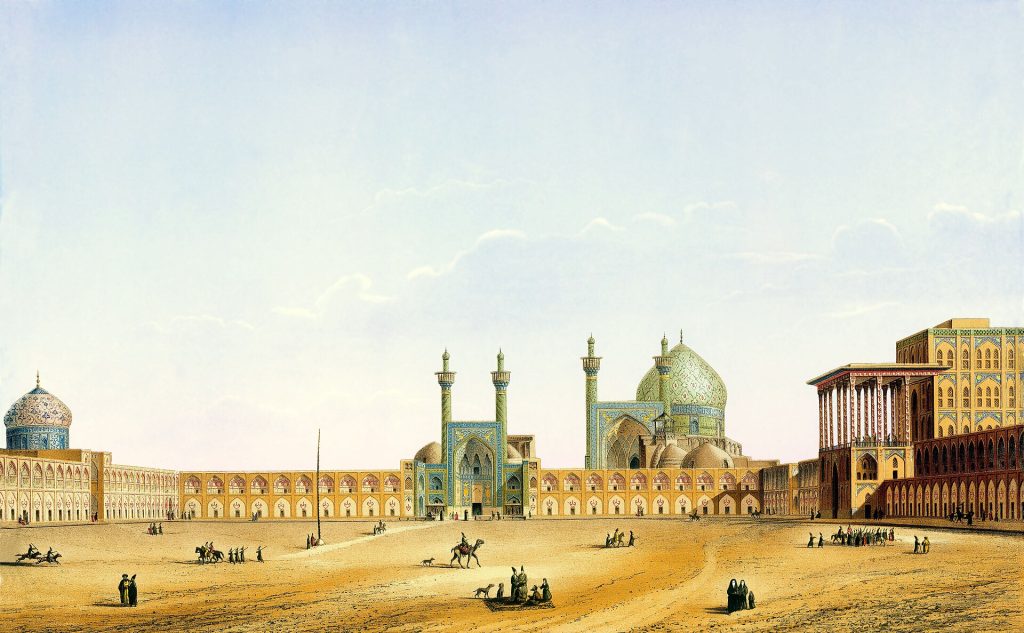
The development of the square was closely connected with the transformation of Isfahan under the Safavids.
During the reign of Shah Abbas I, Isfahan became the Safavid capital, and an ambitious urban development program reshaped the city.
The new square became the central element of this plan.
Historical research indicates that the square was formalized as an urban space around 1590–1591, with construction and development continuing during the following decades.
The result was an enormous rectangular urban space surrounded by monumental architecture and two-storey arcades.
Where Is Naqsh-e Jahan Square?
Naqsh-e Jahan Square is located in the historic center of Isfahan, one of Iran’s most important cultural cities.
The square sits within the historic urban fabric of Isfahan and connects several major monuments and traditional commercial areas.
Its location makes it an ideal starting point for discovering the city’s architectural heritage.
From the square, travelers can explore:
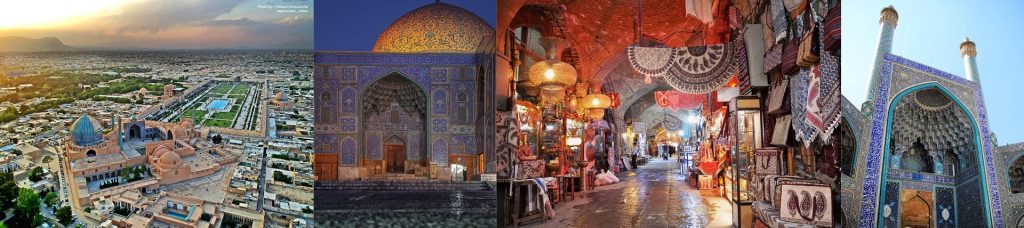
- Shah Mosque
- Sheikh Lotfollah Mosque
- Ali Qapu Palace
- Qeysarieh Bazaar
- Traditional handicraft shops
- Historic caravanserais
- Nearby mosques and palaces
- Isfahan’s historic bridges and neighborhoods
A Monumental Urban Space
UNESCO describes Meidan Emam as approximately 560 metres long and 160 metres wide, covering almost nine hectares.
Its enormous scale was unusual within the traditional urban fabric of Iran.
The square was carefully integrated with the surrounding buildings and commercial arcades, creating a coherent architectural ensemble.
Rather than viewing each monument separately, visitors should appreciate Naqsh-e Jahan as one connected urban composition.
The architecture surrounding the square was designed to work together.
The Four Great Monuments of Naqsh-e Jahan
Four major architectural landmarks define the square.
1. Shah Mosque
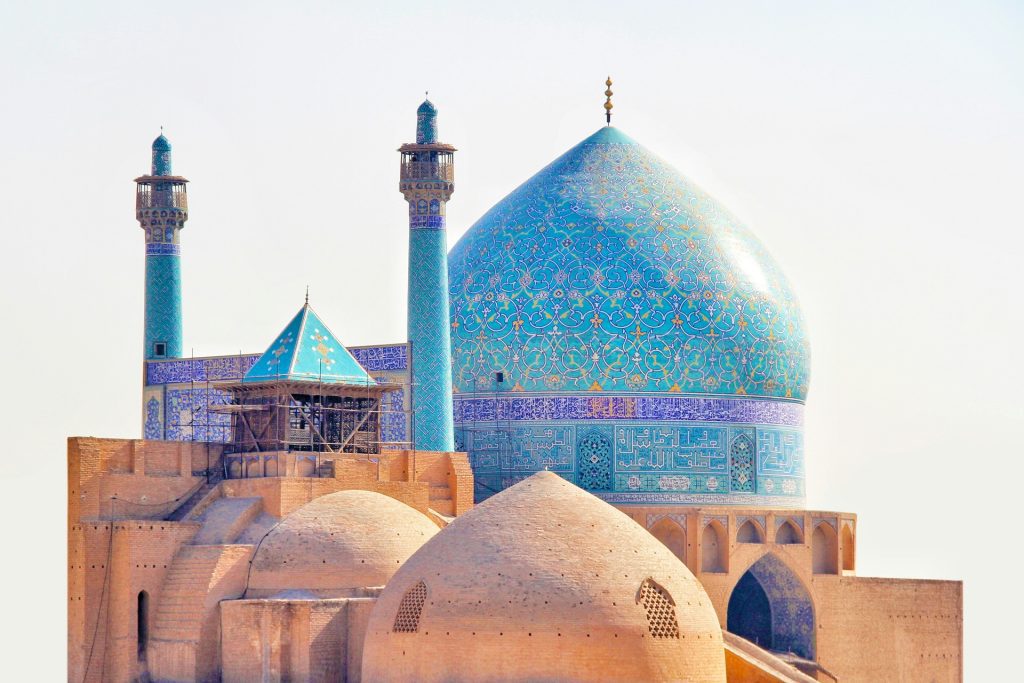
Located on the southern side of the square, the Shah Mosque is one of the greatest masterpieces of Safavid architecture.
Its monumental entrance portal, soaring dome, minarets, tilework, calligraphy, and courtyards demonstrate the extraordinary artistic achievements of the period.
One fascinating feature is the relationship between the mosque and the square.
The square follows one orientation, while the mosque is aligned toward Mecca. The architectural transition between the two creates a sophisticated spatial solution. UNESCO specifically highlights this relationship in its assessment of the site’s Outstanding Universal Value.
2. Sheikh Lotfollah Mosque
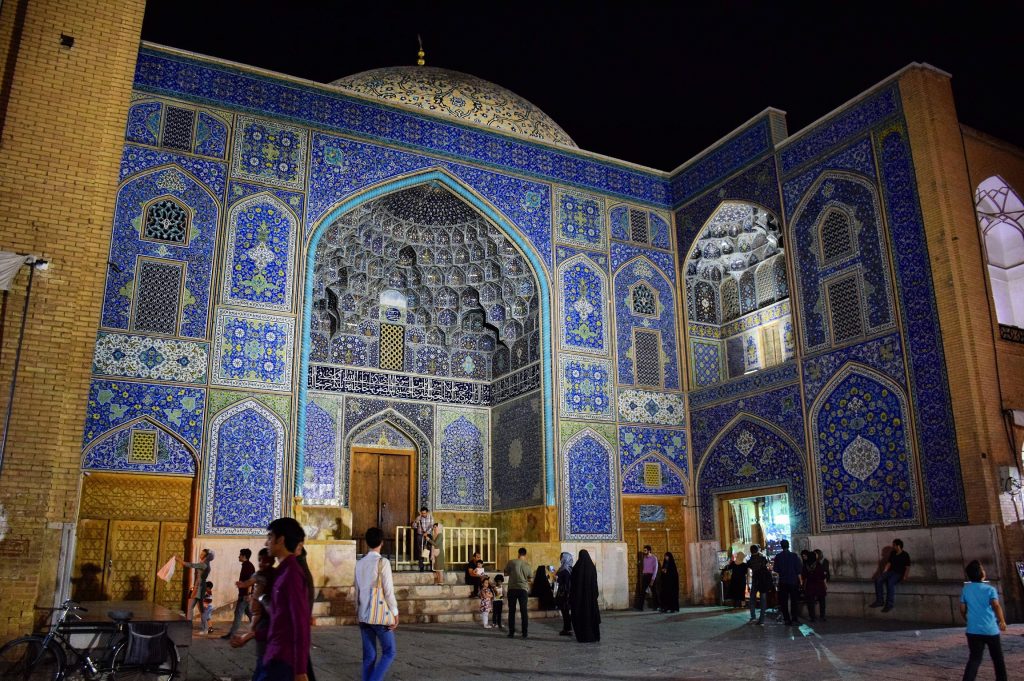
On the eastern side of the square stands the elegant Sheikh Lotfollah Mosque.
Unlike the Imam Mosque, this building was constructed as a private mosque associated with the royal court.
Its intimate scale and extraordinary interior decoration create a very different experience.
The dome is particularly famous for its intricate tilework and changing visual appearance as light moves through the building.
UNESCO identifies Sheikh Lotfollah Mosque as one of the masterpieces of Safavid architecture
3. Ali Qapu Palace
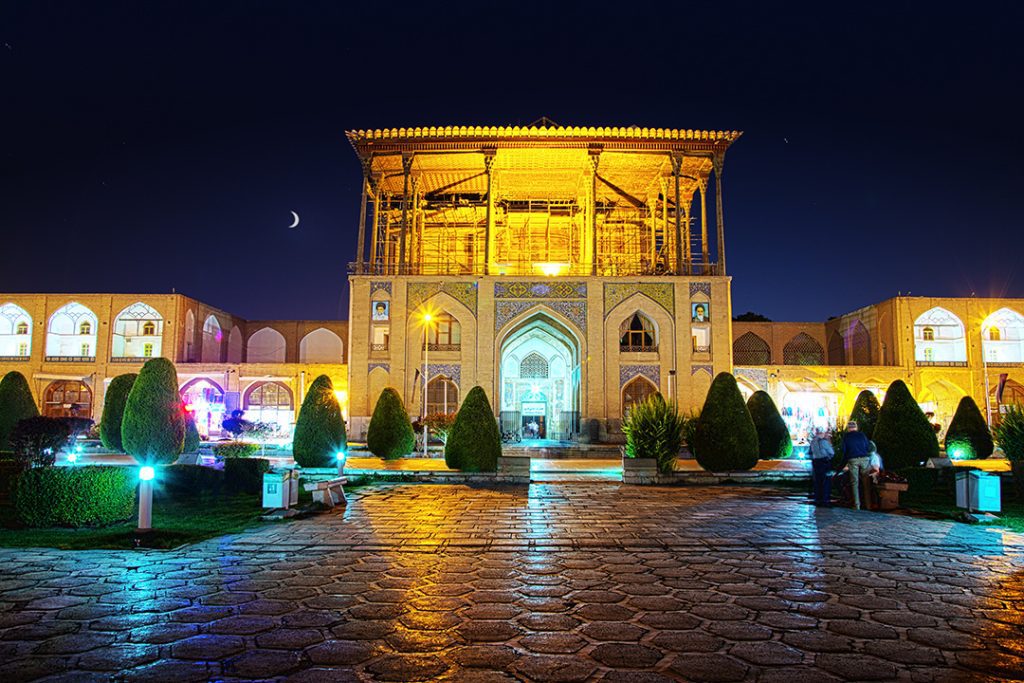
Standing on the western side of the square, Ali Qapu Palace was the monumental entrance to the royal precinct.
Its elevated terrace offered the Safavid court an impressive view over the square.
The palace contains decorated rooms and architectural details that reflect the artistic culture of the Safavid court.
From the upper levels, visitors can appreciate the extraordinary relationship between the palace, the square, the mosques, and the bazaar.
The building is an essential part of understanding Naqsh-e Jahan as both a public and royal space.
4. Qeysarieh Bazaar
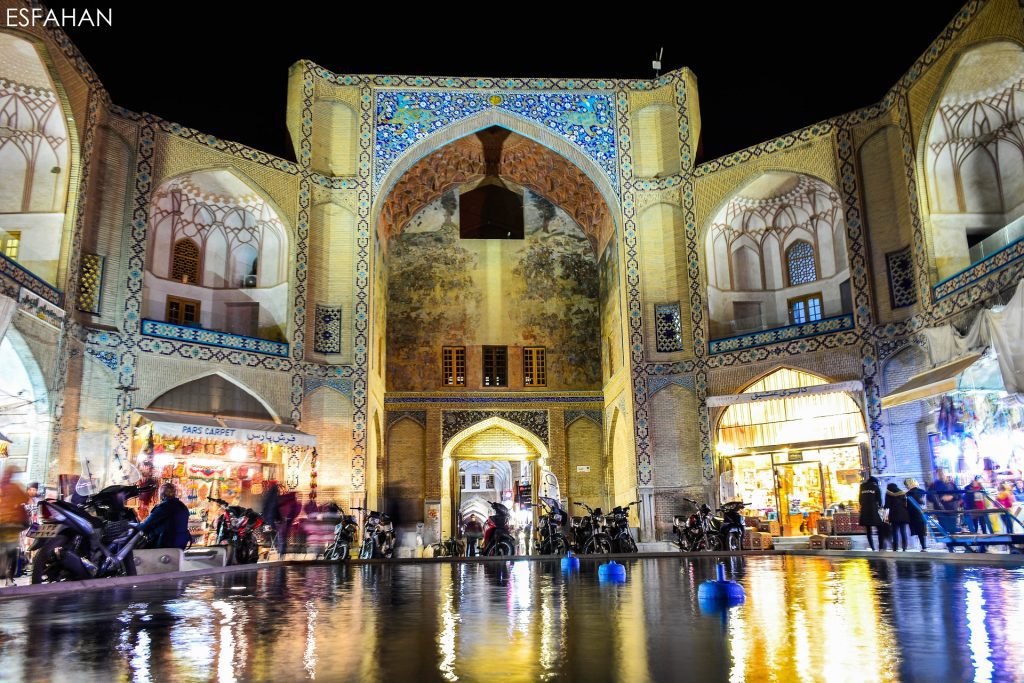
At the northern end of the square is the monumental entrance to the historic Qeysarieh Bazaar.
From here, the commercial world of Isfahan extends into a much larger network of traditional markets.
For centuries, merchants, artisans, travelers, and local residents used these spaces for commerce and social interaction.
Today, visitors can explore shops selling traditional Persian handicrafts, carpets, miniature paintings, metalwork, textiles, and other products.
For travelers interested in authentic cultural experiences, the bazaar remains an essential part of the Naqsh-e Jahan experience.
More Than Architecture: The Life of the Square
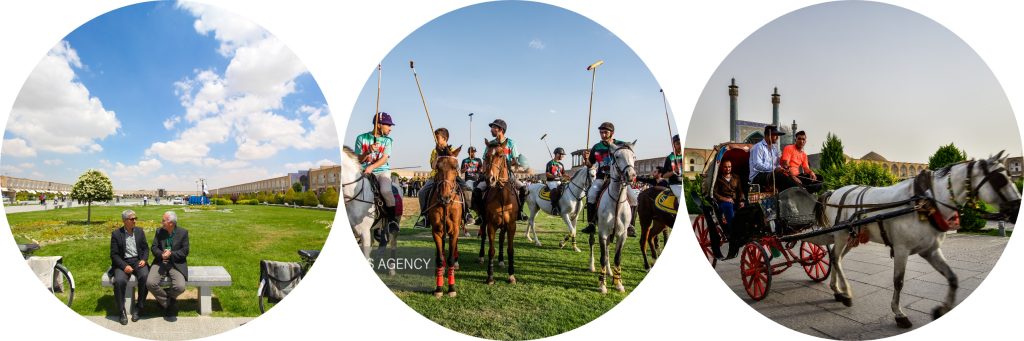
Naqsh-e Jahan was never simply a collection of beautiful buildings.
It was designed as a living public space.
UNESCO records that the square historically hosted celebrations, promenades, polo matches, military assemblies, commercial activity, public performances, and other events.
The surrounding arcades housed shops, while the buildings around the square connected royal, religious, and commercial life.
This combination is one of the reasons the square remains so fascinating.
Chogan (Polo) in Naqsh-e Jahan
One of the most interesting aspects of the square’s history is its connection with Chogan.
The enormous open space provided a suitable setting for the game during the Safavid era.
Historical representations and accounts of the square help illustrate how recreation and royal culture were incorporated into the design of the city.
Today, visitors can still imagine the scale of the original playing field while standing in the center of the square.
Persian Art in Every Detail

Walking around Naqsh-e Jahan means entering a world of Persian craftsmanship.
Look closely at:
- Enamelled tilework
- Floral patterns
- Persian calligraphy
- Geometric designs
- Dome decoration
- Stonework
- Woodwork
- Traditional paintings
- Metalwork
- Handcrafted carpets
Many of the decorative traditions visible around the square remain important parts of Iranian artistic culture today.
This creates an interesting connection between historical monuments and living craftsmanship.
Naqsh-e Jahan and Iranian Handicrafts
The square is also an excellent place to discover traditional Iranian handicrafts.
The surrounding bazaar has long been associated with artisans and merchants.
Depending on the season and shops visited, travelers can discover:
- Persian carpets
- Miniature paintings
- Enamelwork
- Copperware
- Traditional textiles
- Calligraphy
- Woodwork
- Handmade souvenirs
For responsible travelers, purchasing directly from local artisans and established workshops can help support traditional crafts and local livelihoods.
Naqsh-e Jahan by Day
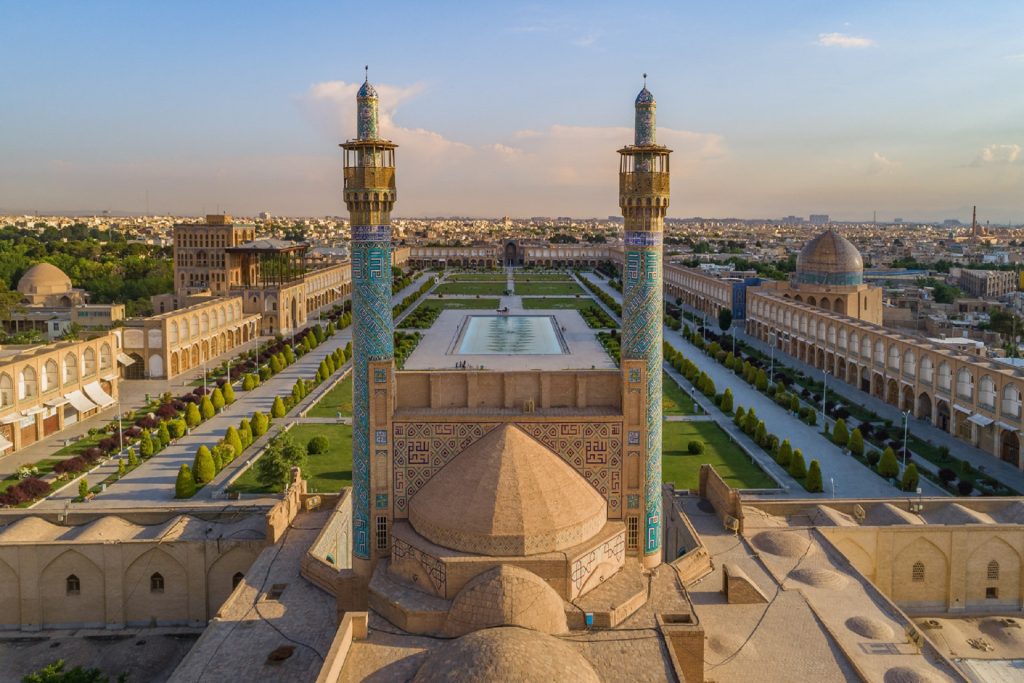
During the day, sunlight reveals the extraordinary colors and details of the architecture.
The square is ideal for slow exploration.
Walk beneath the arcades.
Visit the mosques.
Explore the bazaar.
Pause for Persian tea.
Observe artisans at work.
Take time to study the tilework and calligraphy.
Rather than rushing between monuments, allow yourself time to experience the atmosphere.
Naqsh-e Jahan at Sunset
The square takes on a different character in the late afternoon.
The light changes the colors of the buildings, while the surrounding architecture creates long shadows across the open space.
The domes and minarets become particularly striking against the evening sky.
For photographers, sunset provides one of the most memorable moments to experience Naqsh-e Jahan.
Naqsh-e Jahan After Dark
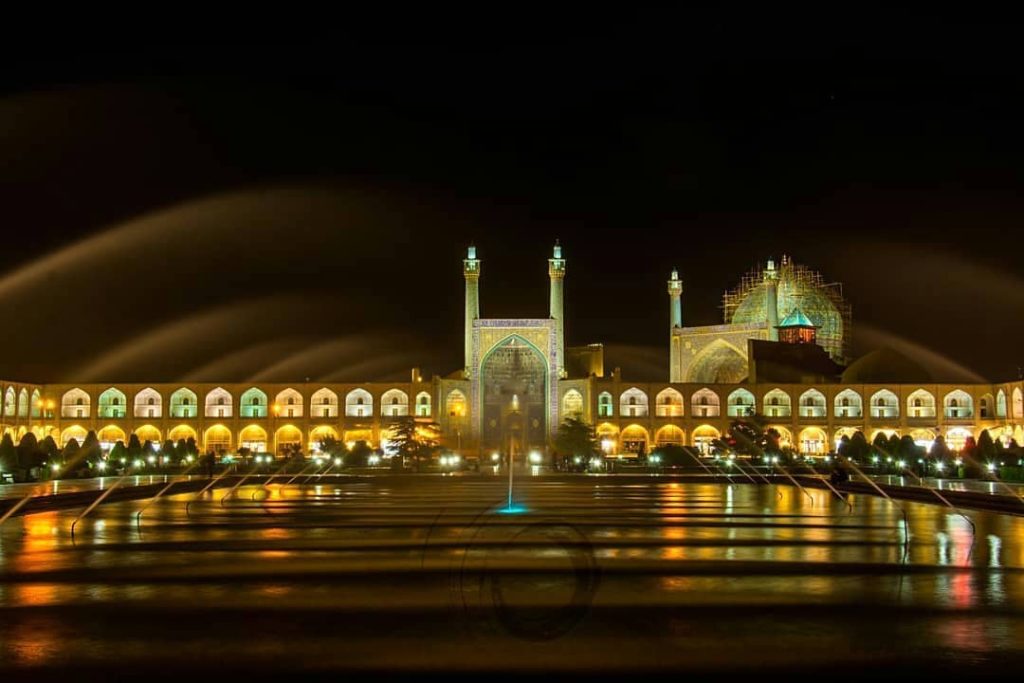
After sunset, the square becomes a lively gathering place.
Families, visitors, young people, and local residents use the space for walking, conversation, relaxation, and social activities.
The illuminated architecture creates a completely different atmosphere from daytime.
This is one of the best examples of why Naqsh-e Jahan should be experienced as a living urban space, rather than simply an archaeological monument.
Naqsh-e Jahan and UNESCO World Heritage
Meidan Emam, Esfahan was inscribed on the UNESCO World Heritage List in 1979. It was among Iran’s first three World Heritage inscriptions, together with Persepolis and Tchogha Zanbil.
UNESCO recognizes the property under criteria (i), (v), and (vi).
Its Outstanding Universal Value relates to:
- Exceptional architectural achievement
- Outstanding Iranian and Islamic architecture
- Innovative urban planning
- The historic role of the square in Safavid society
- The relationship between royal, religious, commercial, and public life
The property includes the square, surrounding arcades, Imam Mosque, Sheikh Lotfollah Mosque, Ali Qapu Pavilion, and Qeysarieh Portico.
A Living World Heritage Site
One of the most fascinating aspects of Naqsh-e Jahan is that it remains part of everyday life in Isfahan.
The square is not frozen in the past.
It continues to function as a public urban space, surrounded by commercial activity and connected to the historic city.
UNESCO’s current management documentation notes that the property continues to have important political, economic, cultural, social, and recreational roles for the local community.
This living dimension makes the experience especially meaningful for cultural travelers.
Responsible Travel at Naqsh-e Jahan
As a World Heritage site and active public space, Naqsh-e Jahan deserves careful and respectful tourism.
Travelers can help protect the heritage by:
- Respecting historic buildings and decorative surfaces
- Following visitor regulations
- Avoiding touching fragile architectural details
- Supporting local artisans
- Keeping the square clean
- Respecting local residents and religious spaces
- Using qualified local guides
- Choosing responsible tourism providers
Preserving the square is a shared responsibility between authorities, local communities, tourism professionals, and visitors.
Exploring Isfahan Beyond Naqsh-e Jahan
Naqsh-e Jahan is only one chapter of Isfahan’s extraordinary heritage.
A longer stay can include:
Masjed-e Jāmé of Isfahan
Another UNESCO World Heritage property, the historic Friday Mosque represents centuries of architectural development.
Si-o-se-pol Bridge
One of Isfahan’s iconic historic bridges, particularly atmospheric in the evening.
Khaju Bridge
A remarkable Safavid-era bridge combining engineering, architecture, and social space.
Chehel Sotoun Palace
Part of the wider Safavid heritage of Isfahan and associated with Persian garden and royal architecture.
Jolfa Armenian Quarter
A fascinating area where Iranian and Armenian cultural heritage meet.
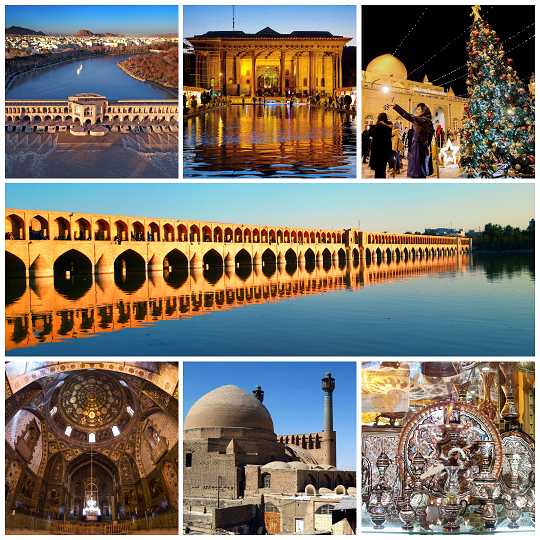
Together, these experiences reveal why Isfahan became known as one of the great cultural centers of Iran.
Best Time to Experience Naqsh-e Jahan
Isfahan can be visited throughout much of the year, but spring and autumn are especially attractive for many travelers because of their generally pleasant temperatures.
For a more relaxed experience, consider exploring the square in different periods of the day.
Morning: architecture and quieter exploration.
Afternoon: museums, mosques, and bazaars.
Sunset: photography and changing light.
Evening: local life and illuminated monuments.
Experience Naqsh-e Jahan with PGTG
At Persian Gryphon Travel Group (PGTG), we believe that experiencing Isfahan means going beyond photographs of its famous monuments.
Our journeys introduce travelers to the stories behind the architecture and the people who continue to keep the city’s traditions alive.
A PGTG Isfahan experience can combine:
- Naqsh-e Jahan Square
- Imam Mosque
- Sheikh Lotfollah Mosque
- Ali Qapu Palace
- Qeysarieh Bazaar
- Masjed-e Jāmé
- Persian gardens
- Traditional handicrafts
- Local cuisine
- Historic bridges
- Artisan workshops
- Community experiences
We can also combine Isfahan with other UNESCO destinations such as Persepolis, Pasargadae, Yazd, Kashan, and the Persian Garden sites.
Why Visit Naqsh-e Jahan Square?
Naqsh-e Jahan is not just a square.
It is a story of architecture, power, faith, commerce, craftsmanship, and community.
It shows how an entire city could be imagined around a single monumental space.
More than four centuries after its creation, the square remains one of the defining symbols of Isfahan and one of the most remarkable expressions of Safavid Iran.
Stand beneath the blue tiles.
Listen to the sounds of the bazaar.
Look across the enormous square.
Watch the light move across the domes.
And experience a place where history is still part of everyday life.
Discover Isfahan with Persian Gryphon Travel Group
From Persepolis to Naqsh-e Jahan, Iran’s World Heritage sites reveal different chapters of a remarkable cultural history.
With PGTG, discover these places through local stories, architecture, cuisine, craftsmanship, and meaningful encounters.
Together, we learn, we experience, and we give meaning to travel.
Leave a Reply