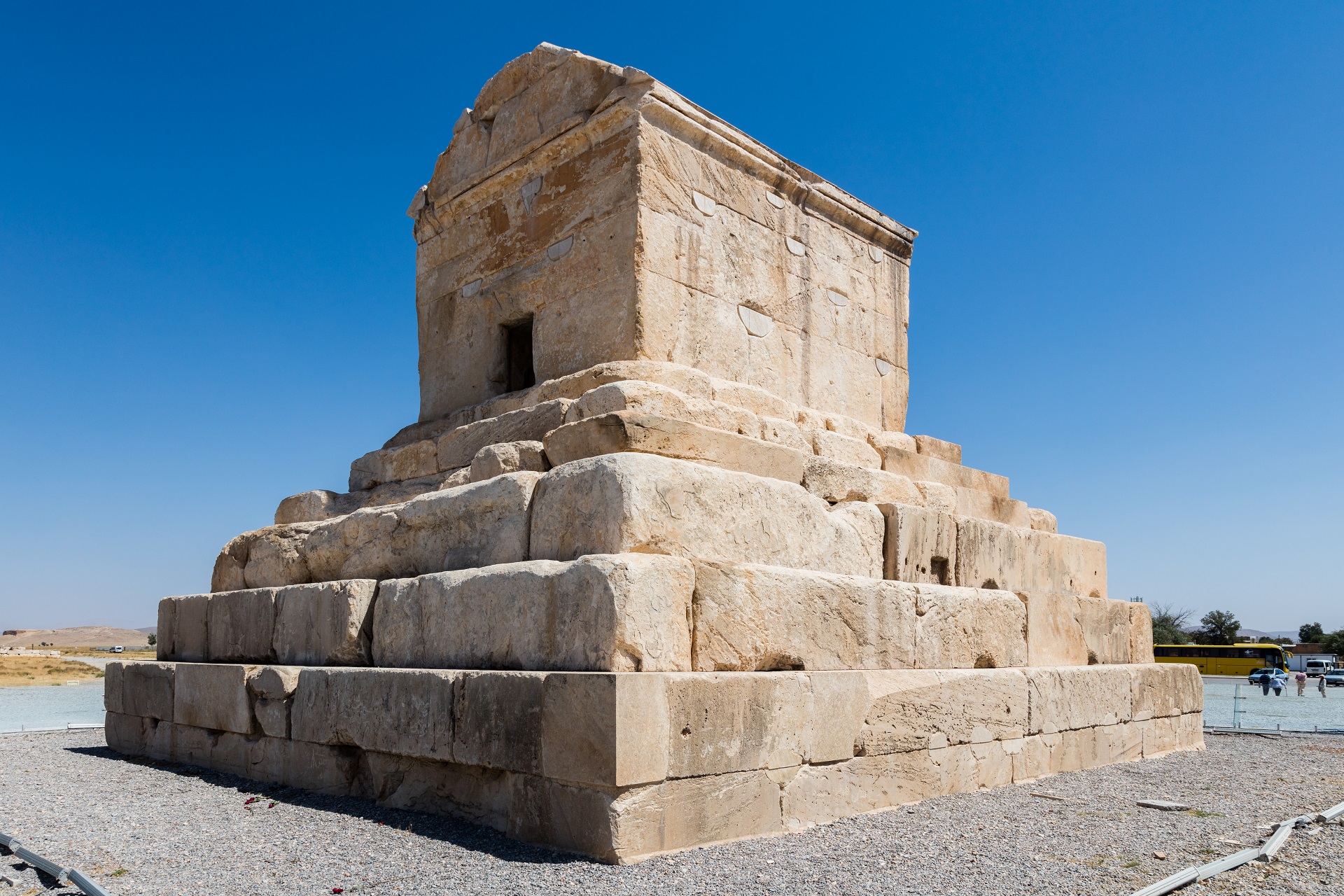
Pasargadae: The First Capital of the Achaemenid Empire
Discover Pasargadae, the ancient capital of Cyrus the Great and one of the most important archaeological sites in Iran.
Long before Persepolis became the ceremonial heart of the Achaemenid Empire, another royal city stood at the center of Persian power.
Its name was Pasargadae.
Founded in the 6th century BCE by Cyrus II, known as Cyrus the Great, Pasargadae was the first dynastic capital of the Achaemenid Empire. Today, its archaeological remains provide an extraordinary window into the beginnings of Achaemenid royal architecture, Persian garden design, and the civilization that would develop into one of the great empires of the ancient world.
Inscribed on the UNESCO World Heritage List in 2004, Pasargadae is recognized for its exceptional cultural and architectural importance under criteria (i), (ii), (iii), and (iv).
For travelers interested in Persian history, archaeology, architecture, and ancient civilizations, Pasargadae is an essential stop on an Iran cultural journey.
Where Is Pasargadae?
Pasargadae lies in the Fars region of southwestern Iran, in the historic heartland of the Persians.
The archaeological site stands on the plain of the Polvar River, within the landscape traditionally associated with ancient Persis. The site is approximately 40 kilometers northeast of Persepolis in a straight line.
Its location is particularly meaningful. This was not simply a palace complex. Pasargadae was conceived as a royal capital within a carefully planned landscape, combining monumental architecture, gardens, waterways, open spaces, and ceremonial buildings.
Today, the archaeological property covers approximately 160 hectares, although the ancient city extended beyond the currently excavated area.
Cyrus the Great and the Birth of Pasargadae

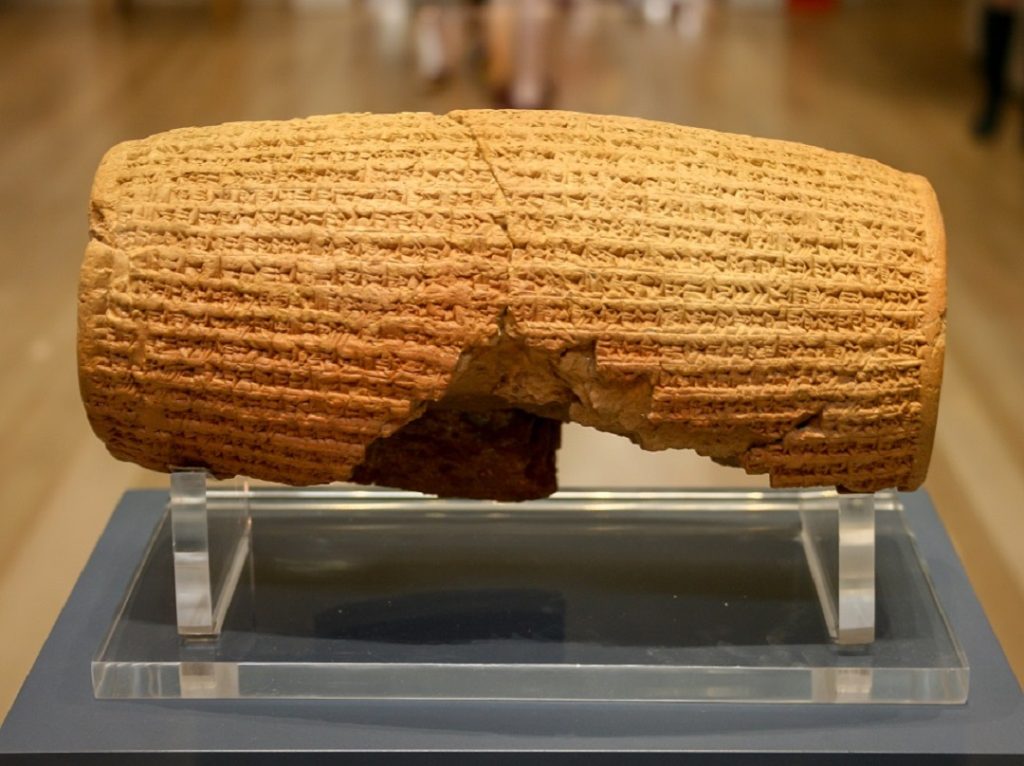
Pasargadae is inseparable from the story of Cyrus the Great, the founder of the Achaemenid Empire.
Cyrus II ruled Persia during the 6th century BCE and established a powerful empire that eventually stretched across a vast territory of Western Asia and beyond.
He selected Pasargadae as his dynastic capital and began creating a royal center unlike anything that had existed in Persia before.
The city represented an important stage in the development of Achaemenid architecture. According to UNESCO, Pasargadae represents the first outstanding expression of royal Achaemenid architecture.
Construction began during Cyrus’s reign and continued after his death.
The result was a royal landscape combining Persian traditions with architectural influences contributed by different peoples of the Achaemenid world. UNESCO describes this synthesis as an important feature of Achaemenid architecture.
The Tomb of Cyrus the Great
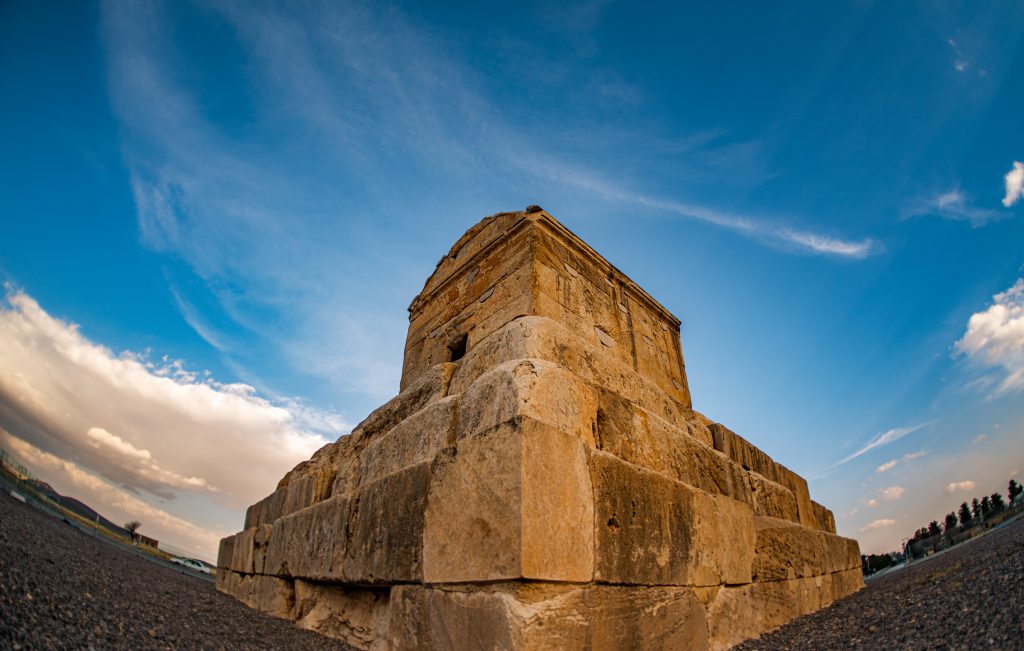
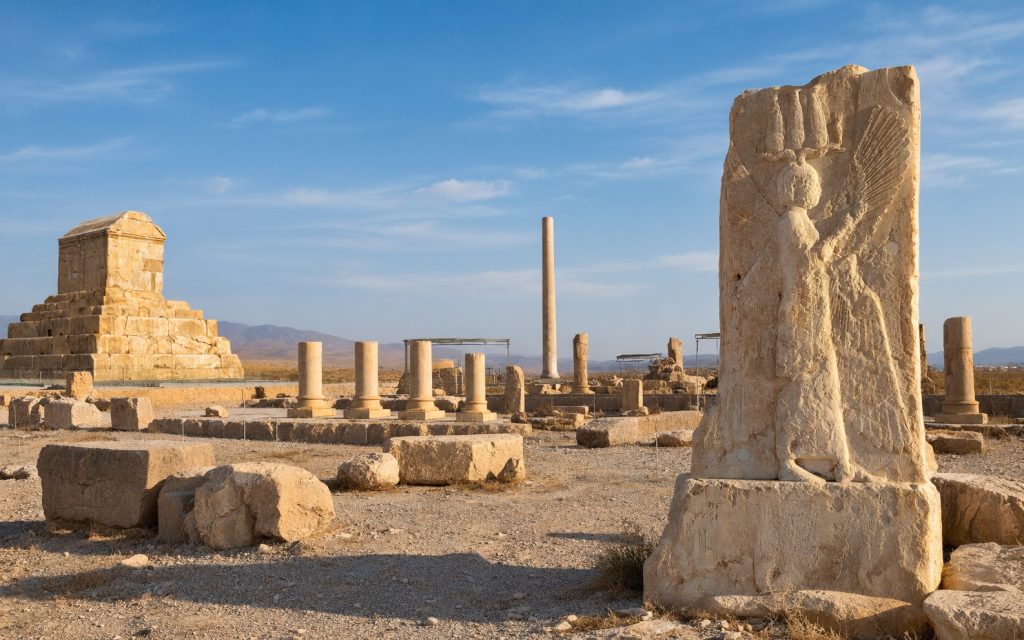
Perhaps the most recognizable monument at Pasargadae is the Tomb of Cyrus the Great.
Standing alone on the archaeological plain, the monument has a remarkably simple and powerful design.
A rectangular stone chamber sits above a series of stepped limestone foundations, creating a distinctive silhouette that has become one of the most famous symbols of ancient Persian history.
The monument was associated with the burial of Cyrus and formed an important part of the royal landscape of Pasargadae. UNESCO identifies it as one of the principal elements contributing to the site’s Outstanding Universal Value.
For visitors, the simplicity of the structure can be striking.
Unlike the enormous monumental architecture later seen at Persepolis, the tomb is relatively compact. Its power comes from its proportions, location, and historical association.
Standing before it offers an opportunity to reflect on the beginnings of the Achaemenid Empire and the ruler who established its first dynastic capital.
The Royal Palace Complex
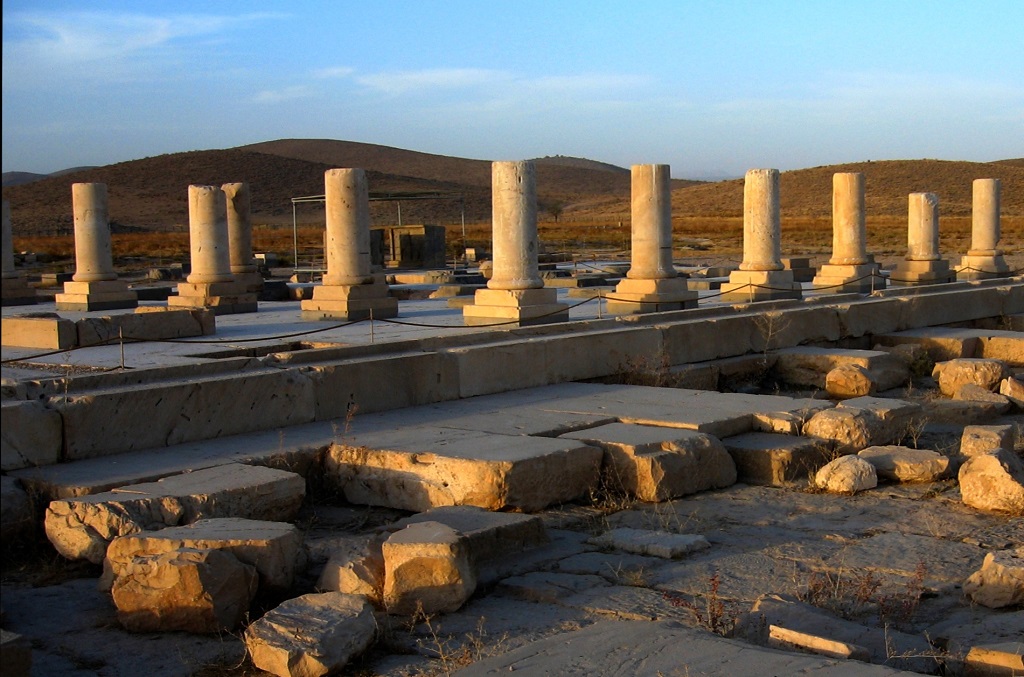
Pasargadae was more than the tomb of its founder.
The site contains the remains of an extensive royal ensemble, including palaces, audience spaces, residential architecture, gateways, pavilions, and gardens.
The principal royal buildings were arranged within a planned landscape.
Among the important structures are:
- The Gatehouse
- The Audience Palace
- The Residential Palace
- Pavilion A
- Pavilion B
- The Royal Gardens
- Tall-e Takht
- The Tomb of Cyrus
Together, these remains demonstrate the sophistication of early Achaemenid architectural planning.
The Four Gardens: An Early Persian Garden Concept
One of the most fascinating aspects of Pasargadae is its relationship with the Persian garden.
The royal buildings were arranged within a garden landscape that UNESCO identifies as an early form of the “Four Gardens” concept.
This design divided the garden into four sections using waterways or pathways.
The concept became highly influential in the development of Persian garden design and later architectural traditions across Western Asia.
The Persian garden was not simply an attractive outdoor space.
Water, shade, vegetation, geometry, architecture, and movement were carefully connected.
The design created a controlled landscape in which nature and architecture existed together.
Centuries later, variations of this idea would continue to shape Persian gardens throughout Iran.
This makes Pasargadae particularly important not only for understanding the Achaemenid Empire, but also for understanding the origins of one of Iran’s most enduring landscape traditions.
Tall-e Takht: The Fortified Terrace
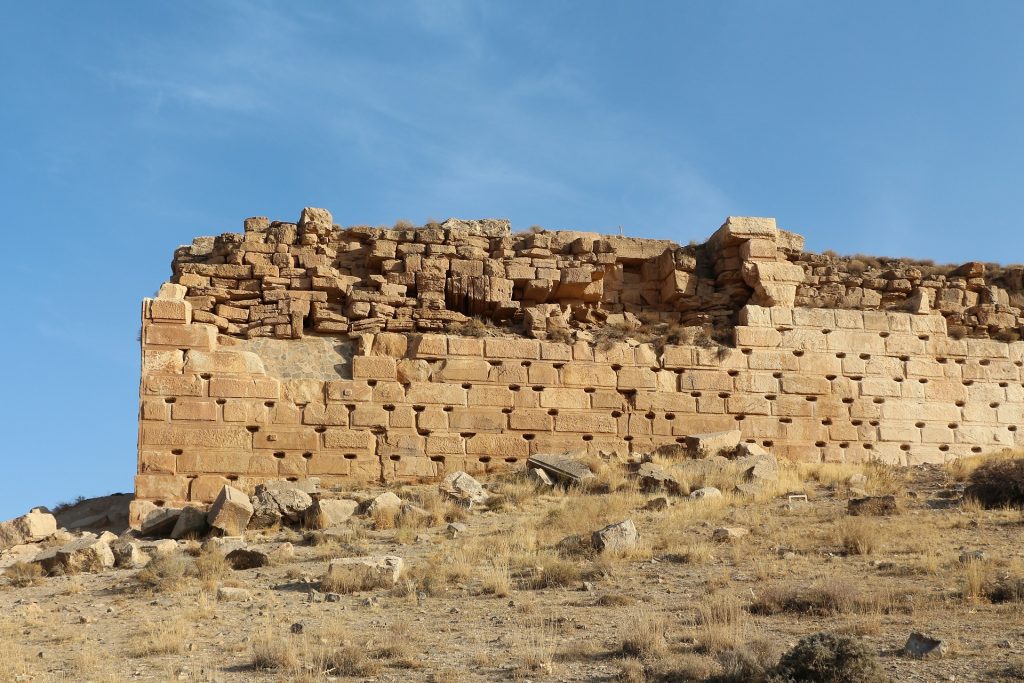
Another major feature of Pasargadae is Tall-e Takht, often translated as “Throne Hill” or “Throne of Solomon.”
The monumental terrace occupies a prominent position within the archaeological landscape.
It was a substantial fortified platform constructed on a hill and later incorporated into a larger defensive complex.
UNESCO identifies Tall-e Takht as one of the key surviving elements of the Pasargadae archaeological property.
Its elevated position also provides a different perspective on the ancient capital and its surrounding landscape.
Architecture at the Beginning of the Achaemenid Era
Pasargadae is particularly significant because it represents an early stage in the development of Achaemenid royal architecture.
Later Achaemenid monuments became famous for their enormous columns, monumental stairways, reliefs, and ceremonial spaces.
Pasargadae presents an earlier architectural language.
Stone, mud brick, columned halls, relief decoration, gardens, and carefully planned spaces were combined to create a new royal architectural tradition.
UNESCO describes Pasargadae as a fundamental stage in the evolution of classic Persian art and architecture.
The architecture also demonstrates the multicultural character of the Achaemenid Empire.
Different artistic and architectural traditions contributed to the development of the royal style.
Rather than representing a single isolated tradition, Pasargadae reflects the interaction of cultures within the expanding Persian Empire.
Pasargadae as a Cultural Landscape
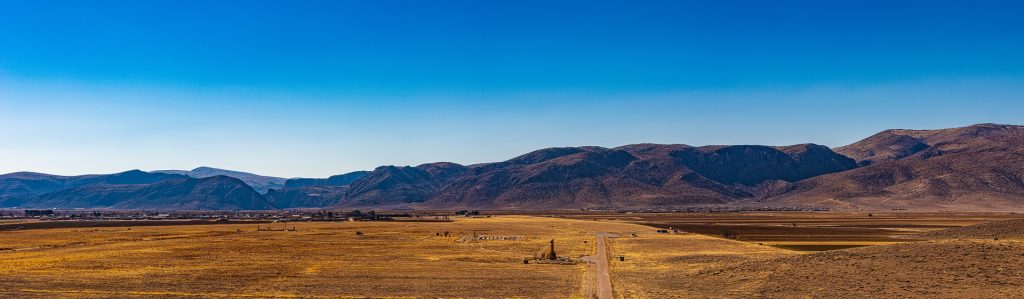
One of the best ways to experience Pasargadae is to look beyond individual monuments.
The surrounding landscape is an important part of the site’s character.
The open plain, mountains, archaeological remains, gardens, pathways, and monumental structures create a relationship between architecture and nature.
This landscape helps visitors understand that Pasargadae was designed as a royal environment, rather than simply a collection of isolated buildings.
UNESCO emphasizes the authenticity of the site’s location, setting, materials, form, and design. The archaeological remains have not been reconstructed into a modern version of the ancient city, allowing visitors to encounter the authentic ruins within their historic landscape.
Pasargadae and Persepolis: What Is the Difference?
Travelers often visit Pasargadae and Persepolis together, but the two sites tell different parts of the Achaemenid story.
Pasargadae was the first dynastic capital established by Cyrus the Great.
Persepolis, founded later under Darius I, developed into a monumental ceremonial center of the empire.
Pasargadae therefore provides an opportunity to explore the early development of Achaemenid royal architecture, while Persepolis demonstrates its later monumental expression.
Visiting both sites creates a fascinating historical sequence:
Cyrus the Great → Pasargadae → Darius I → Persepolis → the mature Achaemenid architectural tradition
For travelers interested in ancient Persia, experiencing both archaeological landscapes can add important context to the history of the empire.
Why Is Pasargadae a UNESCO World Heritage Site?
Pasargadae was inscribed on the UNESCO World Heritage List in 2004 under four cultural criteria:
Criterion (i)
Pasargadae represents an outstanding early expression of royal Achaemenid architecture.
Criterion (ii)
Its architecture reflects contributions from different peoples within the Achaemenid Empire and played an important role in the development of Persian art and architecture.
Criterion (iii)
The archaeological remains provide exceptional testimony to Achaemenid civilization, including its palaces, gardens, and the tomb associated with Cyrus the Great.
Criterion (iv)
The Four Gardens royal ensemble became an important prototype for garden architecture and design in Western Asia.
These criteria demonstrate that Pasargadae is significant not simply because it is ancient, but because of its influence on architecture, landscape design, and the history of Persian civilization.
Responsible Travel at Pasargadae
Pasargadae is an archaeological site of exceptional cultural importance.
Responsible tourism helps protect it for future generations.
When visiting:
- Stay on designated visitor routes.
- Do not climb archaeological structures.
- Do not touch or damage ancient surfaces and inscriptions.
- Never remove stones, pottery, or archaeological materials.
- Follow local site regulations.
- Respect conservation areas.
- Avoid littering.
- Consider using knowledgeable local guides to better understand the site’s history.
- Support responsible local tourism services and communities.
UNESCO identifies natural erosion, flooding, agricultural pressures, vandalism, and inappropriate development as among the challenges that require continued management and conservation.
Responsible travel is therefore not only an ethical choice. It is part of preserving Iran’s cultural heritage.
When Is the Best Time to Visit Pasargadae?
Pasargadae can be visited throughout much of the year, but spring and autumn are particularly attractive for travelers who prefer more comfortable conditions for exploring archaeological sites.
The archaeological landscape is largely open, so visitors should consider sun exposure, walking distances, and seasonal weather.
Combining Pasargadae with Persepolis and other Fars attractions can make an excellent full-day cultural excursion from Shiraz.
Pasargadae: Where the Persian Empire Began to Take Shape
Pasargadae is more than an archaeological ruin.
It is a place where the early vision of the Achaemenid Empire can still be experienced through stone, landscape, gardens, architecture, and history.
Here, the story of Cyrus the Great meets the beginnings of a distinctive Persian architectural tradition.
Here, the early concept of the Persian garden took shape.
And here, more than two and a half millennia later, travelers can walk through the landscape of one of the most influential civilizations of the ancient world.
Discover Pasargadae.
Discover ancient Persia.
Experience Iran with PGTG.
Pasargadae with PGTG
At Persian Gryphon Travel Group (PGTG), we believe that visiting Iran’s heritage sites should be more than simply taking photographs.
Our approach combines sustainable, responsible, and experience-oriented tourism.
At Pasargadae, that means exploring the history behind the monuments, understanding the landscape, learning about Achaemenid civilization, and connecting the ancient story with the Iran travelers experience today.
A journey through Pasargadae can become part of a tailor-made cultural itinerary combining:
- Ancient Persian history
- Achaemenid architecture
- Persian gardens
- Archaeology
- Local culture
- Shiraz
- Persepolis
- Naqsh-e Rostam
- Traditional Persian cuisine
- Responsible travel experiences
Together, we learn, experience, and give meaning to travel.
Leave a Reply