Takht-e Soleyman: The Sacred Fire and Water Sanctuary of Ancient Iran
What if an ancient Iranian sanctuary was built around both sacred fire and a mysterious natural lake?
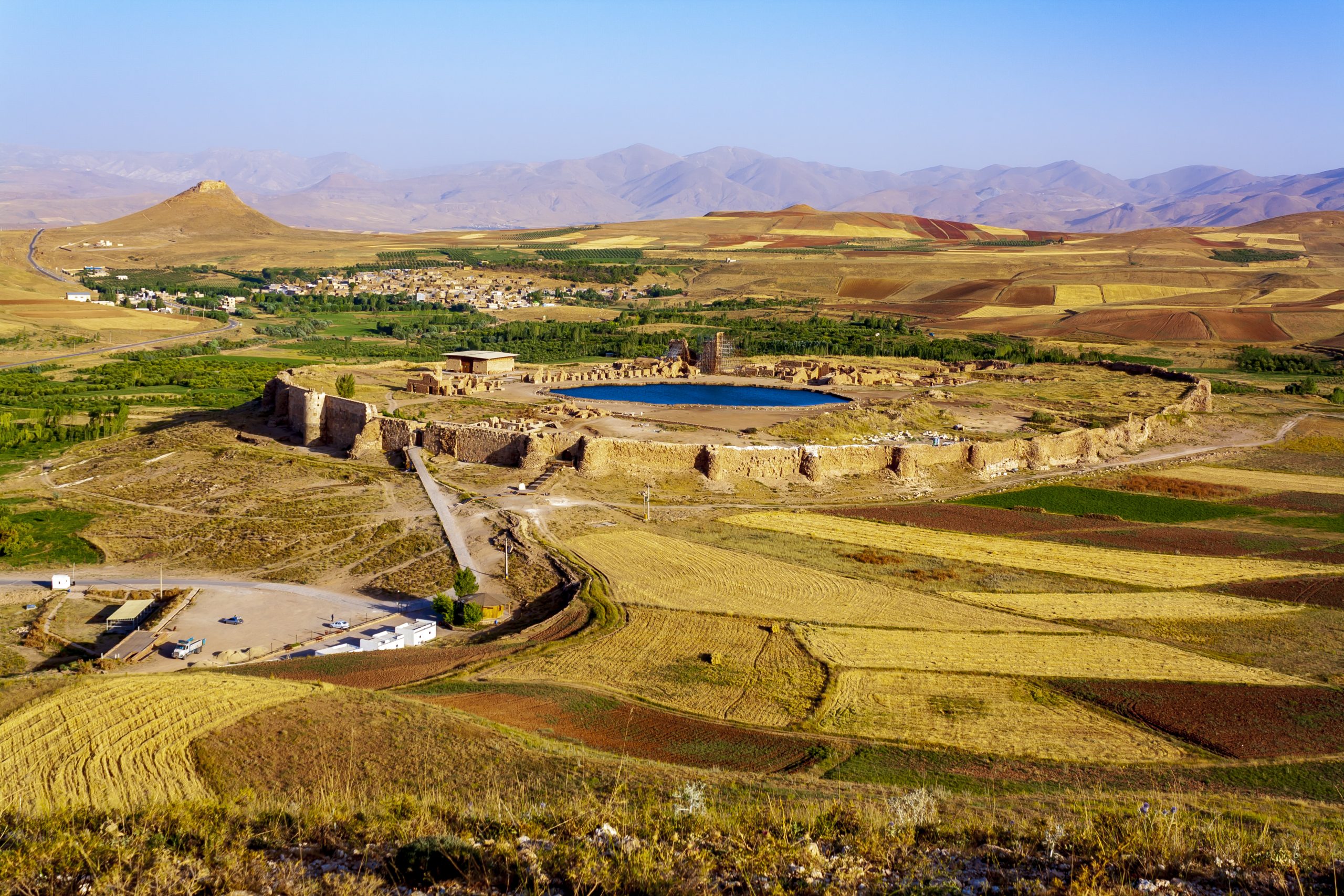
High in the mountains of northwestern Iran lies Takht-e Soleyman, one of the country’s most fascinating archaeological landscapes. Surrounded by mountains, an ancient volcanic cone, and a naturally fed lake, the site combines religion, royal power, architecture, mythology, and nature in an extraordinary setting.
Takht-e Soleyman means “Throne of Solomon”, but its origins reach far deeper into the ancient history of Iran.
For centuries, this remarkable place was associated with fire and water, two powerful elements in ancient Iranian religious traditions. During the Sasanian period, it became the principal Zoroastrian sanctuary and an important royal center.
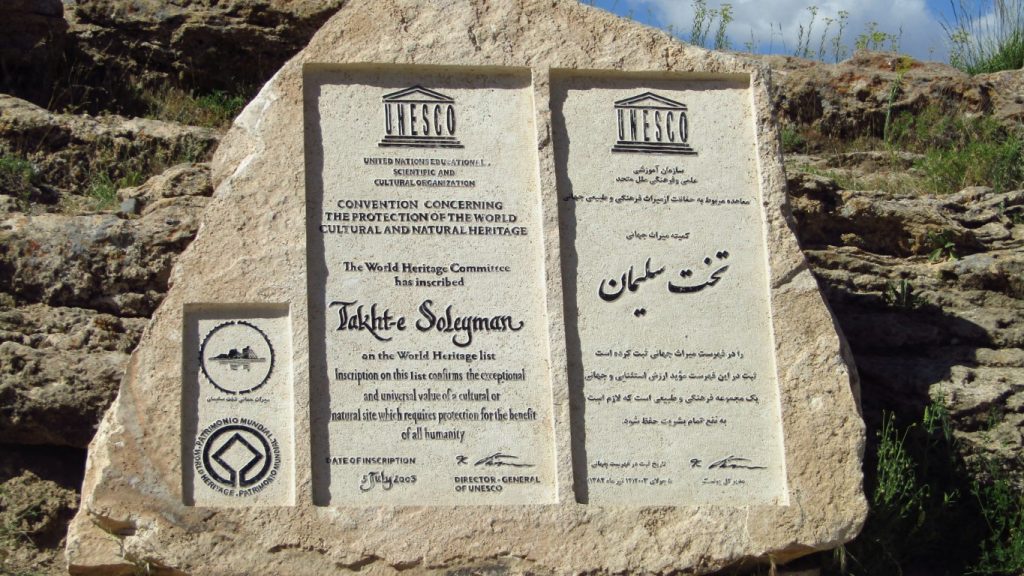
Today, Takht-e Soleyman is a UNESCO World Heritage Site and one of the most remarkable places to explore the religious and architectural history of ancient Iran.
What Does Takht-e Soleyman Mean?
The name Takht-e Soleyman translates as “Throne of Solomon.”
The name comes from later traditions and legends connecting the site with the biblical figure Solomon.
However, the archaeological history of Takht-e Soleyman is much older and more complex.
The site’s significance existed long before these later legends. UNESCO identifies evidence of religious activity connected with fire and water over approximately 2,500 years.
The name therefore represents only one chapter in the long history of this extraordinary landscape.
Where Is Takht-e Soleyman?
Takht-e Soleyman is located in West Azerbaijan Province in northwestern Iran, in a remote mountainous landscape near the town of Takab.
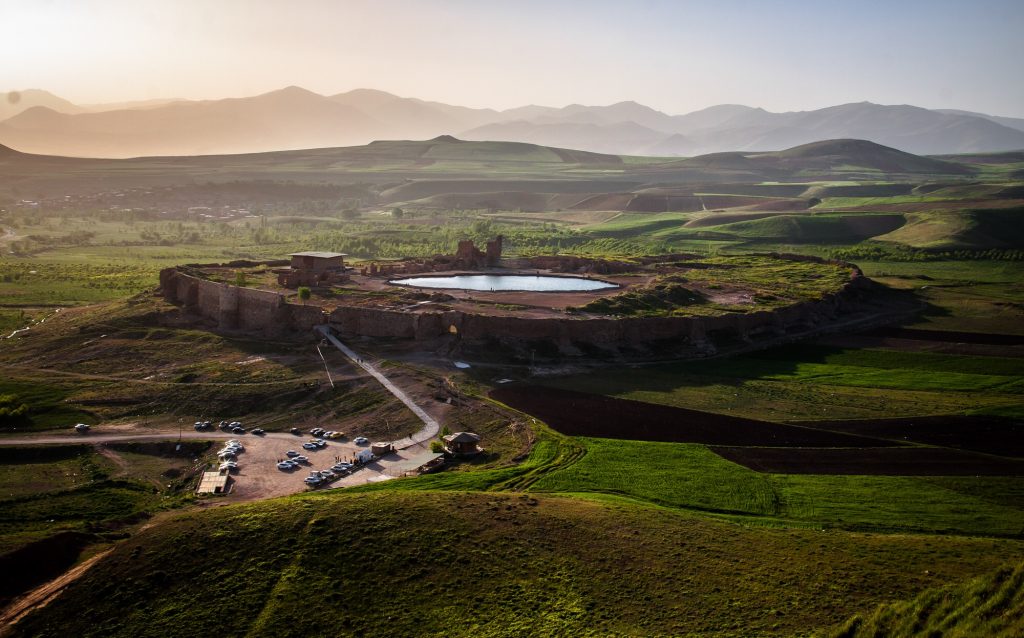
The archaeological complex sits on an elevated natural platform surrounded by mountains. At its center is an artesian lake, while an ancient volcanic mountain known as Zendan-e Soleyman rises nearby.
The dramatic setting was not simply a backdrop.
The relationship between the natural landscape, water, fire, and architecture appears to have been fundamental to the site’s religious significance.
Encyclopaedia Iranica describes the site as being approximately 2,200 metres above sea level, surrounded by mountain ranges exceeding 3,000 metres.
The Royal Sasanian Complex
Takht-e Soleyman was not simply a religious sanctuary.
It was also an important royal center.
The Sasanian rulers incorporated palatial architecture into the sacred complex, creating an unusual combination of religious and royal functions.
UNESCO describes Takht-e Soleyman as an exceptional ensemble of Sasanian royal architecture harmoniously integrated with its natural environment.
The architecture demonstrates how political authority and religious authority could be expressed together within the landscape.
A Sacred Landscape of Fire and Water
One of the most remarkable characteristics of Takht-e Soleyman is the relationship between two seemingly opposite elements:
🔥 Fire
💧 Water
Fire held profound importance in Zoroastrian religious tradition, while the site’s natural lake and its association with Anahita, the divinity of waters, added another sacred dimension.
UNESCO describes Takht-e Soleyman as an exceptional testimony to the continuation of a cult related to fire and water for around two and a half millennia.
This combination makes Takht-e Soleyman more than an archaeological site.
It is a landscape where natural phenomena and religious architecture became deeply connected.
The Sacred Lake
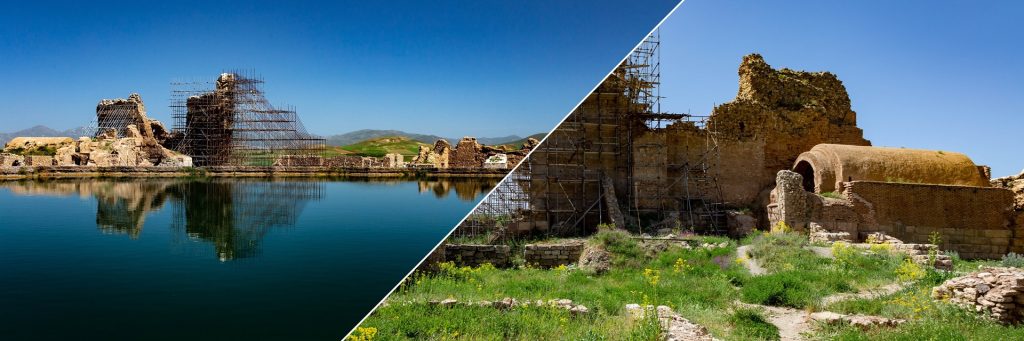
At the heart of Takht-e Soleyman lies a remarkable artesian lake.
The lake occupies the center of the ancient fortified complex and is one of the defining features of the site.
Unlike an ordinary artificial reservoir, the lake is naturally fed by underground water.
Its presence helped shape the site’s architecture and religious significance.
Around the lake, the Sasanians constructed temples, royal buildings, and other structures, creating an architectural composition in which water became an integral part of the sacred landscape.
For visitors today, the lake remains one of the most memorable features of Takht-e Soleyman.
The Sasanian Fire Temple
During the Sasanian period, Takht-e Soleyman became the principal Zoroastrian sanctuary of the Sasanian state.
The Sasanian Empire ruled much of Iran and neighboring regions from the 3rd to the 7th century CE.
At Takht-e Soleyman, religious and royal architecture were brought together around the sacred lake.
The remains include the principal Zoroastrian fire temple, royal palace structures, and a temple dedicated to Anahita.
UNESCO considers the combination of the Zoroastrian sanctuary and Sasanian palatial architecture an outstanding example and an important architectural prototype.
The Temple of Anahita
Another important structure at Takht-e Soleyman was a temple associated with Anahita, the ancient Iranian divinity connected with waters.
Its presence is particularly significant because of the site’s natural lake.
The combination of:
- Sacred fire
- Sacred water
- Temple architecture
- Royal buildings
- Natural landscape
created a unique religious and political center.
The archaeological remains therefore provide an opportunity to explore how religious beliefs influenced the planning of monumental architecture in ancient Iran.
A Fortified Sacred City
The archaeological complex occupies a large fortified platform approximately 350 by 550 metres, rising around 60 metres above the surrounding plain.
Its walls enclosed the sacred and royal structures around the lake.
Beyond the main enclosure, archaeological remains extend into the wider landscape.
UNESCO’s property includes associated archaeological features such as Tepe Majid, the mountain quarry area, and Belqeis Mountain, where remains of a Sasanian-era citadel survive.
The wider landscape is therefore essential to understanding Takht-e Soleyman.
Zendan-e Soleyman: The Mountain of Solomon
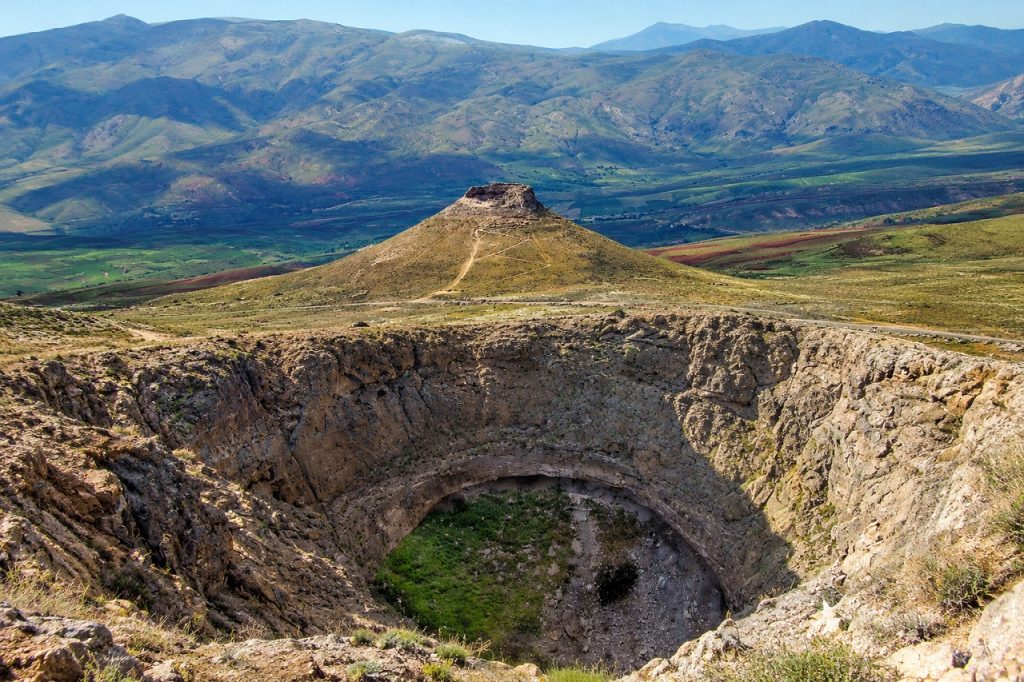
Just a few kilometres west of the main archaeological complex stands Zendan-e Soleyman, or “Solomon’s Prison.”
This ancient volcanic formation rises dramatically above the surrounding landscape.
Archaeological remains at its summit include shrines and temples dating from the first millennium BCE.
The mountain and the sacred complex together form an important part of the broader cultural landscape.
For travelers, seeing both places helps reveal why the natural geography of this region was so important to ancient communities.
The Destruction and Revival of Takht-e Soleyman
The Sasanian complex was destroyed toward the end of the Sasanian era.
Yet the site did not disappear from history.
Centuries later, during the Ilkhanid period in the 13th century, parts of the complex were rebuilt and reused.
UNESCO notes that the principal Zoroastrian sanctuary was partly rebuilt during this period.
This later occupation adds another historical layer to the site and demonstrates how important places could be reused and reinterpreted over centuries.
A History Older Than the Sasanians
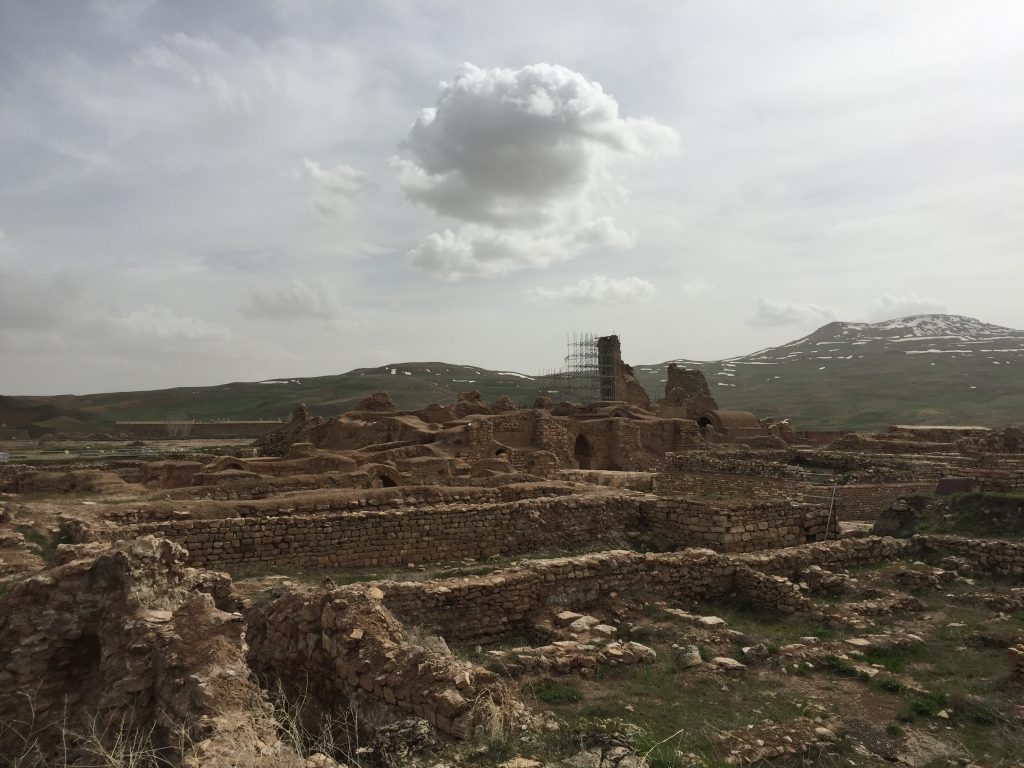
Although Takht-e Soleyman reached its greatest importance during the Sasanian period, its history began much earlier.
UNESCO identifies evidence for religious traditions associated with fire and water extending over approximately 2,500 years.
The site therefore represents multiple historical layers.
Visitors can encounter evidence connected with:
- Pre-Sasanian religious traditions
- Zoroastrianism
- Sasanian royal architecture
- Medieval occupation
- Ilkhanid reconstruction
- Later legends associated with Solomon
This extraordinary continuity is one of the reasons Takht-e Soleyman has such outstanding archaeological value.
Takht-e Soleyman and the Development of Architecture
Takht-e Soleyman is significant not only because of what survives there, but also because of its influence.
UNESCO recognizes the strong influence of its Sasanian architectural composition and elements on the development of religious architecture in the Islamic period and on architecture in other cultures.
The relationship between:
- Courtyards
- Monumental gateways
- Palace structures
- Religious buildings
- Enclosures
- Natural landscape
created an architectural composition that became an important reference for later traditions.
Takht-e Soleyman and Zoroastrian Heritage
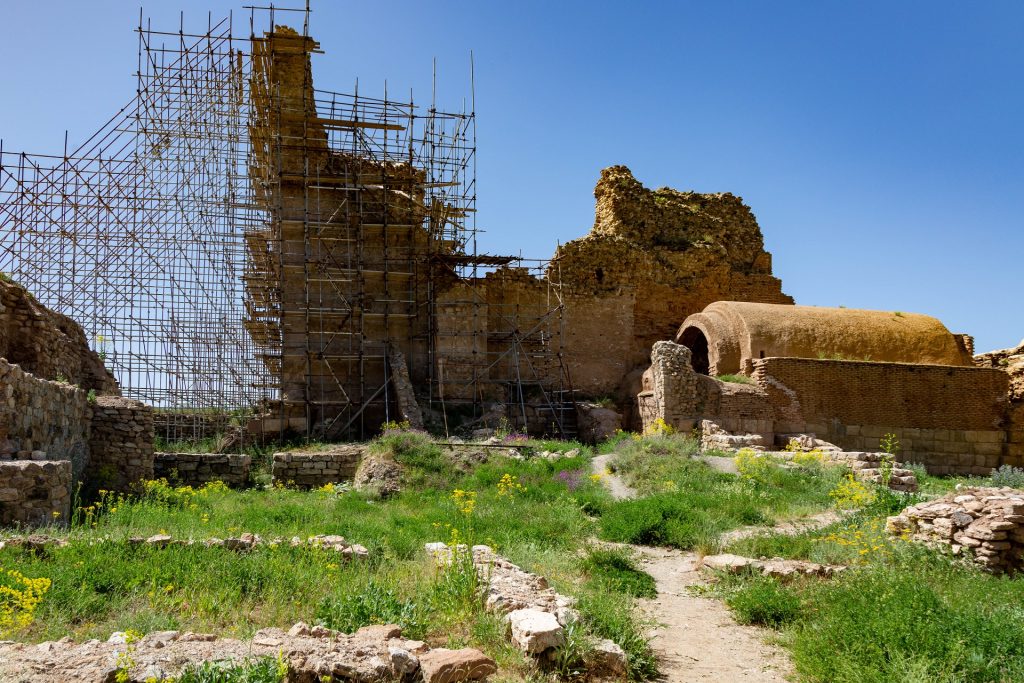
Takht-e Soleyman is particularly important for understanding the history of Zoroastrianism, one of the world’s ancient religious traditions.
During the Sasanian period, Zoroastrianism was closely associated with the state.
Takht-e Soleyman became the principal sanctuary of this tradition and therefore provides important archaeological evidence for the relationship between religion, kingship, and architecture.
UNESCO recognizes the property as the foremost site associated with Zoroastrianism within the World Heritage framework.
For travelers interested in the history of religions, ancient Iran, or Persian civilization, Takht-e Soleyman offers an unusually deep experience.
Why Is Takht-e Soleyman Important?
1. A major Zoroastrian sanctuary
Takht-e Soleyman was the principal Zoroastrian sanctuary during the Sasanian period.
2. Sacred fire and water
The site preserves an exceptional relationship between religious traditions and natural elements.
3. Sasanian royal architecture
Palaces and religious buildings were integrated into one monumental complex.
4. A remarkable natural setting
The lake, mountains, and volcanic landscape form an essential part of the site’s identity.
5. Architectural influence
The Sasanian architectural composition influenced later religious architecture.
6. Multiple historical layers
The site preserves evidence from different periods, including Sasanian and Ilkhanid phases.
Takht-e Soleyman in Iran’s UNESCO Journey
Takht-e Soleyman occupies an important position in Iran’s chronological World Heritage story.
Iran’s first three World Heritage inscriptions came in 1979, including Chogha Zanbil and Persepolis.
Takht-e Soleyman followed in 2003, adding a remarkable Sasanian and Zoroastrian landscape to Iran’s growing collection of internationally recognized heritage sites.
Today, it forms part of a much larger network of Iranian World Heritage properties spanning prehistoric, ancient, Islamic, and modern periods.
Takht-e Soleyman and UNESCO World Heritage
Takht-e Soleyman was inscribed on the UNESCO World Heritage List in 2003.
UNESCO inscribed the site under five cultural criteria:
(i) Outstanding architectural achievement
(ii) Influence on architectural development
(iii) Exceptional testimony to the continuity of fire-and-water cults
(iv) Outstanding example of a Zoroastrian sanctuary integrated with royal architecture
(vi) Strong association with Zoroastrianism, ancient beliefs, and later legends
These criteria demonstrate why Takht-e Soleyman is significant not simply as a collection of ruins, but as an integrated cultural landscape.
Visiting Takht-e Soleyman
A visit to Takht-e Soleyman is different from visiting a monument located inside a major city.
The site is surrounded by mountains and open landscapes.
Its remote setting contributes greatly to the atmosphere.
Visitors can explore:
- The sacred lake
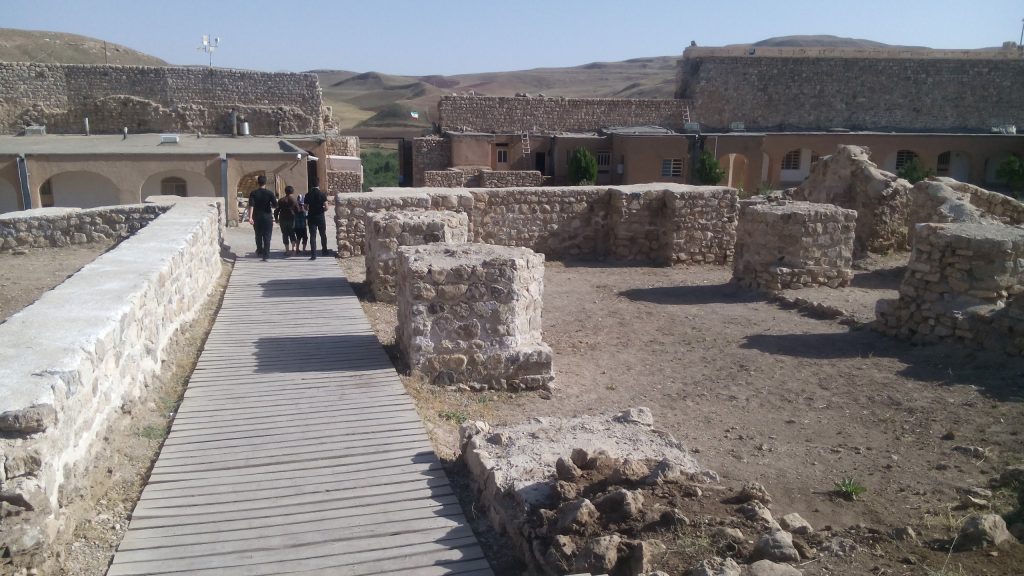
- The ancient fortifications
- The fire temple remains
- The Anahita temple
- Sasanian palace structures
- Ancient gateways
- Archaeological remains around the complex
- Zendan-e Soleyman nearby
The experience is particularly rewarding for travelers who enjoy combining history with landscapes and archaeology.
A Journey Through Ancient Iranian Beliefs
Takht-e Soleyman offers an opportunity to think about ancient Iranian civilization through more than kings and battles.
Here, the landscape itself becomes part of the story.
Fire represented one dimension of sacred tradition.
Water represented another.
The mountains provided a dramatic natural setting.
The royal buildings expressed political power.
The temples expressed religious devotion.
Together, they created one of the most fascinating archaeological landscapes in Iran.
When Is the Best Time to Visit Takht-e Soleyman?
Takht-e Soleyman sits at a high elevation in a mountainous region.
Its climate is therefore considerably different from the warmer plains of southern Iran.
The late spring, summer, and early autumn can provide favorable conditions for exploring the archaeological landscape, while colder months may bring challenging mountain weather.
Because conditions can vary, travelers should check local weather and access conditions before visiting.
Responsible Travel at Takht-e Soleyman
Takht-e Soleyman is a fragile archaeological site.
UNESCO identifies climate, heavy rainfall, extreme temperature changes, seismic activity, development pressures, and other factors as potential threats to the site’s integrity and conservation.
Responsible visitors can help protect this heritage by:
- Staying on designated paths.
- Not climbing archaeological structures.
- Not touching fragile masonry.
- Never removing stones, bricks, or archaeological objects.
- Respecting conservation areas.
- Following local visitor regulations.
- Keeping the archaeological landscape clean.
- Respecting religious and cultural practices at the site.
Responsible tourism helps preserve Takht-e Soleyman for future generations.
Takht-e Soleyman with PGTG
At Persian Gryphon Travel Group (PGTG), we believe Iran’s heritage should be experienced through stories, landscapes, and local knowledge—not simply photographs.
A journey to Takht-e Soleyman can combine:
Ancient history + Zoroastrian heritage + archaeology + mountains + sacred landscapes + local experiences
Our sustainable and responsible approach encourages travelers to understand the significance of the places they visit while respecting their cultural and environmental value.
Together, we learn, experience, and give meaning to travel.
Final Thoughts
Takht-e Soleyman is where fire, water, architecture, religion, and nature meet.
From its ancient sacred traditions to its Sasanian royal architecture and later Ilkhanid revival, the site preserves an extraordinary story spanning thousands of years.
Its lake, temples, palace ruins, fortified walls, volcanic landscape, and surrounding mountains make it one of Iran’s most distinctive archaeological destinations.
For travelers following Iran’s World Heritage story, Takht-e Soleyman opens a fascinating new chapter: the world of Sasanian Iran and Zoroastrian sacred architecture.
Come beyond the famous monuments. Discover the sacred landscapes of Iran with PGTG.
Leave a Reply