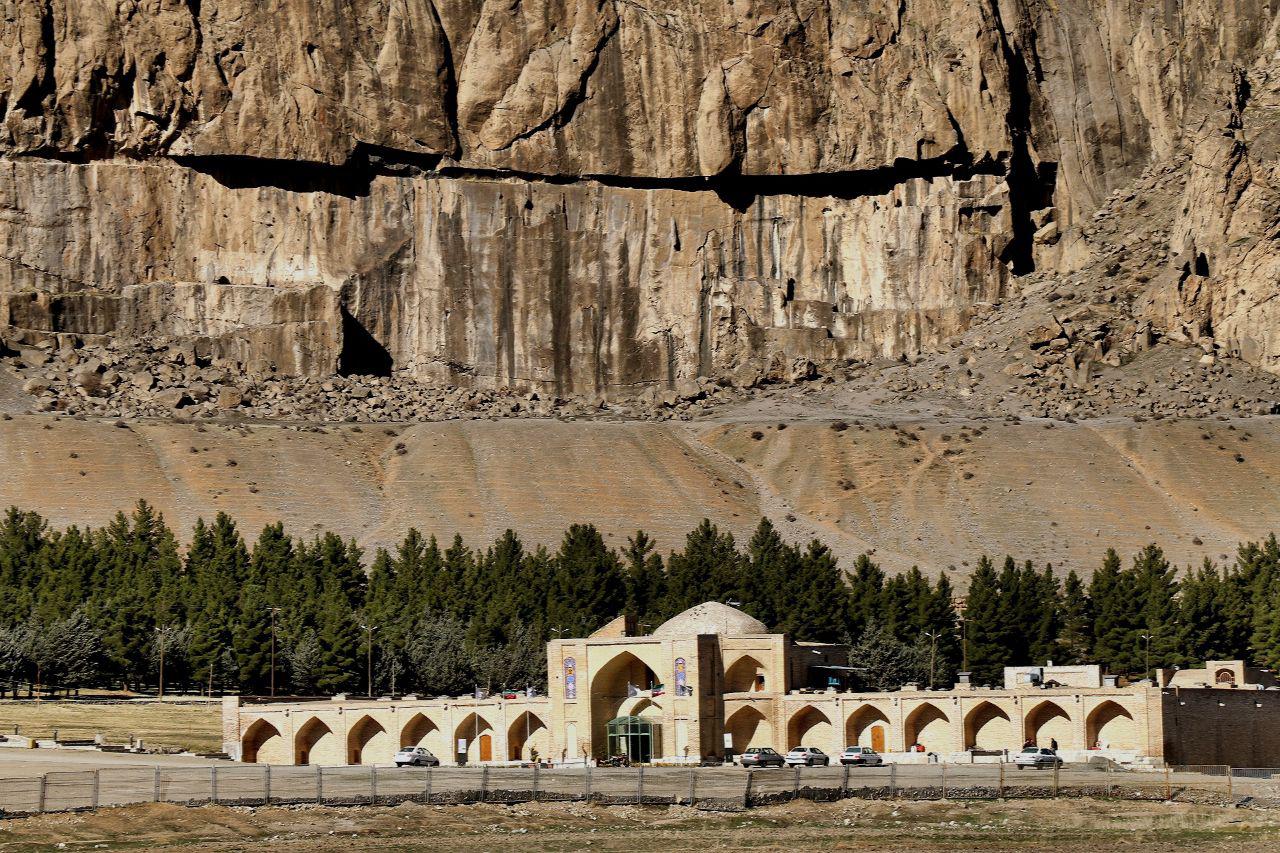
Bisotun: The Stone Chronicle of Darius the Great
A UNESCO World Heritage Site since 2006
High above the plains of western Iran, on the sacred mountain of Bisotun, one of the most remarkable historical documents of the ancient world was carved into limestone.
Known today as Bisotun, or Behistun, this extraordinary archaeological landscape preserves a monumental relief and multilingual inscription commissioned by Darius I, the Great, around 521 BCE.
The inscription records Darius’s struggle to restore the Achaemenid Empire after a period of rebellions. Written in Old Persian, Elamite, and Babylonian, it became one of the most important keys to understanding ancient cuneiform writing. UNESCO describes it as the only known monumental Achaemenid text documenting the specific historic event of the re-establishment of the empire by Darius.
Today, Bisotun offers travelers much more than a single ancient inscription. The wider archaeological site preserves evidence of human activity from prehistoric times through the Median, Achaemenid, Sasanian, and later periods.
Where Is Bisotun?
Bisotun is located in Kermanshah Province in western Iran, along an ancient route connecting the Iranian plateau with Mesopotamia.
The location was strategically important for thousands of years. The sacred mountain rises above a fertile plain, providing a natural landmark for travelers moving between the great cultural regions of western Iran and Mesopotamia.
UNESCO’s World Heritage property covers 187 hectares, with a 361-hectare buffer zone.
Its position along an ancient trade and travel route helps explain why Bisotun became a place where different peoples, cultures, artistic traditions, and writing systems came together.
The Monument of Darius the Great
The most famous feature of Bisotun is the monumental rock relief and inscription commissioned by Darius I after he became king of the Persian Empire.
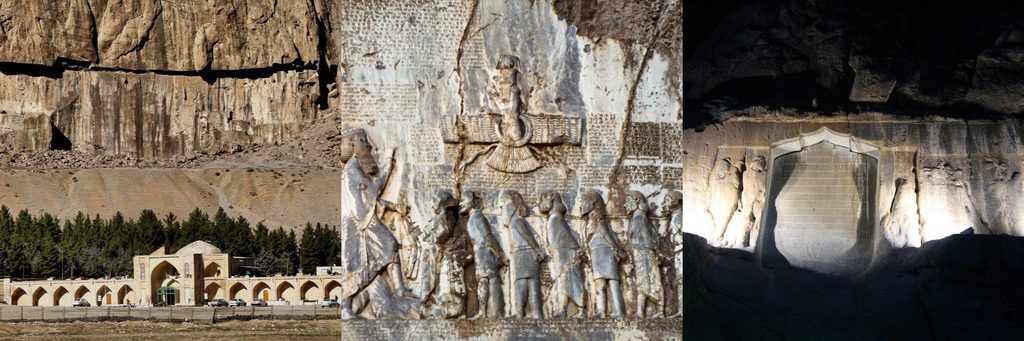
The monument was created in 521 BCE, during the early years of Darius’s reign.
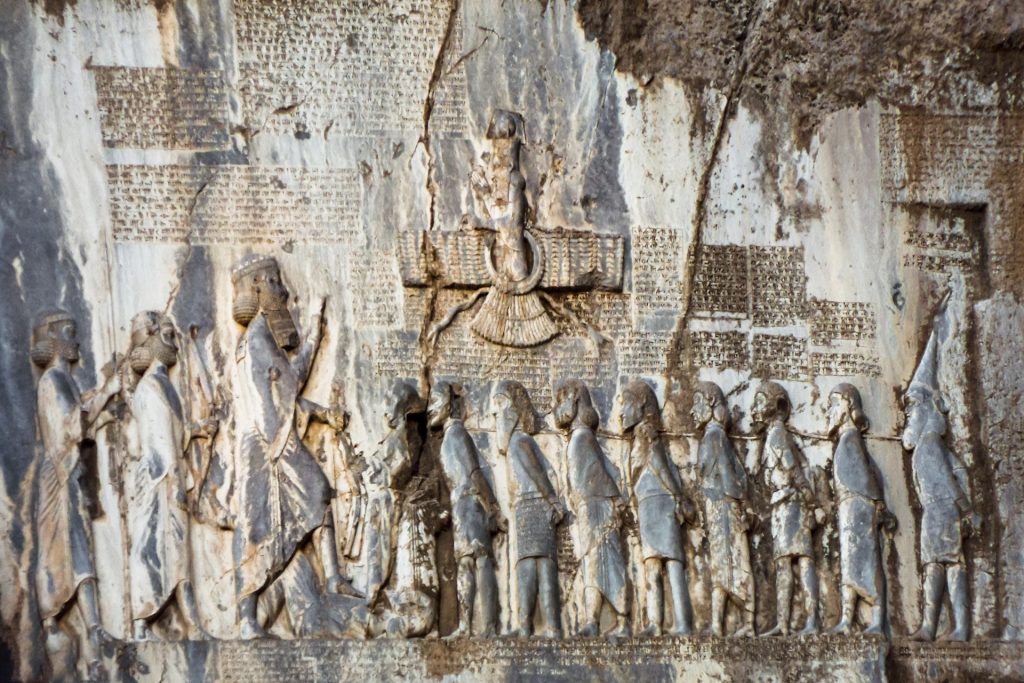
Carved approximately 60 metres above the plain, the relief presents Darius standing with a bow, symbolizing royal authority. Beneath his feet lies a defeated figure traditionally identified with Gaumāta, the claimant whom Darius described as a usurper. Behind Darius stand additional figures representing defeated rebels.
Above the scene appears the winged symbol associated with Ahura Mazda, reflecting the religious and ideological world of the Achaemenid king.
The monument was therefore not simply an artistic composition.
It was a carefully designed statement of royal power, legitimacy, victory, and divine support.
The Bisotun Inscription
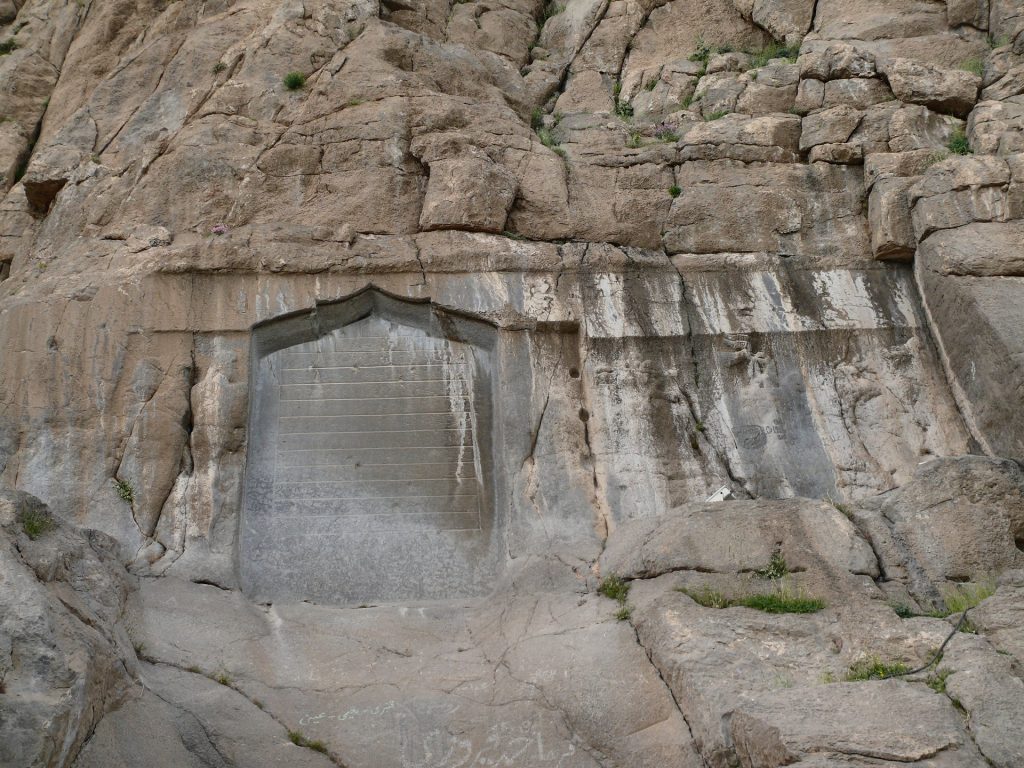
The rock relief is accompanied by a vast inscription containing approximately 1,200 lines.
The text describes the rebellions that challenged Darius after his accession and recounts the battles through which he claimed to have restored the Persian Empire.
What makes Bisotun exceptional is that the same royal narrative was recorded in three languages:
- Old Persian
- Elamite
- Babylonian
These languages were written using cuneiform scripts.
The multilingual nature of the monument was crucial. It allowed later scholars to compare the different versions and gradually unlock the meaning of ancient cuneiform writing.
What Does the Inscription Tell Us?
Darius’s inscription presents his version of the political crisis that followed the death of Cambyses II, the son and successor of Cyrus the Great.
According to the inscription, various individuals claimed the Persian throne in different parts of the empire.
Darius describes his campaigns against these challengers and presents his victories as the restoration of legitimate Achaemenid rule.
The text also repeatedly connects Darius’s authority and victories with Ahura Mazda.
As a historical source, the inscription must of course be understood as a royal proclamation. Like other ancient imperial monuments, it presents events from the perspective of the ruler who commissioned it.
Yet its extraordinary detail makes it one of the most valuable surviving sources for understanding the early reign of Darius I.
Why Bisotun Changed the Study of Ancient History
The importance of Bisotun extends far beyond Iran.
When European scholars began studying the inscription in the 19th century, the ancient cuneiform scripts of the Near East remained largely undeciphered.
British scholar Henry Rawlinson studied the Bisotun inscription during the 1830s and 1840s, making copies of its difficult-to-reach texts. His work, together with that of other scholars, helped open the way to the decipherment of Old Persian and subsequently contributed to the understanding of Elamite and Babylonian cuneiform.
UNESCO therefore emphasizes that the Bisotun inscription was the first cuneiform writing to be deciphered and compares its importance for the study of ancient Near Eastern civilizations with that of the Rosetta Stone for Egyptology.
This makes Bisotun unusual among archaeological sites.
It is simultaneously an ancient historical document and one of the monuments that helped modern scholars rediscover ancient history.
More Than the Darius Inscription
Although Darius’s monument is the star attraction, Bisotun is an extensive archaeological landscape.
Other remains include evidence from:
- Prehistoric settlements
- The Median period
- Achaemenid structures
- Hellenistic remains
- Parthian and Sasanian periods
- Islamic-period monuments
- Historic roads and caravan facilities
Archaeological research has identified prehistoric remains, a Median fortress, later reliefs, architectural remains, and other structures around the mountain.
This layered history makes Bisotun particularly interesting for travelers who want to understand Iran beyond a single historical dynasty.
A Sacred Mountain Before Darius
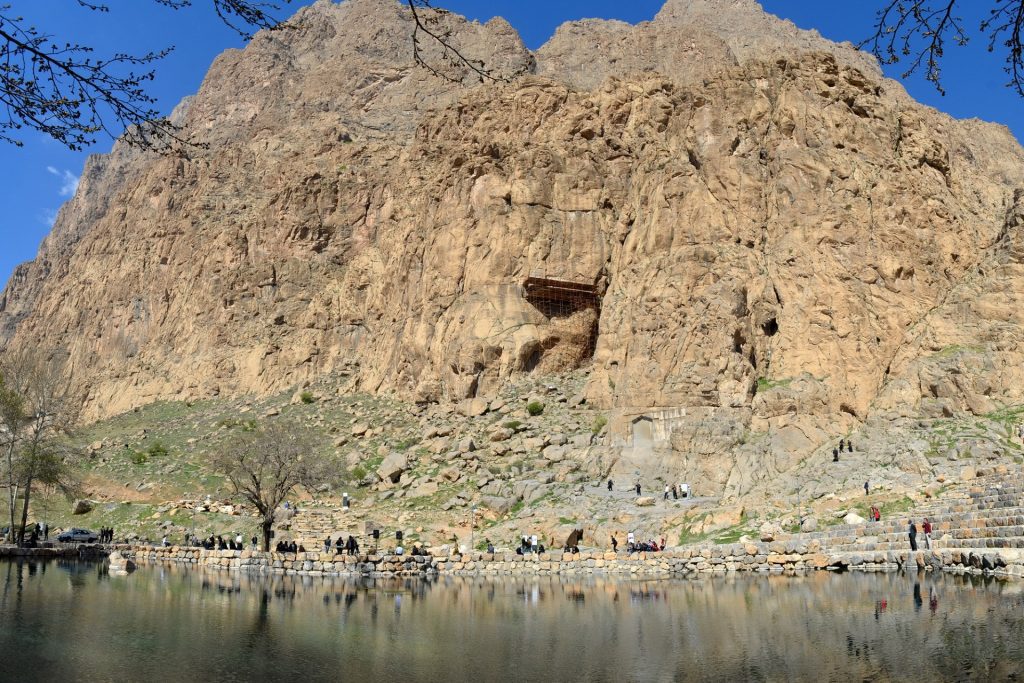
Bisotun was important long before the Achaemenid Empire.
Archaeological evidence shows human activity at the site from prehistoric times. The area also contains remains associated with the Median period, as well as Achaemenid and later historical periods. UNESCO notes that the site’s most significant historical period extended from the 6th century BCE to the 6th century CE.
The mountain itself appears to have had sacred significance.
The ancient name is associated with the idea of a “place of the gods”, reflecting the site’s long religious and cultural importance.
This helps explain why Darius selected this dramatic location for one of the most important monuments of his reign.
He was not simply writing history on a convenient wall.
He was placing his royal message on a mountain that already carried symbolic importance.
A Meeting Point of Languages and Cultures
One of the most fascinating aspects of Bisotun is the interaction of different cultural traditions.
The monument combines:
Persian imperial history
The rise and consolidation of Darius’s rule.
Elamite traditions
Reflecting one of the ancient civilizations incorporated into the Persian imperial world.
Mesopotamian writing
The Babylonian version connects the monument with the long tradition of cuneiform culture.
Ancient Near Eastern art
The royal relief continues artistic traditions of depicting victorious rulers and defeated enemies.
UNESCO recognizes Bisotun as an outstanding testimony to the interchange of human values in monumental art and writing.
UNESCO World Heritage Status
Bisotun was inscribed on the UNESCO World Heritage List in 2006 under criteria (ii) and (iii).
Criterion (ii)
The monument demonstrates the exchange of human values through the development of monumental art and writing.
The imagery of the victorious Achaemenid ruler reflects older traditions from Egypt and the ancient Near East while influencing later artistic traditions.
Criterion (iii)
Bisotun provides exceptional testimony to the history of the ancient Persian world.
Its inscription is unique because it documents a specific historical event: Darius’s re-establishment of the Persian Empire after a series of rebellions.
Why Visit Bisotun?
A visit to Bisotun is an opportunity to experience history on a monumental scale.
You can:
- See the famous relief of Darius the Great.
- Discover one of the world’s most important ancient inscriptions.
- Learn about the Achaemenid Empire.
- Explore evidence of several historical periods.
- Understand the ancient route between Mesopotamia and Persia.
- Discover the story behind the decipherment of cuneiform.
- Experience the dramatic landscape of Kermanshah Province.
- Connect ancient history with the living culture of western Iran.
The experience is particularly powerful when the story of the inscription is explained on site.
Instead of seeing a distant carving on a mountain, you begin to understand it as a political message, historical record, artistic masterpiece, and key to an entire lost world of writing.
When Is the Best Time to Visit Bisotun?
Spring and autumn are generally attractive seasons for exploring western Iran.
Spring brings pleasant temperatures and greener landscapes.
Autumn offers comfortable conditions for cultural sightseeing and road journeys through Kermanshah Province.
Summer can be warm, while winter brings colder conditions to western Iran.
For a comfortable experience, your itinerary should allow enough time to explore the archaeological landscape rather than treating Bisotun as a quick roadside stop.
Bisotun and the Ancient Travel Route
For centuries, this region formed part of an important route between Mesopotamia and the Iranian plateau.
Travelers, armies, merchants, pilgrims, and rulers passed through the surrounding landscape.
The location helped Bisotun become a natural meeting point between different regions.
Even today, visiting the site offers a sense of this geography. Standing beneath the mountain, travelers can understand why the location mattered strategically as well as symbolically.
For PGTG travelers, Bisotun can be combined with other highlights of Kermanshah and western Iran, creating a deeper journey through Persian, Median, Achaemenid, Sasanian, and Kurdish heritage.
Responsible Travel at Bisotun
Heritage sites such as Bisotun are fragile.
The monumental inscription and relief have survived for approximately 2,500 years, but they remain vulnerable to environmental and conservation pressures. UNESCO notes, for example, concerns related to water infiltration behind the relief.
Responsible visitors can help protect the site by:
- Following designated visitor routes.
- Never touching or climbing archaeological structures.
- Avoiding litter and unnecessary disturbance.
- Respecting conservation barriers.
- Listening to local guides and site staff.
- Supporting local tourism services.
- Spending time with local communities and businesses where appropriate.
For PGTG, responsible travel means more than visiting a famous monument.
It means helping travelers understand why these places matter and encouraging tourism that respects heritage, communities, and the environment.
Bisotun: Where History Was Written in Stone
Few places allow travelers to stand so close to an ancient historical document.
At Bisotun, a king of the Achaemenid Empire transformed a mountain into a monumental record of his reign.
The carved image of Darius, the defeated rebels, the invocation of Ahura Mazda, and thousands of lines of multilingual cuneiform together created one of the most extraordinary monuments of ancient Persia.
More than two millennia later, the same inscription helped modern scholars begin to read the languages of ancient civilizations.
Bisotun is therefore not simply a monument to Darius the Great.
It is a monument to the power of writing, memory, cultural exchange, and the human desire to understand the past.
Explore Bisotun with PGTG
At Persian Gryphon Travel Group (PGTG), we believe cultural travel is more meaningful when travelers understand the stories behind the monuments.
A visit to Bisotun can become part of a tailor-made journey through western Iran, combining archaeology, Persian history, local communities, landscapes, cuisine, and authentic cultural experiences.
Together, we learn, experience, and give meaning to travel.
Leave a Reply