Soltaniyeh: The Turquoise Dome of the Ilkhanid Empire
Discover Soltaniyeh, the magnificent former capital of the Ilkhanid dynasty and home to one of the masterpieces of Persian architecture.
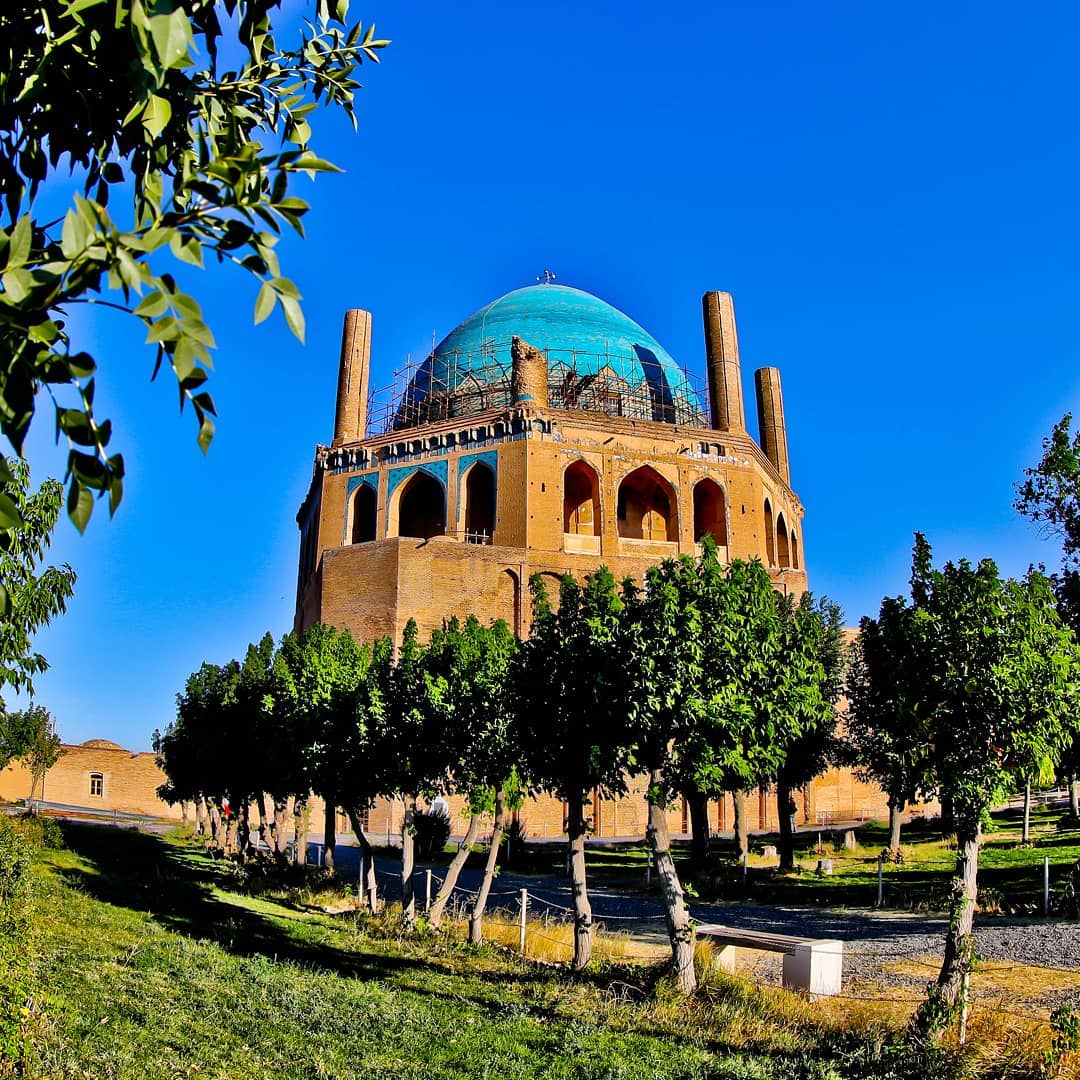
Rising above the plains of northwestern Iran, a vast turquoise-blue dome creates an unforgettable silhouette.
This is Soltaniyeh.
Once the capital of the Ilkhanid dynasty, Soltaniyeh became one of the most important political and architectural centers of 14th-century Iran. At its heart stands the monumental Mausoleum of Oljaytu, also known as Gonbad-e Soltaniyeh.
Built between 1302 and 1312, the mausoleum is one of the outstanding achievements of Persian architecture. Its enormous double-shell dome, sophisticated structural design, and richly decorated interior represent a major stage in the development of Islamic architecture in Iran and Central and Western Asia.
Soltaniyeh was inscribed on the UNESCO World Heritage List in 2005 under criteria (ii), (iii), and (iv).
For travelers interested in Persian architecture, Islamic art, medieval history, and the cultural connections between Iran and Central Asia, Soltaniyeh offers an extraordinary experience.
Where Is Soltaniyeh?
Soltaniyeh is located in Zanjan Province in northwestern Iran, approximately 240 kilometers from Tehran.
Today, the monumental mausoleum stands within a rural landscape surrounded by fertile pasture.
But the landscape visitors see today was once part of a major imperial capital.
The archaeological property covers approximately 790 hectares, preserving the mausoleum and archaeological remains associated with the historic city.
The setting is important.
Soltaniyeh was deliberately established in a fertile region that could support a major urban center. Its development demonstrates the relationship between political power, landscape, settlement, and architecture during the Ilkhanid period.
Soltaniyeh and the Ilkhanid Empire
To understand Soltaniyeh, it is necessary to understand the Ilkhanids.
The Ilkhanid dynasty was established by Mongol rulers in Iran during the 13th century.
Over time, the Ilkhanids became deeply connected with Persian culture, administration, art, and architecture.
Soltaniyeh emerged as an important capital during the reign of Öljaitü, the eighth Ilkhanid ruler.
The city was developed as an imperial center, reflecting the transformation of Mongol political power within the cultural environment of Iran.
Its architecture provides evidence of this fascinating period of cultural interaction.
Öljaitü and the Creation of Soltaniyeh
Öljaitü, also known by his Persian name Sultan Muhammad Khodabandeh, played a central role in the development of Soltaniyeh.
He chose the location for his capital and commissioned the enormous mausoleum that would become the city’s defining monument.
Construction of the mausoleum began in 1302 and was completed around 1312.
The project represented an extraordinary architectural ambition.
The resulting structure combined monumental scale with sophisticated engineering and highly elaborate decoration.
The dome became the dominant feature of the city and remains one of the most recognizable monuments of Iranian architecture.
The Mausoleum of Oljaytu
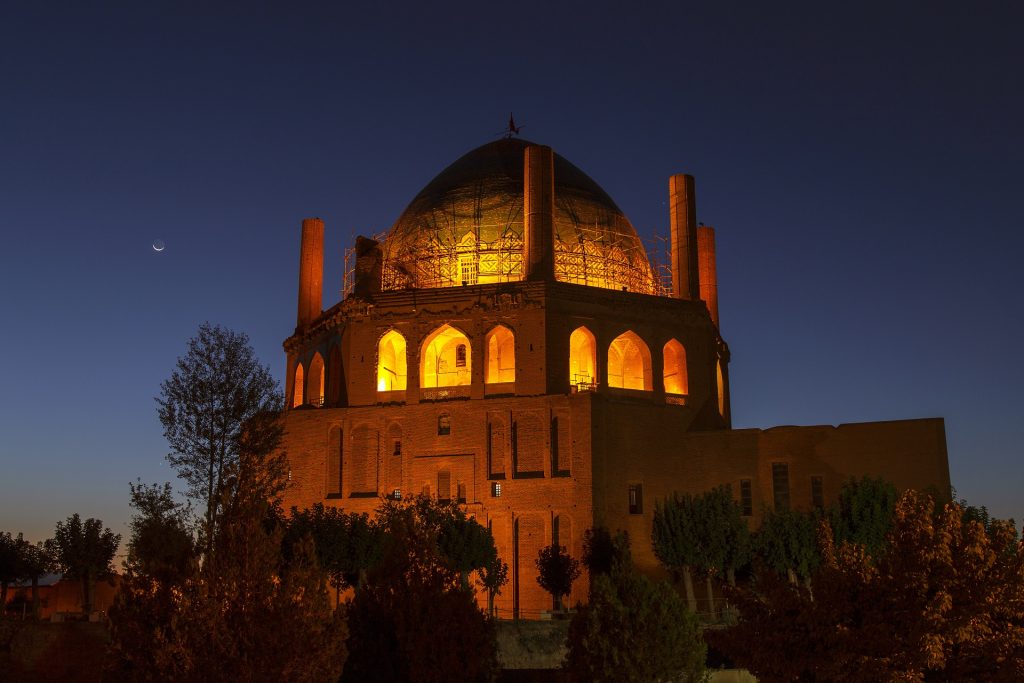
The Mausoleum of Oljaytu is the centerpiece of Soltaniyeh.
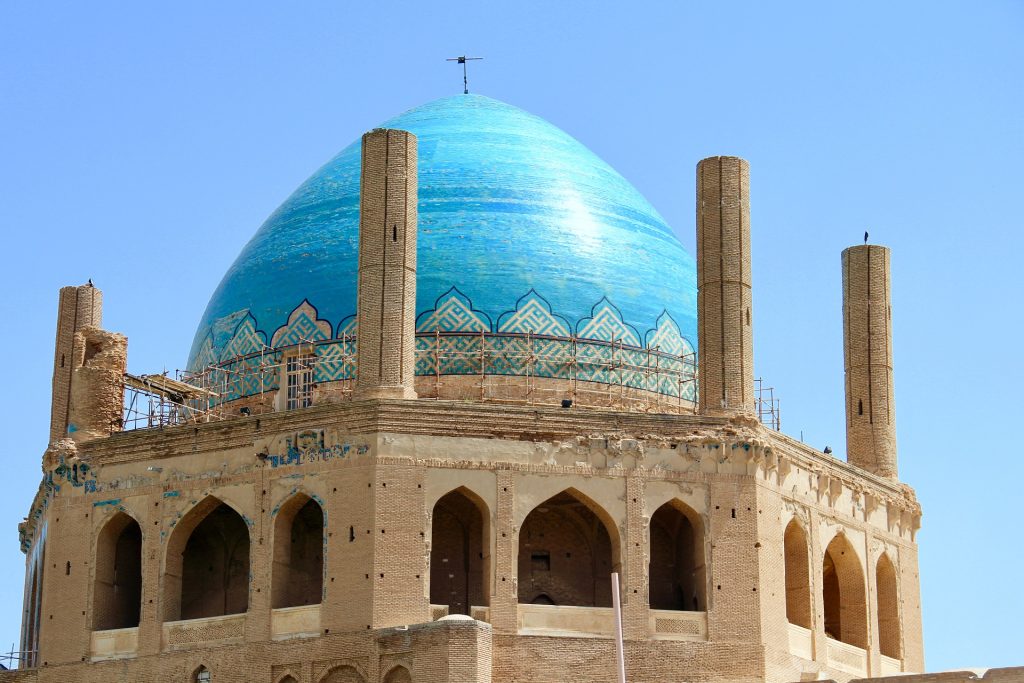
The building has an octagonal plan and is crowned by an enormous dome covered with turquoise-blue faience tiles.
The dome rises approximately 50 metres above the ground and is surrounded by eight slender minarets.
Its scale is immediately impressive.
Yet the importance of the building is not simply its size.
Its innovative structure and decorative program helped establish new possibilities for monumental Islamic architecture.
UNESCO describes the mausoleum as an architectural masterpiece of the Ilkhanid period and an essential link in the development of Islamic architecture in central and western Asia.
The World’s Early Double-Shell Dome
One of Soltaniyeh’s most important architectural innovations is its double-shell dome.
Instead of functioning as a single massive layer, the dome consists of an inner shell and an outer shell.
This structural approach allowed architects to create a remarkably tall and monumental form while managing the engineering challenges associated with such a large dome.
UNESCO identifies Soltaniyeh’s dome as the earliest extant example of its type and highlights its importance for the later development of Islamic domes.
The development of this architectural technology became an important part of the history of Persian dome construction.
It also illustrates the extraordinary engineering knowledge available to architects in medieval Iran.
A Masterpiece of Persian Architecture
Soltaniyeh is more than an Ilkhanid monument.
It represents an important stage in the evolution of Persian architectural traditions.
Earlier Seljuk architecture had already established important developments in Iranian domes, brick construction, spatial organization, and decorative techniques.
At Soltaniyeh, these traditions were expanded through new structural ideas and increasingly elaborate decoration.
UNESCO considers the mausoleum an outstanding achievement in the development of Persian architecture, particularly through its engineering structure, spatial proportions, architectural forms, and decorative techniques.
Encyclopaedia Iranica likewise identifies the dome of Soltaniyeh as one of the major achievements of Iranian dome architecture.
The Turquoise Dome: A Symbol of Soltaniyeh
The turquoise color of the dome is one of the site’s most memorable characteristics.
Against the surrounding landscape, the blue-green glazed tiles create a dramatic contrast.
This visual identity has made the dome one of the iconic images of Iranian architecture.
For photographers and architecture enthusiasts, the monument offers different perspectives throughout the day.
Morning and late afternoon light can emphasize the texture of the brickwork, the geometry of the structure, and the contrast between the dome and surrounding landscape.
The Extraordinary Interior
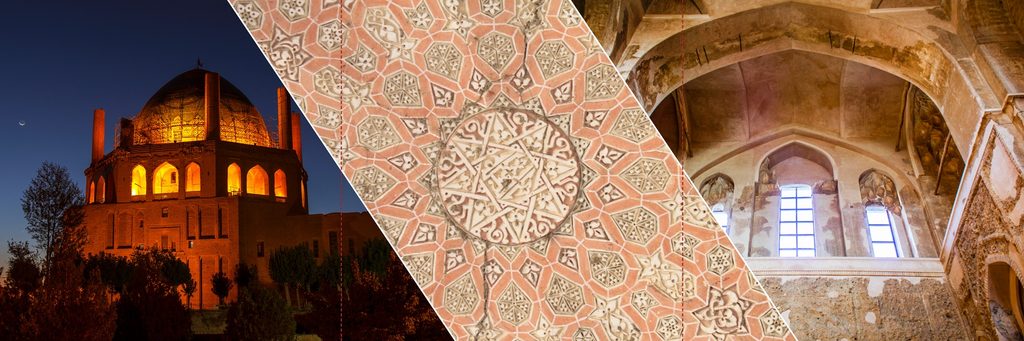
The exterior turquoise dome is perhaps the most recognizable feature of Soltaniyeh.
But the interior is equally important.
The mausoleum contains an extraordinary combination of decorative techniques, including:
- Glazed tiles
- Brickwork
- Stucco
- Inlaid decoration
- Calligraphy
- Geometric patterns
- Painted decoration
- Architectural ornamentation
UNESCO emphasizes the richness of the interior decoration and notes that much of the interior has remained remarkably intact.
The combination of structure and decoration creates an architectural experience in which engineering and artistic expression are inseparable.
The Eight-Sided Architectural Composition
The octagonal plan is one of the defining characteristics of the mausoleum.
Eight sides create a strong geometric foundation for the monumental structure, while the surrounding minarets reinforce the vertical rhythm.
Above this geometric base, the huge dome rises dramatically into the sky.
The design demonstrates a sophisticated understanding of:
Geometry + Proportion + Structure + Light + Decoration
These principles would continue to influence Persian and Islamic architectural traditions.
Soltaniyeh and the Development of Islamic Architecture
The importance of Soltaniyeh extends far beyond Iran.
UNESCO recognizes the mausoleum as an essential link in the development of Islamic architecture in central and western Asia.
It connects the architectural traditions of the classical Seljuk period with later developments associated with the Timurid era.
This makes Soltaniyeh an important chapter in the wider history of Islamic architecture.
Its innovations demonstrate how architectural knowledge evolved through experimentation, cultural exchange, and the adaptation of earlier traditions.
Did Soltaniyeh Influence Later Domes?
Soltaniyeh’s architectural influence is an important subject in the history of Islamic architecture.
Its monumental double-shell dome became an important reference for later architects.
The UNESCO nomination documentation highlights the significance of its innovative dome and its influence on subsequent architectural developments.
Some architectural historians have also discussed parallels between Soltaniyeh and later monumental domes beyond Iran.
However, rather than claiming a simple direct line of influence, it is more accurate to understand Soltaniyeh as part of a wider exchange of architectural ideas across the medieval Islamic world.
Soltaniyeh: More Than a Mausoleum
Although the mausoleum is the dominant surviving monument, Soltaniyeh was once a much larger city.
Archaeological investigations within the UNESCO property have revealed remains of the historic urban settlement.
The archaeological landscape preserves evidence of the former Ilkhanid capital and its relationship with the surrounding environment.
This is why Soltaniyeh should not be viewed simply as an isolated tomb.
It represents the surviving heart of an imperial capital.
The surrounding archaeological landscape provides important evidence about the urban ambitions of the Ilkhanid dynasty.
The Lost Imperial City
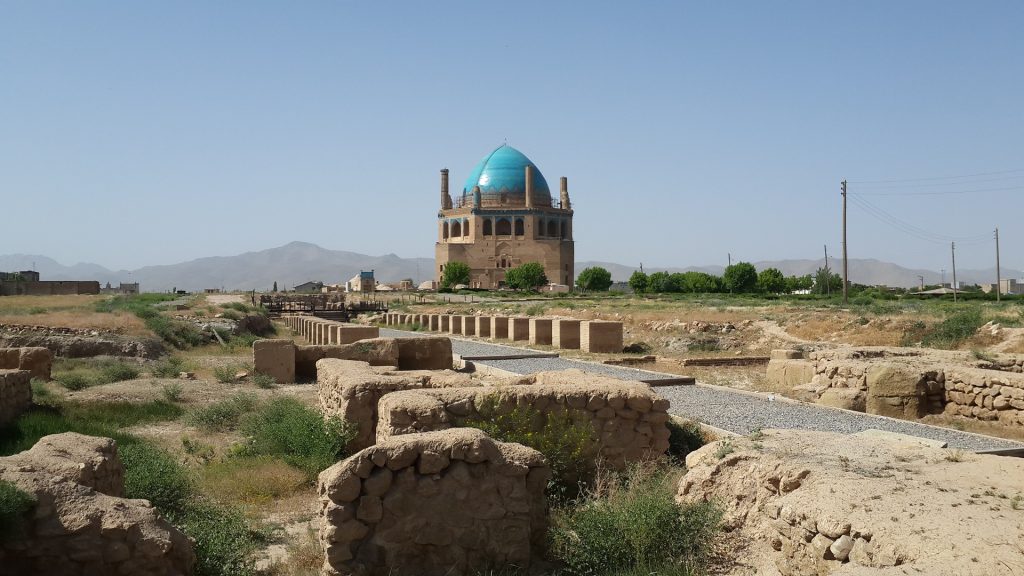
Imagine approaching Soltaniyeh in the early 14th century.
Instead of the relatively quiet landscape visitors see today, you would encounter a major imperial capital.
Palaces, administrative buildings, religious structures, markets, residences, gardens, and public spaces would have formed part of the urban environment.
At the center stood the enormous mausoleum of the ruler.
Although much of the historic city has disappeared, archaeology continues to reveal pieces of its former scale and organization.
The surviving dome therefore acts as a gateway into a much larger lost city.
Soltaniyeh and the Cultural Meeting of Worlds
The Ilkhanid period was characterized by extensive cultural interaction.
Mongol political traditions encountered the established artistic and architectural traditions of Iran.
Central Asian influences interacted with Persian craftsmanship.
Islamic architectural traditions developed through connections between Iran, Anatolia, Central Asia, and the wider Islamic world.
Soltaniyeh embodies this period of cultural exchange.
Its architecture demonstrates how a new ruling dynasty became integrated into the cultural landscape of Iran.
Why Is Soltaniyeh a UNESCO World Heritage Site?
Soltaniyeh was inscribed on the UNESCO World Heritage List in 2005 under three cultural criteria: (ii), (iii), and (iv).
Criterion (ii)
The Mausoleum of Oljaytu represents an essential link in the development of Islamic architecture in central and western Asia, particularly through its double-shell dome and elaborate decorative techniques.
Criterion (iii)
Soltaniyeh, as the former capital of the Ilkhanid dynasty, provides exceptional testimony to the history of Iran during the 13th and 14th centuries.
Criterion (iv)
The mausoleum represents an outstanding achievement in Persian architecture, particularly through its innovative engineering, spatial proportions, architectural forms, and decorative techniques.
What Can Travelers Experience in Soltaniyeh?
A visit to Soltaniyeh offers the opportunity to experience:
🕌 The Mausoleum of Oljaytu
The monumental centerpiece of the UNESCO property.
🔷 The Turquoise Dome
One of the most recognizable domes in Persian architecture.
🧱 Ilkhanid Brickwork
Intricate structural and decorative brick techniques.
✨ Interior Decoration
Glazed tiles, stucco, calligraphy, and other decorative traditions.
🏛️ Archaeological Landscape
Remains of the former Ilkhanid capital surrounding the mausoleum.
🌾 Historic Setting
A fertile landscape that contrasts with the monumental architecture.
Together, these elements reveal why Soltaniyeh is one of Iran’s great architectural treasures.
Soltaniyeh and the Persian Architectural Journey
Soltaniyeh becomes even more fascinating when viewed within the wider history of Iranian architecture.
A journey through Iran can connect several major architectural periods:
Persepolis → Pasargadae → Islamic Iran → Seljuk architecture → Soltaniyeh → Timurid architecture → Safavid Isfahan
Each site reveals a different stage in the evolution of Persian architecture.
Soltaniyeh occupies a particularly important position between the Seljuk and Timurid periods.
It represents a moment of innovation when earlier architectural traditions were transformed into new monumental forms.
Best Time to Visit Soltaniyeh
Soltaniyeh can be visited throughout the year.
For travelers planning a broader journey through northwestern Iran, spring and autumn can offer comfortable conditions for exploring the archaeological landscape.
The site can be combined with destinations in Zanjan, Qazvin, Tehran, and northwestern Iran, depending on the itinerary.
Travelers interested in architecture may also wish to combine Soltaniyeh with other historic monuments to create a thematic Persian architecture journey.
Responsible Travel at Soltaniyeh
Soltaniyeh is a protected archaeological and architectural heritage site.
Its preservation depends on careful conservation and responsible visitor behavior.
When visiting:
- Follow designated visitor routes.
- Respect restricted areas.
- Do not touch fragile decorative surfaces.
- Do not climb architectural elements.
- Do not remove bricks, tiles, or archaeological materials.
- Avoid littering.
- Follow local conservation regulations.
- Respect the monument as a place of cultural and historical significance.
- Support knowledgeable local guides and responsible tourism services.
UNESCO notes that continued conservation and appropriate management are essential for maintaining the site’s authenticity, integrity, and Outstanding Universal Value.
Soltaniyeh with PGTG
At Persian Gryphon Travel Group (PGTG), we believe that heritage travel should go beyond simply seeing famous monuments.
Soltaniyeh offers an opportunity to understand how architecture reflects history, cultural exchange, technology, religion, and political power.
A PGTG journey can introduce travelers to:
- Ilkhanid history
- Persian and Islamic architecture
- Medieval Iran
- Dome engineering
- Persian decorative arts
- Archaeological landscapes
- Local culture
- Responsible heritage tourism
- Zanjan and northwestern Iran
Our sustainable and experience-oriented approach encourages travelers to slow down, observe the details, learn the stories, and understand the people and cultures behind the monuments.
Together, we learn, experience, and give meaning to travel.
Leave a Reply