
Chogha Zanbil: The Ancient Elamite Ziggurat of Iran
Chogha Zanbil is one of Iran’s most extraordinary archaeological treasures and one of the most remarkable surviving monuments of the ancient Elamite civilization. Rising from the landscape of Khuzestan in southwestern Iran, its enormous mud-brick ziggurat tells the story of a civilization that flourished centuries before the rise of the Achaemenid Persian Empire.
Built around 1250 BCE as the religious center of the Elamite kingdom, Chogha Zanbil was dedicated to the Elamite deities Inshushinak and Napirisha. The ancient complex was surrounded by three enormous concentric walls and included temples, palaces, royal structures, water reservoirs, and other buildings.
Today, Chogha Zanbil is recognized by UNESCO as a World Heritage Site and is one of the most important archaeological sites in Iran for understanding the Middle Elamite period.
For travelers interested in ancient civilizations, archaeology, architecture, and the deeper layers of Persian history, Chogha Zanbil offers an experience far beyond the better-known monuments of central Iran.
What Does Chogha Zanbil Mean?
The modern name Chogha Zanbil refers to the distinctive shape of the archaeological mound.
The ancient city itself was known as Dur-Untash, meaning the “City of Untash,” after its founder, the Elamite king Untash-Napirisha.
The site was conceived as a major religious center rather than simply an ordinary urban settlement. At its heart stood the enormous ziggurat, surrounded by temples and other sacred structures.
Where Is Chogha Zanbil?
Chogha Zanbil is located in Khuzestan Province in southwestern Iran, in the ancient region of Elam.
The archaeological site stands on an arid plateau overlooking the valley of the Ab-e Diz River. Its location places it within a broader historical landscape that includes some of the oldest centers of civilization in Iran.
Chogha Zanbil is also relatively close to Susa, another major archaeological site associated with ancient Elam. UNESCO notes that the ruins of Chogha Zanbil and Susa provide important evidence for understanding the architectural development of the Middle Elamite period.
This makes the region particularly valuable for travelers interested in exploring the history of ancient southwestern Iran.
The Great Ziggurat of Chogha Zanbil
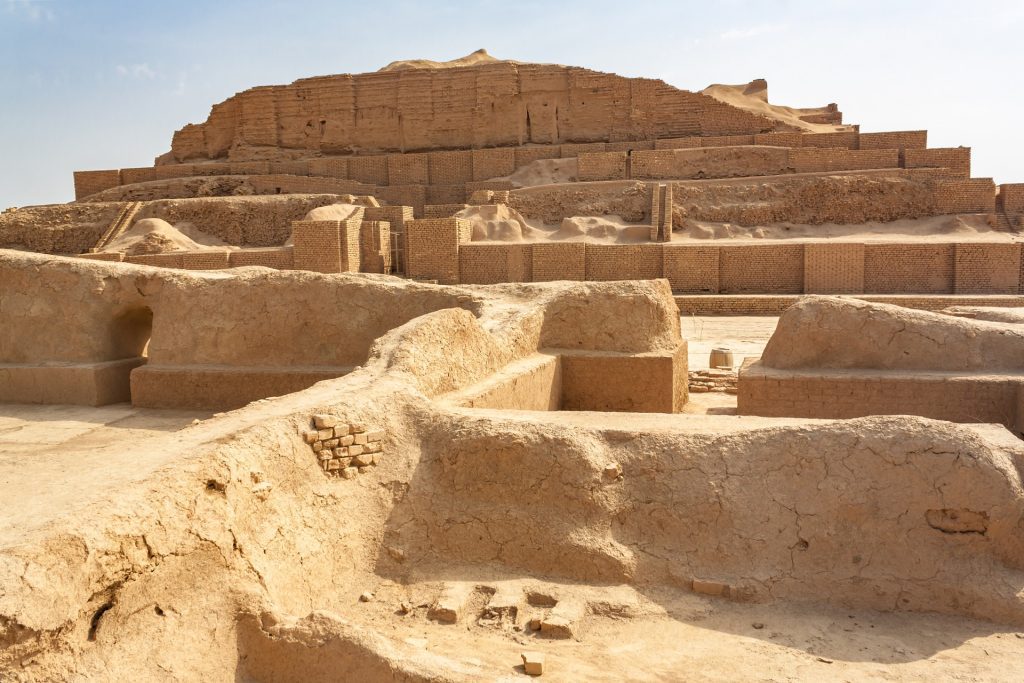
The most spectacular monument at Chogha Zanbil is its enormous ziggurat.
A ziggurat is a monumental stepped structure associated with the religious architecture of ancient Mesopotamia and neighboring cultures.
The Chogha Zanbil ziggurat was dedicated to Inshushinak, the principal god of Susa, and Napirisha, one of the major Elamite deities.
Originally, the ziggurat had five levels and measured approximately 105.2 metres on each side, reaching an estimated height of about 53 metres.
Much of the upper structure has disappeared over the centuries. Today, the monument stands approximately 24.75 metres high, yet its preservation remains exceptional. UNESCO identifies it as the largest ziggurat outside Mesopotamia and the best-preserved monument of its type.
Its massive scale is difficult to appreciate through photographs alone. Walking across the archaeological landscape and seeing the enormous brick structure rising from the surrounding plain gives visitors a powerful sense of its original ambition.
A Monument Built with Millions of Bricks
One of the most fascinating aspects of Chogha Zanbil is its extensive use of mud brick and fired brick.
Mud brick formed the basic building material across much of the complex. Fired bricks were used in important structural and protective elements.
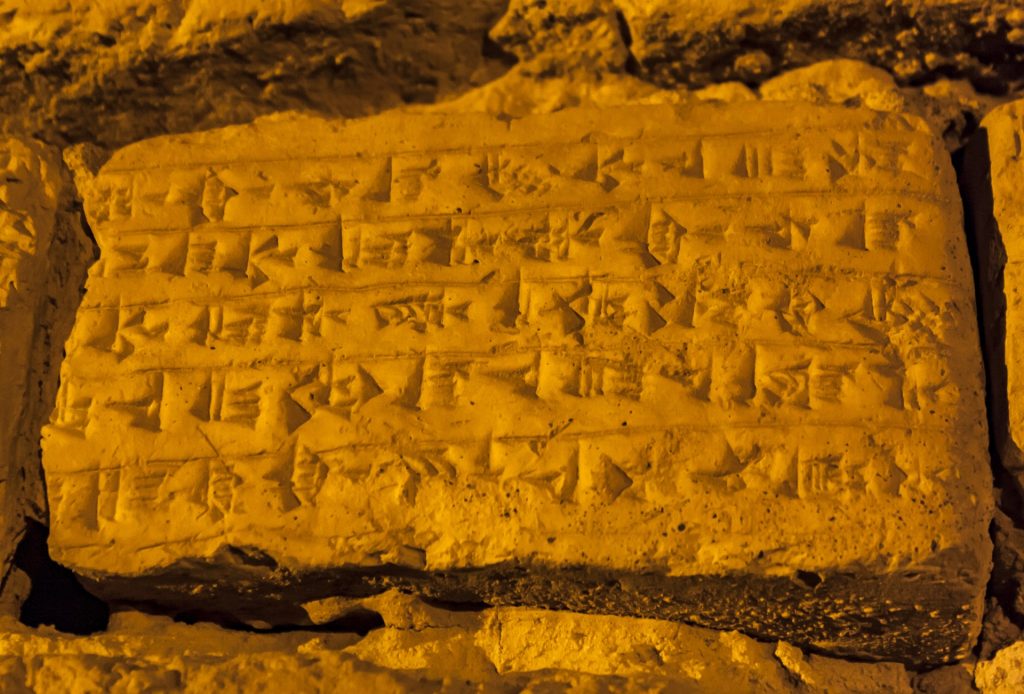
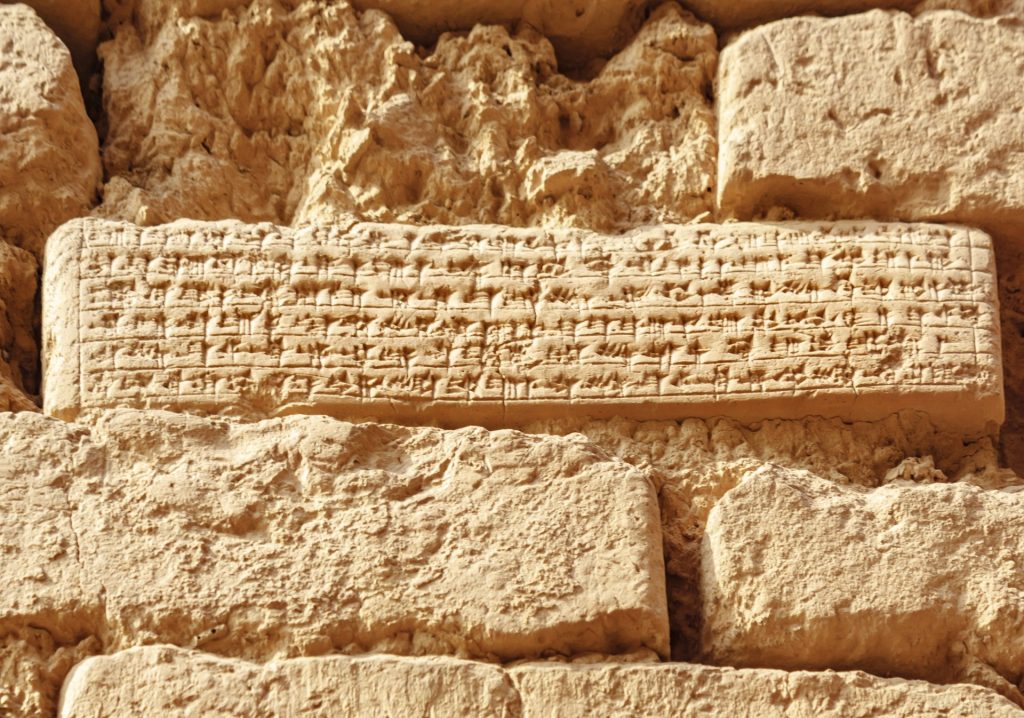
Many bricks also carry cuneiform inscriptions written in Elamite and Akkadian. These inscriptions provide valuable information about the rulers, gods, buildings, and religious purposes of the complex.
The combination of architecture and inscriptions makes Chogha Zanbil more than an impressive ruin. It is an archaeological record of Elamite society.
Three Concentric Walls
The ziggurat did not stand alone.
Chogha Zanbil was surrounded by three enormous concentric enclosure walls, creating a series of protected zones around the sacred center.
The outer wall enclosed a huge area containing residential and royal structures. A second wall protected the temple area, while the innermost enclosure surrounded the ziggurat itself.
The outer wall had a circumference of roughly 4 kilometres, enclosing an area of approximately 100 hectares.
Archaeological investigations have revealed evidence of:
- Temples
- Palaces
- Royal structures
- Tombs
- Residences
- Water reservoirs
- Sacred spaces
- Defensive and enclosure walls
- The central ziggurat
Together, these remains reveal the scale and complexity of the ancient religious city.
The Elamite Civilization
Long before the Achaemenid Empire emerged, the ancient land of Elam developed one of the important civilizations of southwestern Iran.
Elam was centered largely around what is now Khuzestan and neighboring regions. Its political and cultural history stretched across many centuries, with Susa serving as one of its most important centers.
Chogha Zanbil provides exceptional archaeological evidence for the religious architecture and cultural traditions of the Middle Elamite period.
UNESCO describes the site as an exceptional expression of the culture, beliefs, and ritual traditions of one of Iran’s oldest indigenous peoples.
The Sacred City of Dur-Untash
Chogha Zanbil was founded by Untash-Napirisha as a religious center of the Elamite kingdom.
The city appears to have been conceived as an important sacred settlement, but it was never fully completed.
UNESCO reports that the city remained unfinished following the invasion of the Assyrian king Ashurbanipal, with thousands of unused bricks still found at the site.
The settlement was eventually abandoned and destroyed, but the remains survived across the landscape.
This unfinished character is part of what makes Chogha Zanbil particularly fascinating: visitors can see not only what the Elamites built, but also evidence of a monumental project that was never completely realized.
Chogha Zanbil and the Assyrian Empire
The history of Chogha Zanbil is also connected to the conflicts between Elam and the powerful Assyrian Empire.
According to UNESCO, the sacred city was destroyed by the Assyrian king Ashurbanipal around 640 BCE.
The destruction forms part of the broader history of the ancient Near East, when powerful kingdoms competed for territory, resources, and influence.
Despite destruction and abandonment, the ziggurat and other structures survived sufficiently to provide extraordinary evidence of Elamite architecture.
Why Chogha Zanbil Is Important
Chogha Zanbil is important for several reasons.
1. It preserves Elamite history
The site provides exceptional evidence of the Middle Elamite civilization and its religious traditions.
2. It preserves monumental architecture
The ziggurat demonstrates the sophistication and ambition of ancient Elamite builders.
3. It connects Iran with the ancient Near East
Its architectural traditions demonstrate cultural connections between Elam and the wider ancient Near Eastern world.
4. It preserves ancient inscriptions
Cuneiform inscriptions on bricks provide important historical and religious information.
5. It is exceptionally well preserved
UNESCO considers the Chogha Zanbil ziggurat the best-preserved monument of its type and the largest outside Mesopotamia.
6. A Different Side of Iran’s Ancient History
Many travelers first encounter ancient Iran through Persepolis and Pasargadae, monuments associated with the Achaemenid Persian Empire.
Chogha Zanbil offers a different perspective.
Its history belongs to a much earlier period, when Elamite kingdoms flourished in southwestern Iran.
Visiting the site helps place later Persian civilizations into a much longer historical timeline.
From Elamite cities to Achaemenid capitals, Sassanid landscapes, Islamic architecture, and Safavid cities, Iran’s heritage represents thousands of years of cultural development.
Chogha Zanbil and UNESCO World Heritage
Chogha Zanbil was inscribed on the UNESCO World Heritage List in 1979, making it one of Iran’s earliest World Heritage inscriptions.
UNESCO inscribed the property under criteria (iii) and (iv).
Criterion (iii) recognizes Chogha Zanbil as an exceptional testimony to the Middle Elamite civilization.
Criterion (iv) recognizes the ziggurat as an outstanding example of this type of monumental architecture.
Chogha Zanbil was inscribed in the same initial period as other internationally renowned Iranian heritage sites, including Persepolis and Meidan Emam, Esfahan.
Chogha Zanbil, Susa and Ancient Khuzestan
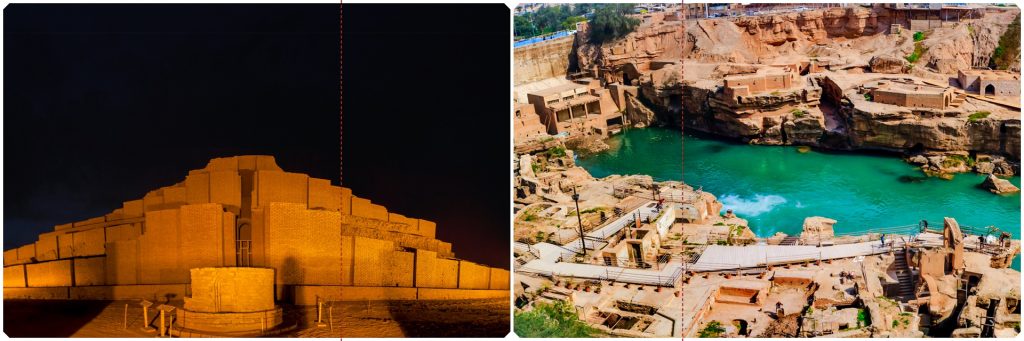
For travelers interested in ancient Iran, Chogha Zanbil becomes even more meaningful when visited as part of a wider Khuzestan archaeological journey.
The region contains several layers of history, including:
Chogha Zanbil
The great Elamite religious complex and ziggurat.
Susa
One of the most important ancient cities of the region and a major center of Elamite history.
Shushtar
Famous for its extraordinary historical hydraulic system and engineering heritage.
Together, these destinations demonstrate that the history of Iran extends far beyond the better-known Achaemenid monuments.
Visiting Chogha Zanbil as a Cultural Experience
A visit to Chogha Zanbil is not simply about seeing an ancient monument.
It is an opportunity to experience an archaeological landscape.
The vast open surroundings, monumental brick architecture, ancient inscriptions, and remains of temples and palaces create an atmosphere very different from Iran’s busy urban heritage sites.
For PGTG travelers, the experience can include storytelling about:
- Ancient Elam and its kingdoms
- Elamite religion and mythology
- The development of ziggurat architecture
- Ancient construction techniques
- Cuneiform inscriptions
- The relationship between Susa and Chogha Zanbil
- The later history of southwestern Iran
- Archaeological conservation
- The importance of protecting earthen architecture
This approach helps transform a visit from simple sightseeing into a deeper cultural experience.
Responsible Travel at Chogha Zanbil
Chogha Zanbil is a fragile archaeological site.
Much of its architecture is made from mud brick, which is particularly vulnerable to environmental conditions.
UNESCO identifies issues including heavy rainfall, changes to the Ab-e Diz River, agricultural activity, pollution, and deforestation as conservation concerns.
Visitors therefore play an important role in protecting the site.
When visiting:
- Follow designated visitor routes.
- Do not climb archaeological structures.
- Never touch or remove ancient bricks.
- Do not collect archaeological fragments.
- Avoid damaging fragile surfaces.
- Follow local guide and site regulations.
- Respect the archaeological landscape.
- Take photographs without disturbing other visitors or conservation work.
Responsible tourism helps ensure that future generations can experience Chogha Zanbil too.
When Is the Best Time to Visit Chogha Zanbil?
Khuzestan has a hot climate, particularly during the summer months.
For a more comfortable archaeological experience, the cooler months from autumn through spring are generally more suitable for exploring the region.
Early morning and late afternoon can also provide more comfortable conditions and beautiful light across the ancient brick architecture.
For travelers combining Chogha Zanbil with Susa and Shushtar, planning the route around the region’s seasonal conditions can make the journey much more enjoyable.
Why Visit Chogha Zanbil?
Chogha Zanbil is worth including in an Iran itinerary if you are interested in:
- Ancient civilizations
- Archaeology
- Elamite history
- Ziggurat architecture
- UNESCO World Heritage
- Ancient Near Eastern history
- Cultural landscapes
- Persian history beyond the Achaemenids
- Responsible cultural tourism
- Less conventional destinations in Iran
Standing before the enormous ziggurat, it becomes possible to imagine the ambition of a civilization that flourished more than 3,000 years ago.
Chogha Zanbil is not simply an ancient ruin.
It is a surviving chapter of Elamite Iran.
Chogha Zanbil with PGTG
At Persian Gryphon Travel Group (PGTG), we believe that visiting Iran’s heritage sites should be more than checking famous monuments off a list.
Our approach combines sustainable, responsible, and experience-oriented tourism.
A journey to Chogha Zanbil can be designed as part of a broader cultural route through southwestern Iran, connecting archaeology, architecture, local communities, landscapes, food, and stories.
Rather than simply asking travelers to look at ancient ruins, we want them to understand the civilizations that created them.
Together, we learn, experience, and give meaning to travel.
Final Thoughts
From the great ziggurat to its concentric walls, temples, palaces, inscriptions, and archaeological landscape, Chogha Zanbil provides an extraordinary window into ancient Elam.
Its importance lies not only in its age, but in what it reveals about architecture, religion, urban planning, engineering, and cultural traditions in ancient southwestern Iran.
For travelers exploring Iran’s UNESCO World Heritage Sites chronologically, Chogha Zanbil is an essential stop between the earliest chapters of Iranian civilization and the later Persian empires.
Explore the ancient world. Discover Elam. Experience Iran with PGTG.
Leave a Reply