
Gonbad-e Qābus: Discover Iran’s Extraordinary 1,000-Year-Old Brick Tower
Rising majestically above the northeastern plains of Iran, Gonbad-e Qābus is an extraordinary achievement of medieval architecture. Its elegant cylindrical structure, ten-pointed star-shaped foundation, and soaring conical roof create a monument unlike any other.
Built in 1006 CE, this remarkable tower commemorates Qābus ibn Voshmgir, a ruler of the Ziyarid dynasty who was also known for his literary interests. Standing approximately 53 metres high, it demonstrates the remarkable engineering knowledge and artistic creativity of early Islamic Iran.
Recognized as a UNESCO World Heritage Site in 2012, Gonbad-e Qābus represents an important chapter in the history of Persian architecture. Its innovative design influenced the development of monumental tomb towers across Iran, Anatolia, and Central Asia.
For travellers interested in history, architecture, engineering, and the cultural diversity of northern Iran, this monument offers an unforgettable experience.
Discover Gonbad-e Qābus with PGTG and explore one of Iran’s most extraordinary architectural treasures.
1. Where Is Gonbad-e Qābus?
Gonbad-e Qābus is located in the city of Gonbad-e Kavus, in Golestan Province, northeastern Iran.
The monument stands near the remains of ancient Jorjan, an important historical city that once served as a centre of regional government, trade, science, and culture.
The surrounding region forms part of the broad northeastern Iranian landscape, connecting the Caspian region with the historic routes of Central Asia.
Golestan Province is also known for its forests, plains, traditional villages, and cultural diversity. It offers visitors a different perspective on Iran beyond the country’s famous central desert cities and classical historical routes.
The tower remains the most recognizable landmark of Gonbad-e Kavus. Its impressive height makes it visible from considerable distances across the surrounding lowlands.
2. The History of Gonbad-e Qābus
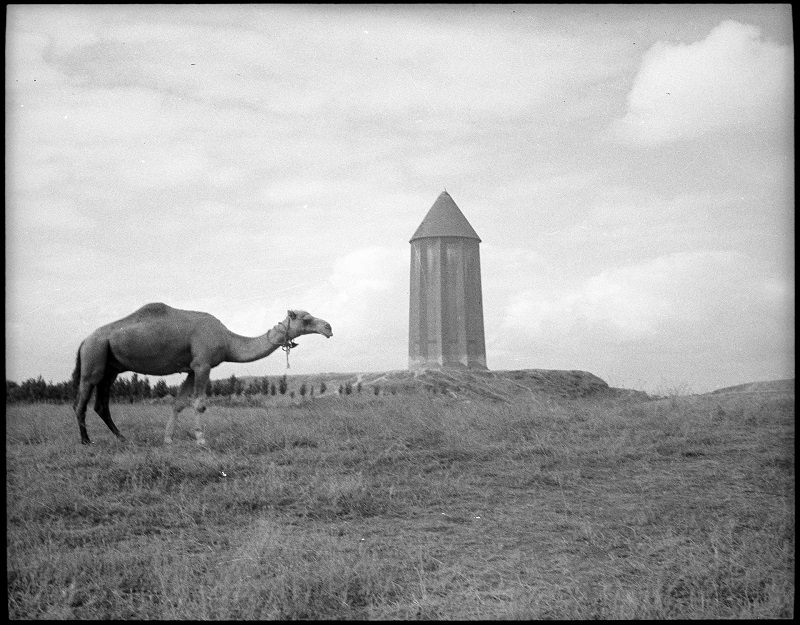
The story of Gonbad-e Qābus begins during the 10th and 11th centuries, when the Ziyarid dynasty ruled parts of northern Iran.
The Ziyarids were an influential regional dynasty whose territories included areas of Tabarestan and Gorgan. Their period was marked by political competition, cultural development, and the growth of Persian literary and intellectual traditions.
Qābus ibn Voshmgir: The Ruler Behind the Monument
Qābus ibn Voshmgir was a prominent Ziyarid ruler, reigning from 978 to 1012, with interruptions.
He was more than a political leader. Historical sources also describe him as a writer and patron of intellectual life.
His court was connected with important scholars of the period. The philosopher and physician Avicenna (Ibn Sina) reportedly sought refuge at his court, while the scholar Al-Biruni was also associated with his intellectual environment.
Qābus commissioned the tower in 1006 CE. Its inscriptions identify him as the founder and preserve the historical date of its construction.
The monument therefore represents both political authority and the cultural ambitions of a ruler who valued literature and learning.
A Monument Built to Last
Gonbad-e Qābus was constructed as a monumental tomb tower.
Its extraordinary height, carefully calculated proportions, and durable brick structure demonstrate the technical ambitions of its builders.
Unlike many historical monuments that have undergone extensive reconstruction, the tower retains much of its original architectural character.
Its survival over more than a millennium makes it an exceptional example of early Islamic monumental construction.
3. An Architectural Masterpiece: 53 Metres of Engineering Excellence
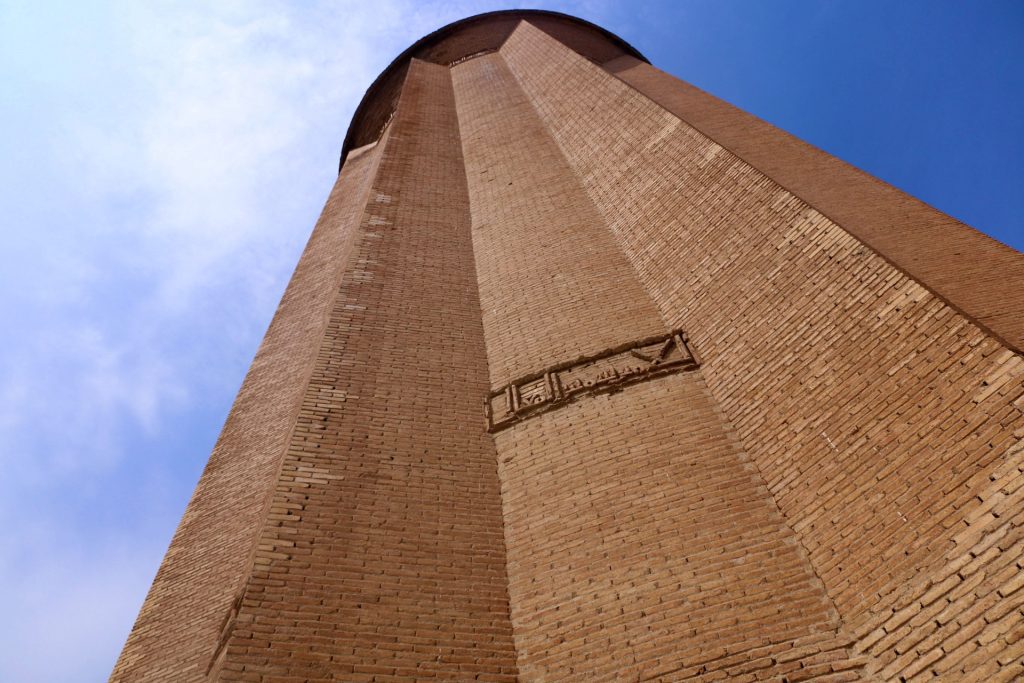
The most striking feature of Gonbad-e Qābus is its architectural simplicity combined with remarkable structural complexity.
The tower rises approximately 53 metres and consists of a hollow cylindrical shaft topped by a conical brick roof.
Its design is based on geometric principles that create an impressive balance between height, stability, and visual elegance.
The Ten-Pointed Star Foundation
One of the most fascinating elements is the tower’s geometric foundation.
Its plan is based on a ten-pointed star, creating a distinctive relationship between the central cylindrical structure and the ten external projections.
These projections, often described as flanges or buttresses, extend vertically along the tower.
They contribute to its recognizable appearance and express the mathematical precision behind its design.
The Cylindrical Body
The tower’s main body is a hollow cylinder constructed from unglazed fired bricks.
It tapers slightly as it rises, becoming narrower toward the upper section.
Its massive brick walls provide structural support while maintaining an elegant vertical appearance.
The combination of geometric planning and load-bearing brick construction represents an important achievement in early Islamic architecture.
The Conical Roof
The tower is crowned by a distinctive conical brick roof.
This feature gives Gonbad-e Qābus its unmistakable silhouette and distinguishes it from many other historical monuments in Iran.
The conical form later became an influential model for commemorative and funerary towers across the region.
Together, the cylindrical shaft and conical roof create a monumental structure that remains visually impressive more than a thousand years after its construction.
4. The Art of Brickwork and Kufic Inscriptions
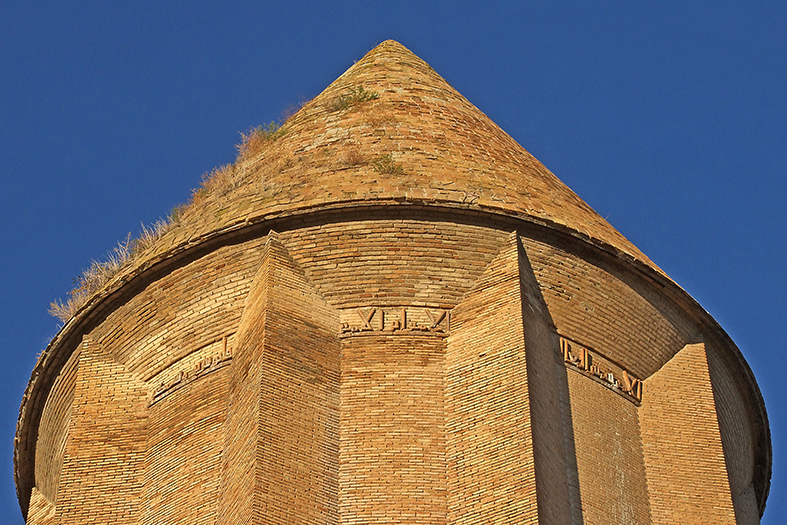
Unlike many Persian monuments famous for colourful tilework, Gonbad-e Qābus celebrates the natural beauty and structural possibilities of brick.
Its pale, unglazed fired bricks create a warm appearance that changes with the sunlight.
The exterior is decorated with geometric brick details and two remarkable bands of Kufic inscriptions.
Two Historic Inscriptions
The tower features two horizontal inscription bands, one near the entrance and another close to the conical roof.
These inscriptions commemorate Qābus ibn Voshmgir and identify him as the founder of the monument.
They are written in Kufic script, an early Arabic calligraphic style characterized by its angular forms.
The inscriptions are integrated into the architecture rather than applied as separate decorative panels.
Their placement reinforces the monument’s horizontal divisions while contrasting with the strong vertical movement of the tower.
Architecture Without Excessive Decoration
One of the most impressive aspects of Gonbad-e Qābus is its restrained artistic language.
The monument does not depend on elaborate mosaics, colourful tiles, or extensive ornamental decoration.
Instead, its beauty comes from proportion, geometry, materials, and structural clarity.
It demonstrates how architectural creativity can emerge through the intelligent use of simple materials.
5. Ancient Jorjan: The Lost City Behind the Tower
To understand the importance of Gonbad-e Qābus, it is essential to explore the history of ancient Jorjan.
Jorjan was once a major urban and cultural centre in northeastern Iran. It played an important role in regional trade, administration, craftsmanship, and intellectual life.
Its geographical position connected the Iranian plateau with Central Asian territories and the southern Caspian region.
The city experienced significant development during the medieval period.
However, it was devastated during the Mongol invasions of the 13th century and the following centuries.
Much of its historic urban fabric disappeared, leaving archaeological remains that continue to provide evidence of its former importance.
Today, Gonbad-e Qābus is considered the most significant surviving monument associated with the ancient city.
Visiting the tower offers an opportunity to reflect on the wider history of Jorjan and the cultural world that once surrounded it.
6. Why Is Gonbad-e Qābus a UNESCO World Heritage Site?
Gonbad-e Qābus was inscribed on the UNESCO World Heritage List in 2012.
Its exceptional architectural qualities are recognized through four UNESCO criteria:
Criterion (i): Masterpiece of human creative genius
The tower represents an outstanding achievement in early Islamic brick architecture, combining geometric precision with exceptional structural and aesthetic qualities.
Criterion (ii): Exchange of human values
Its conical-roofed design influenced the development of monumental tomb towers in Iran, Anatolia, and Central Asia. It reflects architectural exchange between Central Asian nomadic traditions and Iranian civilization.
Criterion (iii): Exceptional testimony to a civilization
The monument provides remarkable evidence of the cultural and political achievements of the Ziyarid dynasty during the 10th and 11th centuries.
Criterion (iv): Outstanding example of an architectural type
Gonbad-e Qābus demonstrates the development of mathematics, geometry, and structural engineering in the Muslim world around the beginning of the second millennium.
UNESCO inscription: 2012
Category: Cultural Heritage
UNESCO criteria: (i), (ii), (iii), (iv)
Location: Gonbad-e Kavus, Golestan Province, Iran
UNESCO property number: 1398
Official UNESCO listing: https://whc.unesco.org/en/list/1398/
7. What Makes Gonbad-e Qābus Special for Travellers?
Gonbad-e Qābus offers a different kind of cultural experience compared with Iran’s famous palaces, mosques, and ancient archaeological sites.
Its architectural power comes from its simplicity and engineering precision.
Visitors can appreciate several remarkable features:
- The monumental height: Observe the tower’s impressive proportions from different viewpoints.
- The ten-pointed star geometry: Discover the mathematical principles behind its design.
- The brick construction: Examine the craftsmanship and structural techniques of early Islamic builders.
- The conical roof: Admire the distinctive silhouette that influenced later monumental towers.
- The Kufic inscriptions: Explore the historical messages preserved in the brickwork.
- The surrounding landscape: Experience the relationship between the tower and the northeastern Iranian plains.
For architecture students, historians, photographers, and cultural travellers, Gonbad-e Qābus provides an opportunity to explore an extraordinary chapter of Persian architectural history.
8. Discover Golestan Province Beyond the Tower
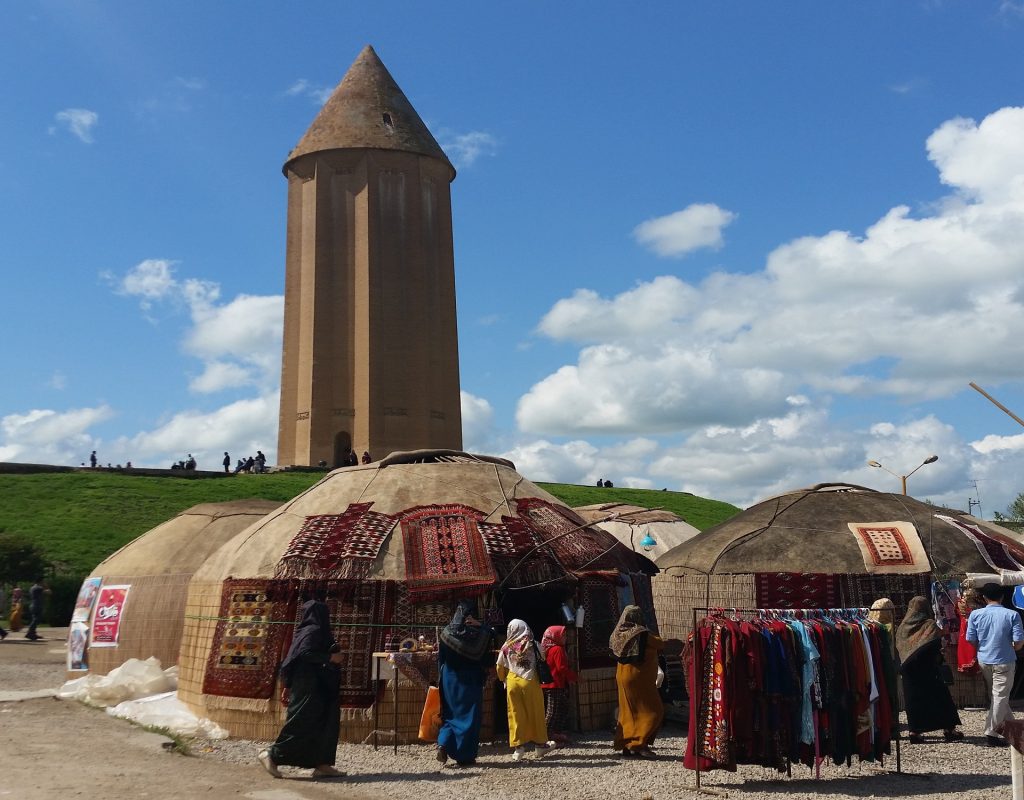
A visit to Gonbad-e Qābus can become part of a wider journey through Golestan Province and northeastern Iran.
This region offers a combination of natural landscapes, cultural traditions, rural communities, and historical attractions.
Depending on available time and travel conditions, visitors can explore:
Ancient Jorjan
Discover the archaeological remains of the ancient city and learn about its former importance as a regional centre.
Golestan National Park
Explore one of Iran’s important protected natural areas, known for its diverse landscapes, forests, wildlife, and ecological significance.
Turkmen Cultural Heritage
Experience the traditions, handicrafts, local food, and cultural heritage of Turkmen communities in northeastern Iran.
Traditional Villages and Rural Landscapes
Discover local lifestyles, traditional architecture, agriculture, and the hospitality of communities throughout the province.
Khalid Nabi Cultural Landscape
Explore the distinctive landscape and historic cemetery associated with Khalid Nabi, a fascinating destination in the northeastern highlands of Golestan.
These experiences can help travellers understand the cultural and geographical diversity of northeastern Iran.
9. Best Time to Visit Gonbad-e Qābus
Spring and autumn are generally the most comfortable seasons for exploring Golestan Province.
Spring (March–May): The region becomes greener, and moderate temperatures create favourable conditions for sightseeing and nature experiences.
Summer (June–August): Temperatures can be hot, particularly across the plains. Plan outdoor activities carefully and stay hydrated.
Autumn (September–November): Pleasant weather and changing landscapes make this an attractive season for cultural and nature-based travel.
Winter (December–February): Temperatures can become cold, especially in elevated areas. Visitors should check local weather conditions before travelling.
For a comfortable cultural journey, spring and autumn are excellent starting points.
10. Responsible Tourism: Protecting Iran’s Architectural Heritage
Gonbad-e Qābus is an exceptional example of heritage that has survived for more than a thousand years.
Preserving this monument requires cooperation between conservation professionals, local authorities, residents, and visitors.
As responsible travellers, we can contribute by following simple practices:
- Respect visitor regulations and conservation boundaries.
- Avoid touching, climbing, or damaging historic brickwork.
- Do not leave litter around the monument.
- Respect local residents and cultural traditions.
- Support local guides, craftspeople, and businesses.
- Learn about the history of the region before visiting.
- Choose responsible travel services that value heritage protection and local participation.
Sustainable tourism should create meaningful experiences while supporting the preservation of cultural and natural resources.
11. Explore Gonbad-e Qābus with PGTG
Iran is a destination of extraordinary contrasts. From ancient empires and historic cities to mountain landscapes, forests, deserts, and traditional communities, every region tells a different story.
Gonbad-e Qābus introduces travellers to the remarkable architectural heritage of northeastern Iran.
With Persian Gryphon Travel Group (PGTG), you can explore Iran through cultural, historical, rural, and sustainable travel experiences.
Our approach connects historical monuments with local knowledge, cultural encounters, and meaningful experiences.
Whether you are an architecture enthusiast, a history lover, a photographer, or an adventurous traveller, northeastern Iran offers discoveries beyond the familiar tourist routes.
Gonbad-e Qābus is more than a thousand-year-old tower. It is a symbol of human creativity, scientific knowledge, and the enduring architectural heritage of Iran.
Contact Persian Gryphon Travel Group to plan your tailor-made journey through Iran.
Leave a Reply