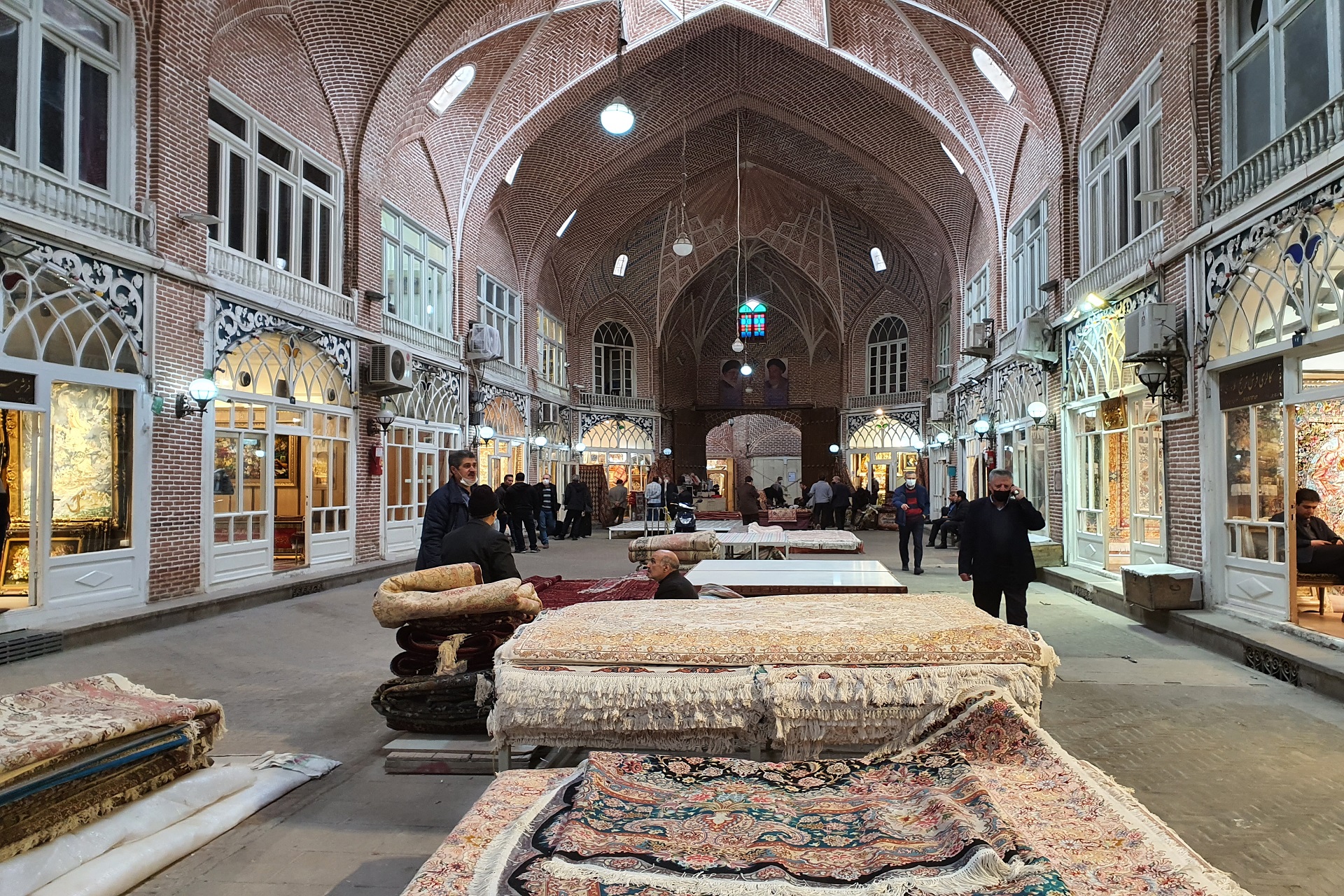
Tabriz Historic Bazaar Complex: A Living Masterpiece of Iran’s Silk Road Heritage
Discover the Tabriz Historic Bazaar Complex, a UNESCO World Heritage Site where centuries of trade, traditional craftsmanship, Persian architecture, and cultural exchange continue to shape the heart of northwestern Iran.
Imagine walking beneath magnificent brick domes, following winding covered corridors, and discovering shops filled with handmade carpets, traditional textiles, jewelry, spices, and local delicacies. Around you, merchants negotiate, artisans preserve their skills, and generations of Iranian life unfold within one extraordinary historic marketplace.
Welcome to the Tabriz Historic Bazaar Complex — one of the most remarkable examples of Iran’s traditional commercial architecture and a historic crossroads of civilizations.
Located in Tabriz, the capital of East Azerbaijan Province in northwestern Iran, this vast marketplace was once among the most important commercial centers along the historic east–west trade routes. For centuries, it connected merchants, travelers, and communities from different regions, helping goods, ideas, technologies, and traditions travel across continents.
UNESCO inscribed the Tabriz Historic Bazaar Complex on the World Heritage List in 2010, recognizing its outstanding architectural, historical, and cultural significance. Today, it remains a living marketplace where heritage is not simply preserved in stone and brick but continues through everyday activity.
Why Is Tabriz Bazaar a UNESCO World Heritage Site?
UNESCO inscribed the Tabriz Historic Bazaar Complex in 2010 under three cultural criteria: (ii), (iii), and (iv).
These criteria recognize the complex’s international cultural connections, its testimony to a living civilization, and its exceptional architectural organization.
Criterion (ii): Exchange of human values
The bazaar played a major role in international trade and cultural exchange, particularly between the 12th and 18th centuries.
Its position along east–west trading routes enabled people, products, and ideas to circulate between different societies. The resulting exchanges contributed to the development of its architecture and commercial culture.
Criterion (iii): Testimony to a cultural tradition
The complex represents an unusually complete example of a historic commercial and social system.
Its specialized professions, buildings, religious spaces, and community relationships reveal how a traditional bazaar operated as part of a broader civilization.
Importantly, this is a living tradition. Commercial activity continues to connect the historic environment with contemporary Tabriz.
Criterion (iv): An outstanding architectural ensemble
The bazaar is an exceptional example of a multifunctional urban complex shaped by trade.
Its interconnected buildings and spaces form an integrated system rather than a collection of isolated monuments. The relationship between architectural form and commercial function is a defining feature of the site.
Together, these criteria recognize the bazaar as both an architectural achievement and a record of human interaction.
UNESCO inscription: 2010
Location: Tabriz, East Azerbaijan Province, Iran
World Heritage criteria: (ii), (iii), (iv)
Where Is the Tabriz Historic Bazaar Complex?
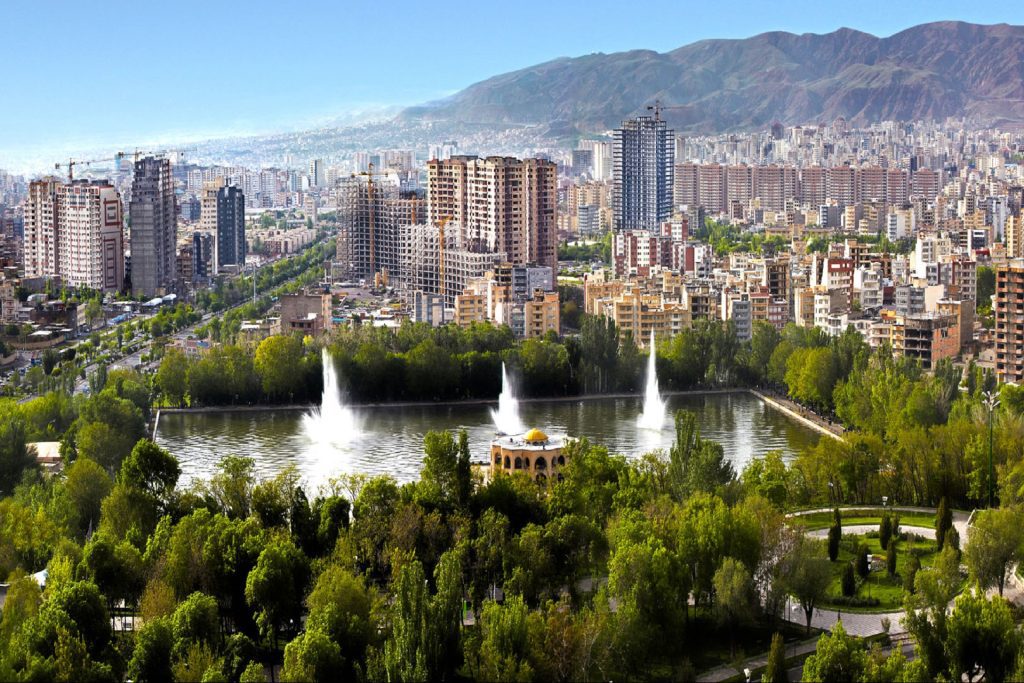
The Tabriz Historic Bazaar Complex lies in the historic center of Tabriz, a major city in northwestern Iran. The city has long occupied a strategic position between the Iranian plateau, the Caucasus, Anatolia, and routes connecting Asia with Europe.
This geographical position helped Tabriz become an important destination for international trade and cultural exchange. Merchants and travelers passed through the region carrying goods, stories, religious traditions, artistic influences, and new ideas.
The bazaar developed within this dynamic environment. Rather than functioning as a simple collection of shops, it became an interconnected urban system combining commercial spaces, caravanserais, religious buildings, educational facilities, and places for social interaction.
The UNESCO-listed property covers approximately 29 hectares, with a larger surrounding buffer zone. Its network of interconnected structures reveals how commerce shaped the architecture and social organization of a historic Iranian city.
For travelers, the bazaar offers an opportunity to explore Tabriz beyond its monuments. It provides a closer look at the city’s living traditions, everyday rhythms, and enduring relationship with trade.
A History Shaped by the Silk Road
Tabriz: A crossroads of civilizations
Tabriz has been a place of cultural exchange since antiquity. Its location made it an important meeting point for traders and travelers moving between eastern and western markets.
The historic bazaar became especially prominent between the 12th and 18th centuries, when Tabriz played a significant role in international commerce. Its merchants participated in extensive trading networks that linked different parts of Asia and connected them with markets farther west.
Silk, textiles, carpets, precious goods, and other commodities moved through these networks. Trade also encouraged the exchange of craftsmanship, architectural techniques, languages, and cultural practices.
The bazaar was therefore more than an economic center. It was a place where people from different backgrounds encountered one another and helped shape a shared urban culture.
The Safavid era and the rise of Tabriz
Tabriz became the capital of the Safavid kingdom in the early 16th century, strengthening its political and commercial importance.
The Safavid period was a major chapter in Persian history. It witnessed developments in architecture, art, trade, and urban culture. Tabriz benefited from its strategic position and its connections with regional and international markets.
Although the Safavid capital later moved elsewhere, Tabriz retained its importance as a commercial hub. The bazaar continued to support trade and the economic life of the city for generations.
Its history demonstrates how a city can maintain its importance even as political power shifts between regions.
Earthquakes and reconstruction
Northwestern Iran is an earthquake-prone region, and Tabriz has experienced devastating earthquakes throughout its history.
The earthquake of 1780 severely damaged the bazaar. Much of the complex visible today reflects reconstruction after this disaster, although the marketplace retains a much older historical layout and tradition.
The rebuilt structures demonstrate the resilience of Tabriz’s commercial community. Merchants and craftspeople continued to use the bazaar, preserving its role in the city’s economic and social life.
Today, its historic fabric offers evidence of both architectural continuity and the ability of communities to rebuild after major disruptions.
Architecture: A City Beneath Brick Domes
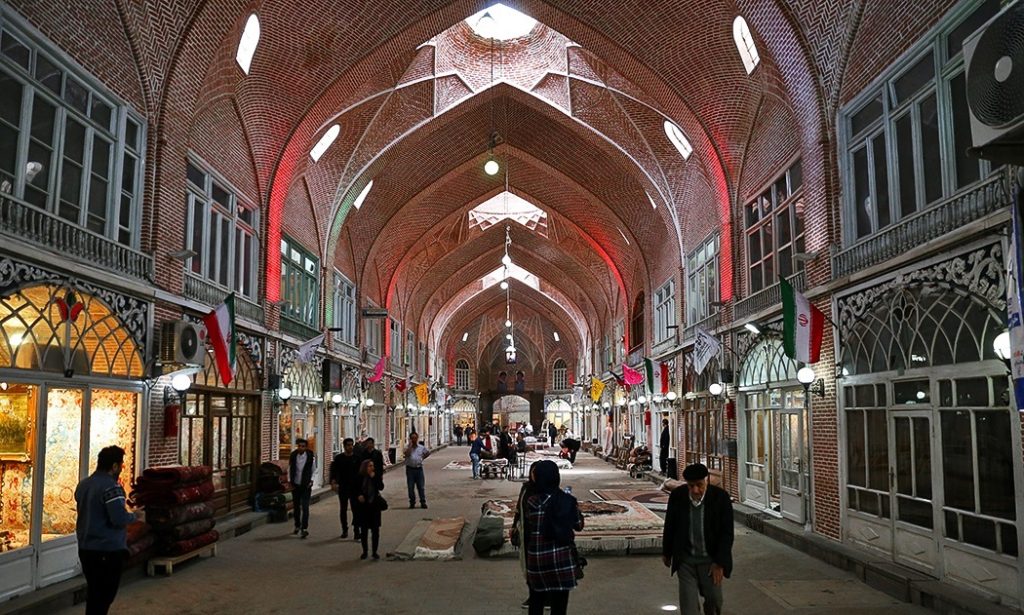
One of the most impressive features of the Tabriz Historic Bazaar Complex is its interconnected architecture.
Unlike a modern shopping center, the bazaar developed gradually over centuries. Its many sections, passages, courtyards, and specialized buildings form a complex urban environment rather than a single monumental structure.
Covered corridors and vaulted passages
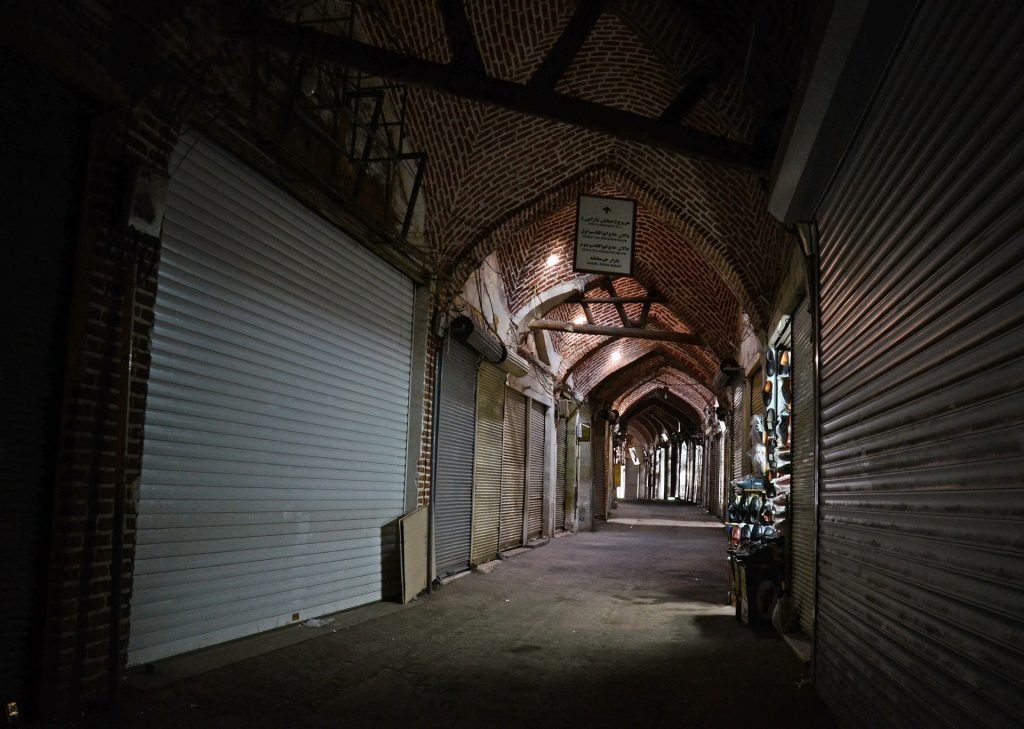
The bazaar’s covered walkways create a distinctive atmosphere. Brick arches and vaulted ceilings connect shops and commercial sections, allowing visitors to move through the marketplace while remaining sheltered from direct sunlight and much of the weather.
These passages also establish a strong visual rhythm. Repeated arches, changing perspectives, and varying ceiling heights create a sense of discovery as visitors explore the complex.
The architecture serves practical purposes while expressing the craftsmanship and aesthetic traditions of historic Iranian building.
Brick domes and light openings
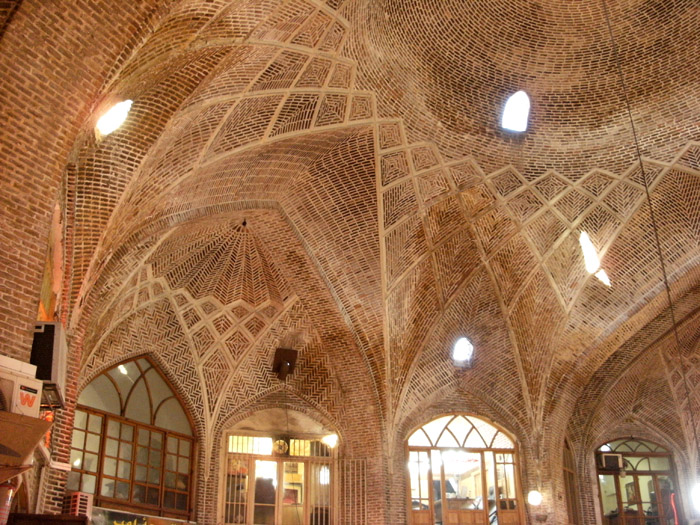
Brick domes are among the bazaar’s most recognizable architectural features.
Many spaces are covered by domed or vaulted roofs, with openings that allow daylight to enter. The interplay of light and shadow reveals the texture of the brickwork and gives the interior passages a distinctive character.
These structures demonstrate how traditional architecture responded to commercial needs, local materials, climate, and patterns of movement.
Timchehs: Specialized commercial halls
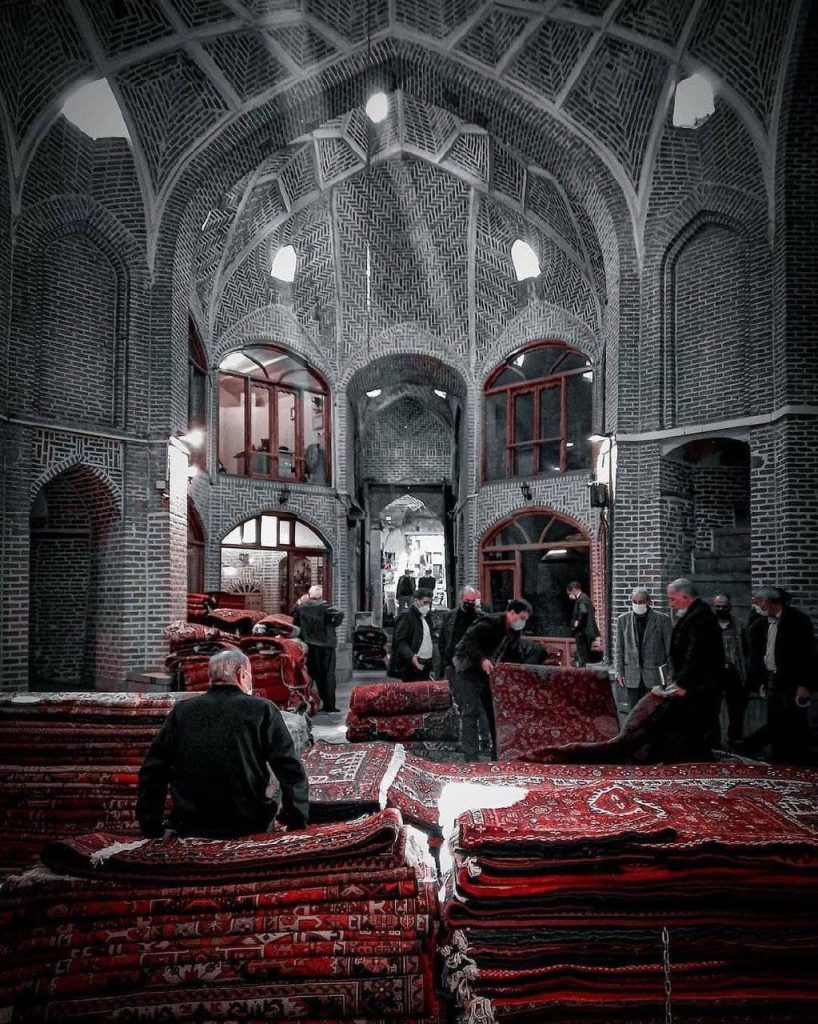
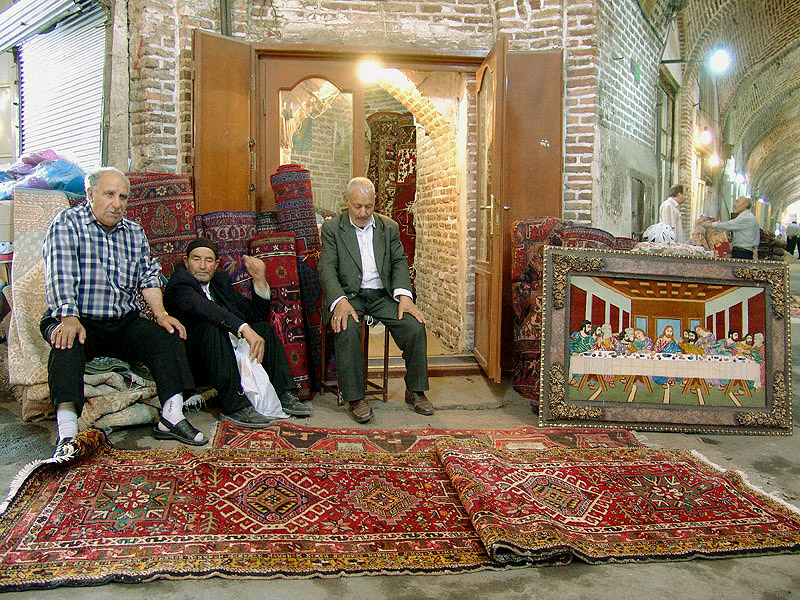
A timcheh is a covered commercial space or trading hall, often associated with a particular type of merchandise or group of merchants.
These halls are among the architectural highlights of the Tabriz Bazaar. Some feature elaborate brick domes, carefully proportioned spaces, and decorative details that reflect the status of the goods and businesses they accommodated.
The Mozaffariyeh Timcheh is especially associated with the carpet trade. It offers a memorable setting for understanding the importance of carpets and textile craftsmanship in the commercial history of Tabriz.
Caravanserais and courtyards
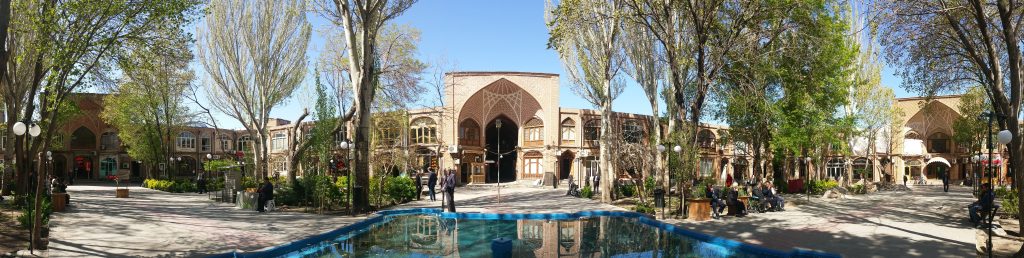
Historic trade required more than shops. Merchants needed places to store goods, arrange transactions, accommodate traveling traders, and organize their commercial activities.
Caravanserais and courtyard-based spaces formed part of this wider trading environment. Together with the covered passages and specialized market sections, they helped create a functional urban system.
This integration is central to the bazaar’s heritage value. Its architecture reflects the practical requirements of commerce while supporting social interaction, religious activity, and education.
The Main Sections and Highlights of Tabriz Bazaar
The complex consists of numerous interconnected sections, each with its own atmosphere and commercial traditions. Some specialize in particular goods, while others are known for their architecture or historic role.
Mozaffariyeh Timcheh: The carpet quarter
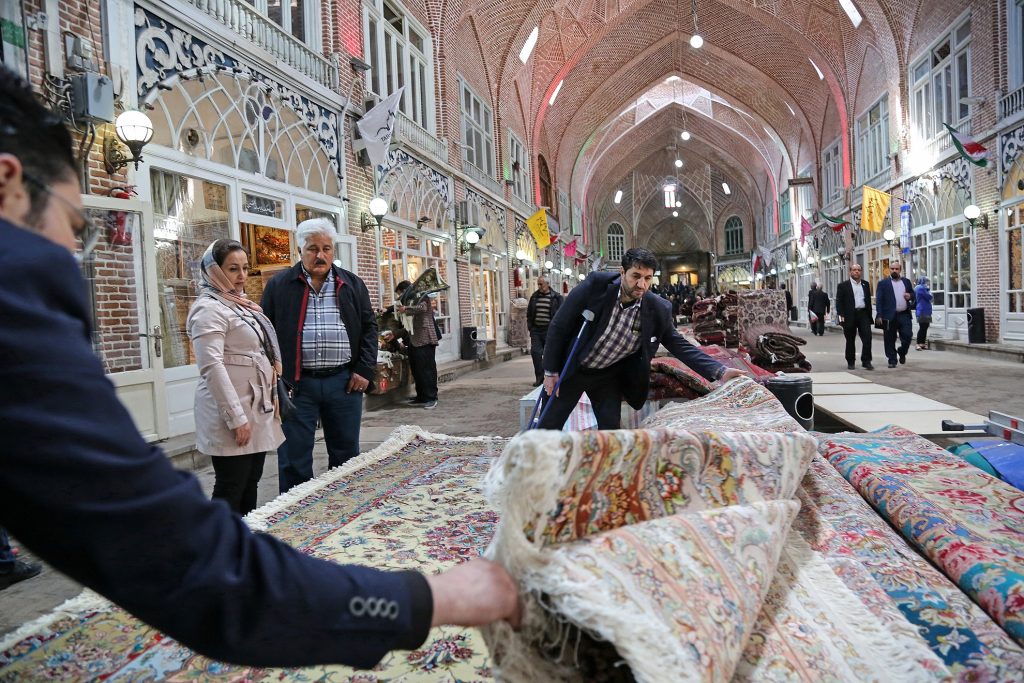
Carpets are an essential part of Iranian artistic and cultural heritage. Tabriz has long been recognized for its carpet-making tradition, and its historic bazaar remains an important place to encounter this craft.
Mozaffariyeh Timcheh is one of the most celebrated spaces in the bazaar. Its covered architecture provides a striking backdrop for displays of Persian carpets, from richly colored traditional designs to intricate floral and geometric patterns.
As you explore, take time to notice the variety of designs, weaving traditions, materials, and finishing techniques.
If you are considering purchasing a carpet, ask about its origin, materials, production methods, and the artisan or workshop behind it. Understanding the work involved can make the experience more meaningful.
Amir Bazaar: Jewelry and precious goods
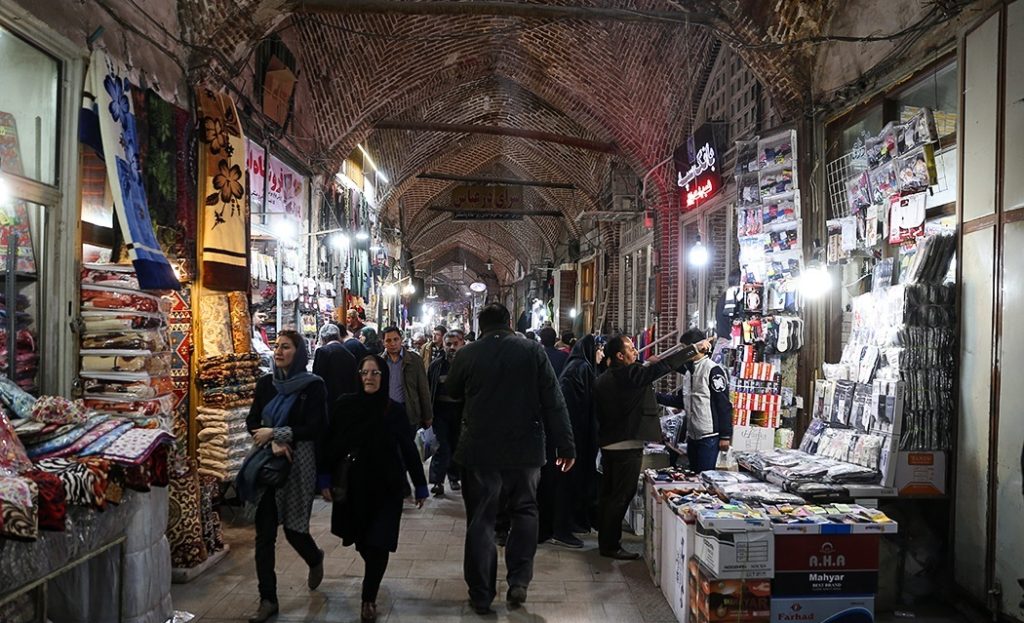
The Amir Bazaar is traditionally associated with gold and jewelry trading. It illustrates the diversity of specialized commercial activities within the historic complex.
While the merchandise differs from one section to another, the underlying structure remains the same: interconnected businesses operating within a larger network of trade and community life.
Traditional craft and merchandise sections
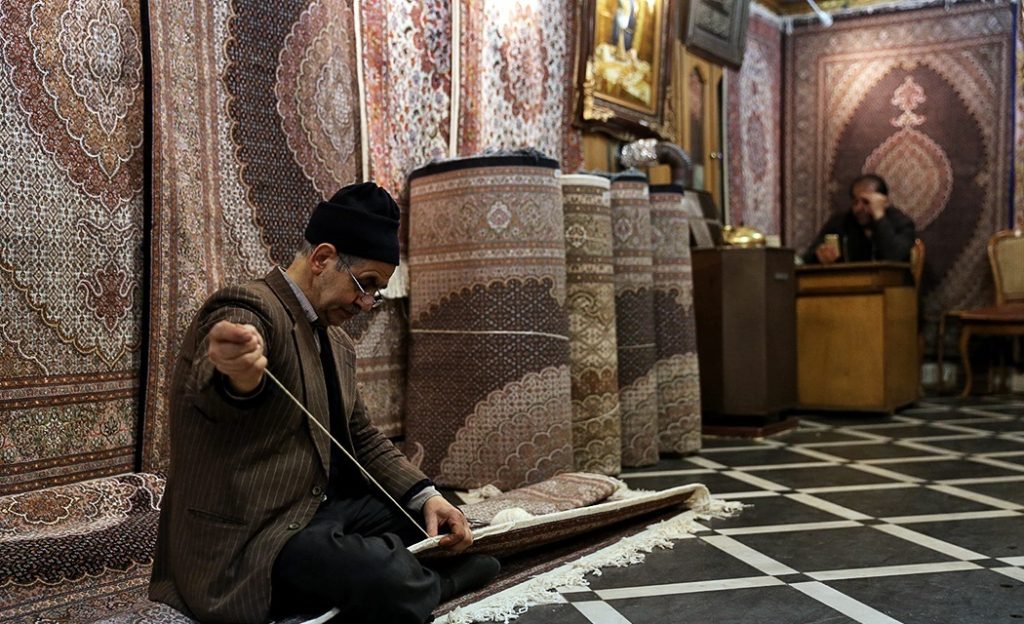
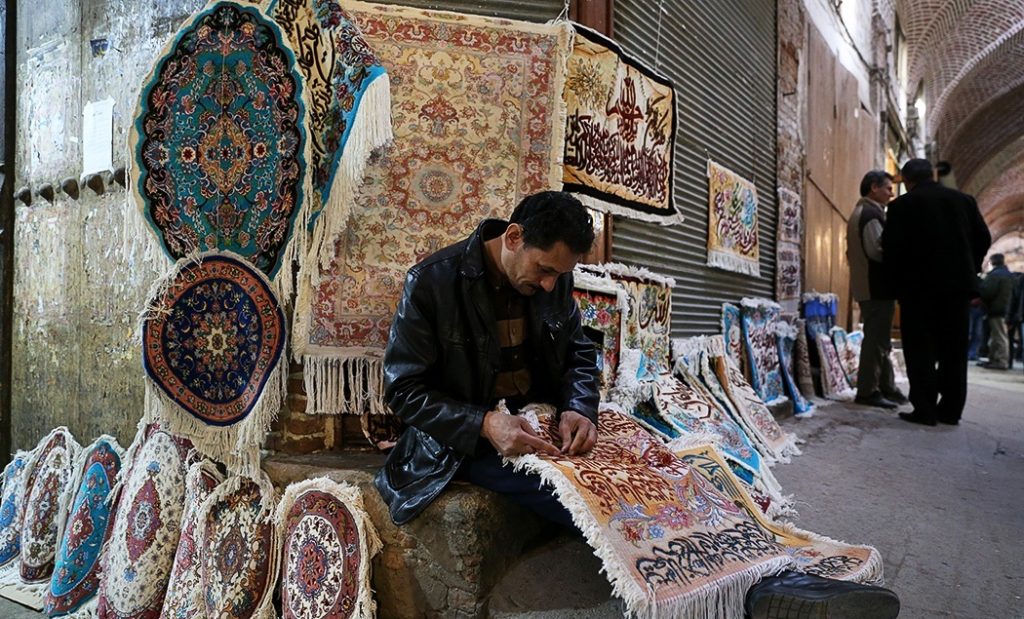
Other parts of the bazaar offer opportunities to discover textiles, shoes, household goods, copperware, and other traditional products.
The specific shops and merchandise available can change over time. This variety is part of what makes the bazaar a living place rather than a static museum.
Look closely at the objects themselves. Patterns, materials, tools, and finishing techniques can reveal connections between regional identity, local resources, and centuries of craftsmanship.
Mosques, schools, and religious spaces
The bazaar’s historical significance extends beyond buying and selling.
Mosques, educational spaces, and other religious or community facilities formed part of the wider complex. These institutions connected commercial activity with spiritual life, learning, and social organization.
Their presence illustrates an important characteristic of traditional Iranian bazaars: they were multifunctional urban environments where different aspects of community life came together.
Persian Carpets and the Art of Traditional Craftsmanship
For many visitors, the carpets of Tabriz are among the most memorable aspects of the bazaar.
Tabriz is internationally associated with Persian carpet production. These carpets are admired for their intricate patterns, detailed workmanship, and diverse artistic influences.
Traditional designs may include floral compositions, medallions, garden-inspired arrangements, geometric motifs, and elaborate borders. Colors and materials vary according to the design and production method.
A carpet is more than a decorative object. It can represent months of skilled work, inherited knowledge, artistic interpretation, and relationships between makers and buyers.
How to appreciate a Persian carpet
Even if you are not planning to purchase one, learning about carpet craftsmanship can enrich your visit.
Consider asking a knowledgeable seller about:
- Materials: wool, silk, cotton, or combinations of fibers.
- Design: the meanings and origins of motifs, where known.
- Technique: how the carpet is woven and finished.
- Provenance: where it was made and whether its production details can be documented.
- Craftsmanship: the skills and time required to complete the piece.
Approach these conversations with curiosity. They provide opportunities to learn directly from people who work within the trade.
If you decide to buy, choose a reputable seller, request clear information about the item, and check current customs and export regulations before making a purchase.
The Living Culture of the Bazaar
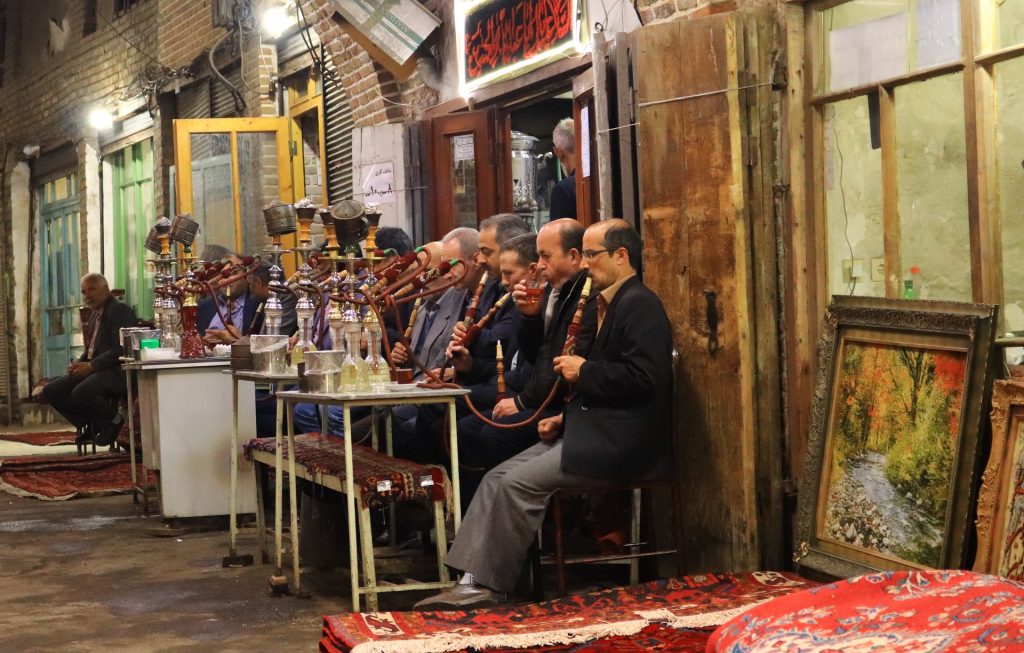
The Tabriz Historic Bazaar Complex is exceptional because its heritage remains connected to everyday life.
Many historic sites are experienced primarily as archaeological remains or carefully preserved monuments. Tabriz Bazaar, by contrast, continues to function as a commercial environment.
Its significance lies in the relationship between buildings, businesses, craftspeople, customers, and the wider community.
Merchants and generations of knowledge
Trade depends on knowledge that is often passed from one generation to another.
Merchants learn about products, quality, negotiation, suppliers, and customer relationships. Artisans develop specialized techniques through practice and experience.
These forms of knowledge may not always appear in written records, yet they are essential to the bazaar’s identity.
When visitors engage respectfully with shopkeepers and craftspeople, they gain insight into this living heritage.
A place for social interaction
The bazaar also acts as a social meeting place.
People visit to shop, work, meet acquaintances, discuss business, and participate in the daily rhythm of the city. Its commercial spaces are intertwined with longstanding social relationships.
This interaction between architecture and community is one reason UNESCO recognizes the bazaar as an exceptional example of a traditional commercial and cultural system.
From heritage to contemporary life
The continued use of the bazaar demonstrates that cultural preservation does not always mean removing a historic place from everyday activity.
In Tabriz, commercial life remains an important part of the site’s identity. Responsible conservation must therefore consider both the physical structures and the people who depend on them.
Supporting local businesses and appreciating traditional craftsmanship can help visitors understand why living heritage matters.
What to Experience During Your Visit
A visit to the Tabriz Historic Bazaar Complex can be much more than a walk through a traditional market. With time and curiosity, it becomes an opportunity to explore architecture, food, craftsmanship, history, and everyday life.
Walk beneath the historic brick vaults
Begin by exploring the main passages and allowing time to appreciate the architecture.
Look for changes in the shape of the vaults, patterns in the brickwork, and openings that bring daylight into the interior. Notice how the different sections connect and how the buildings accommodate commercial activity.
A knowledgeable local guide can help explain the relationship between individual structures and the wider history of the bazaar.
Discover the Persian carpet tradition
Visit the carpet sections to learn about weaving techniques, regional patterns, materials, and the commercial importance of Persian carpets.
Even without making a purchase, you can gain a deeper appreciation of the skill and knowledge involved in this craft.
Meet local merchants and craftspeople
Where appropriate, engage with shopkeepers and artisans who are happy to explain their work.
Ask questions respectfully, avoid interrupting busy transactions, and seek permission before photographing people or their products.
These small gestures help create more meaningful interactions.
Taste local food
Tabriz has a rich culinary tradition, and food can be an important part of a cultural visit.
Depending on what is available during your trip, look for local bakeries, traditional sweets, tea, and regional specialties. Ask local residents for recommendations and consider choosing independently owned businesses.
Food offers another way to understand the region’s identity and the connections between trade, agriculture, and everyday culture.
Explore the surrounding historic city
After visiting the bazaar, continue discovering Tabriz through its historic neighborhoods, museums, architectural landmarks, and cultural institutions.
Allow time to understand the city as a whole. Its heritage is not confined to a single marketplace but extends through its buildings, traditions, food, crafts, and people.
Best Time to Visit Tabriz Bazaar
Tabriz experiences a continental climate, with cold winters, warm summers, and notable seasonal differences.
Spring, particularly May and June, can be pleasant for exploring the city and its historic sites. Early autumn, especially September and early October, can also offer comfortable conditions.
Summer may be suitable for sightseeing, although daytime temperatures can rise. Winters are often cold, and snow or icy conditions may affect outdoor travel.
The bazaar is largely covered, making it an appealing destination in different seasons. However, it remains an active commercial environment, so opening hours and activity levels can vary by section, day, and local calendar.
Before visiting, confirm current access arrangements and local opening hours with your guide or accommodation provider.
Responsible Tourism: Helping Keep Living Heritage Alive
The Tabriz Historic Bazaar Complex illustrates how cultural heritage and local livelihoods can be closely connected.
Responsible tourism can help visitors appreciate this relationship while contributing to the continued vitality of the historic marketplace.
Support local businesses
Consider buying directly from established local merchants and craftspeople when you find something meaningful. Ask about the products and the people who make them.
Thoughtful spending can help sustain traditional skills and local commercial activity.
Value craftsmanship, not just souvenirs
Rather than treating the bazaar as a place to collect inexpensive souvenirs, take time to understand the work behind its products.
A conversation about a carpet, a traditional craft, or a locally made object can offer a deeper cultural experience than a hurried purchase.
Respect residents and workers
The bazaar belongs to the people who work, shop, and meet there every day. Be mindful of privacy, ask before photographing individuals, and follow local customs.
Reduce unnecessary waste
Carry a reusable bag or water bottle where practical, avoid unnecessary packaging, and dispose of waste responsibly.
Recognize conservation challenges
Historic buildings require ongoing maintenance, and the region faces natural hazards, including earthquakes. Conservation must balance the protection of architectural fabric with the needs of a functioning marketplace.
UNESCO’s recognition highlights the importance of protecting both the physical structures and the complex social and economic relationships that give the bazaar its identity.
For PGTG, visiting places like Tabriz is an opportunity to connect travelers with cultural heritage while encouraging responsible engagement with local communities.
Include Tabriz Bazaar in Your Iran Travel Itinerary
Tabriz is an excellent destination for travelers interested in Persian history, traditional architecture, handicrafts, regional cuisine, and the cultural connections between Iran and neighboring regions.
The historic bazaar can form the centerpiece of a city visit or part of a longer journey through northwestern Iran.
Depending on your interests, an itinerary could combine:
- Tabriz Historic Bazaar Complex: Explore the historic marketplace and its specialized commercial sections.
- Blue Mosque of Tabriz: Discover a celebrated monument known for its historic tilework and architectural heritage.
- Tabriz museums and historic landmarks: Learn more about the city’s cultural and political history.
- Kandovan village: Experience a distinctive settlement known for its rock-cut homes and surrounding landscape.
- Armenian Monastic Ensembles of Iran: Explore the region’s remarkable Armenian Christian heritage on a longer northwestern Iran journey.
Travel times, road conditions, opening hours, and access arrangements should be checked when planning your itinerary.
At PGTG — Persian Gryphon Travel Group — we believe that meaningful travel goes beyond visiting famous landmarks. It creates opportunities to learn from local communities, discover the stories behind historic places, and appreciate the diversity of Iranian culture.
Discover the Stories Beneath the Domes
The Tabriz Historic Bazaar Complex is a remarkable place where architecture, trade, craftsmanship, and community life come together.
Its covered corridors and brick domes preserve the memory of centuries of commerce. Its specialized market sections reveal the importance of traditional crafts. Its continuing activity demonstrates that heritage can remain part of everyday life.
For travelers, the bazaar offers a different way to experience Iran: not only through grand monuments and ancient ruins, but also through the people, skills, and relationships that sustain its cultural identity.
Don’t just read about Iran’s heritage — come and experience it!
Walk beneath the historic domes of Tabriz, discover the art of Persian carpets, meet local merchants, and explore the stories that connect Iran with the wider world.
Explore Iran with PGTG — where every journey brings you closer to the people, stories, and heritage that make this land unforgettable.
Together, we learn, experience, and give meaning to travel.
📩 Contact Persian Gryphon Travel Group to plan your cultural journey to Iran.
Leave a Reply