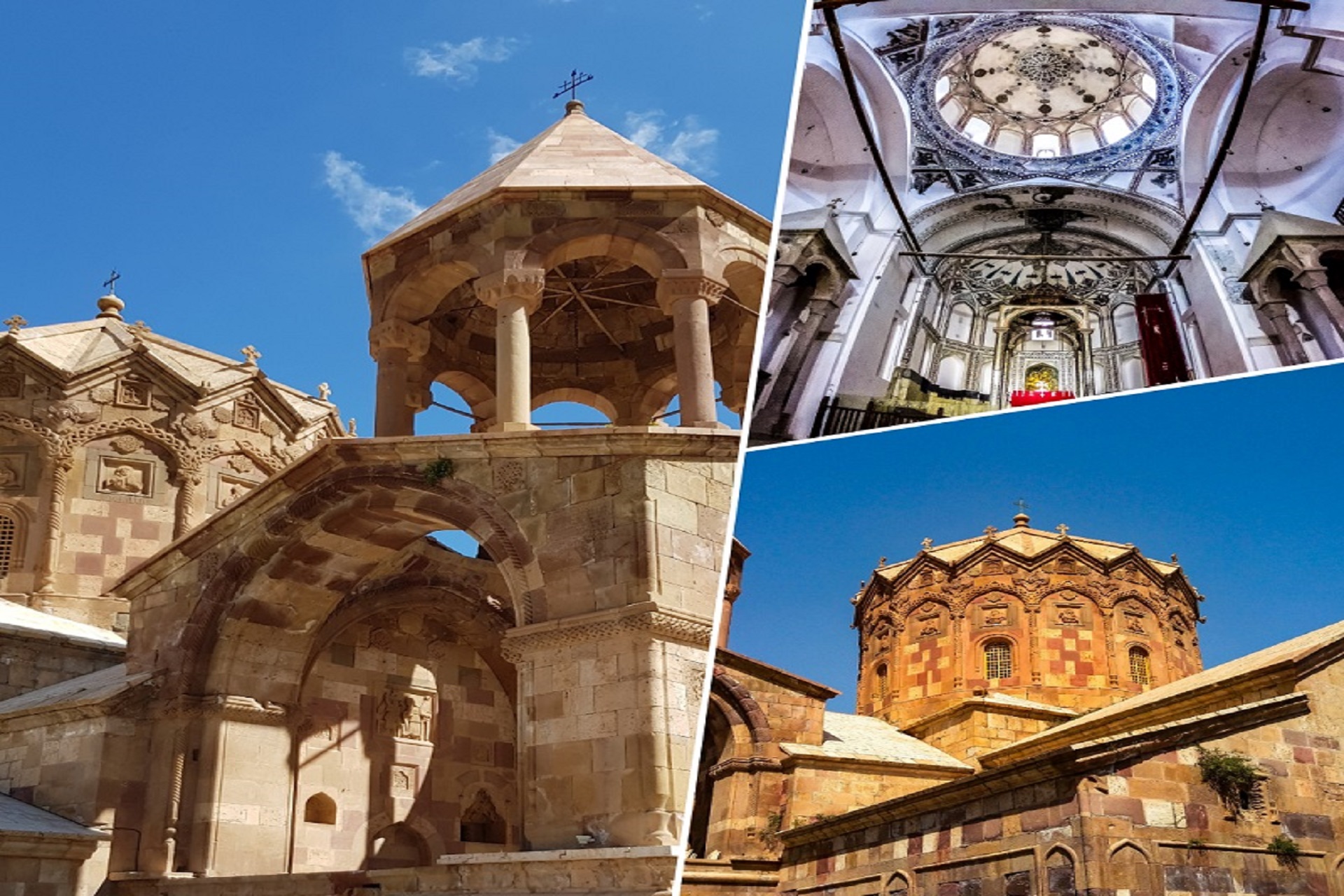
Armenian Monastic Ensembles of Iran: Hidden Treasures of Christian Heritage
Discover Iran’s Armenian monasteries, where centuries of faith, architecture, and cultural exchange meet in the landscapes of northwestern Iran.
Iran is home to an extraordinary diversity of cultural and religious heritage. Among its most remarkable treasures are the Armenian Monastic Ensembles of Iran, a UNESCO World Heritage Site that preserves the architectural and spiritual legacy of Armenian Christianity.
Located in northwestern Iran, these historic religious monuments tell stories of faith, pilgrimage, craftsmanship, and cultural connections that have continued across centuries.
The UNESCO property includes three principal ensembles: Saint Thaddeus Monastery, Saint Stepanos Monastery, and the Chapel of Dzordzor. Their architecture combines distinctive Armenian traditions with influences from Persian, Byzantine, Orthodox, Assyrian, and other regional cultures.
Inscribed on the UNESCO World Heritage List in 2008, these monuments are more than historic churches. They remain important symbols of Armenian cultural identity and religious traditions in Iran.
For travelers interested in architecture, religion, history, photography, and cultural discovery, the Armenian Monastic Ensembles offer an unforgettable journey beyond Iran’s better-known destinations.
Where Are the Armenian Monastic Ensembles?
The Armenian Monastic Ensembles are located in the provinces of West Azerbaijan and East Azerbaijan in northwestern Iran.
This region lies near historic routes connecting the Iranian plateau, Armenia, the Caucasus, and the wider Middle East. Its geography has encouraged centuries of trade, migration, religious exchange, and cultural interaction.
The monasteries occupy landscapes that are part of their historical identity. Mountains, valleys, rivers, and open countryside create a setting that contrasts beautifully with their monumental stone walls and intricate architectural details.
The UNESCO property covers approximately 129.28 hectares, with a buffer zone of approximately 655.01 hectares. It is a serial World Heritage property comprising three principal ensembles rather than a single monument.
Exploring these sites also introduces visitors to the wider cultural heritage of northwestern Iran, including historic towns, traditional villages, regional cuisine, and the living traditions of Armenian communities.
A Living Legacy of Armenian Christianity
Armenian Christianity has deep historical roots in the region. The monasteries of northwestern Iran have preserved important evidence of Armenian religious and cultural life, certainly since the seventh century.
Over time, these religious centers became places of worship, pilgrimage, artistic production, and cultural continuity.
Their importance extends beyond their religious function. The monasteries also demonstrate how communities preserved distinctive architectural traditions while interacting with neighboring cultures.
UNESCO recognizes them as exceptional examples of Armenian architecture and decoration, as well as important evidence of the historical presence and influence of Armenian culture in this region.
The buildings have experienced destruction, natural disasters, and repeated periods of reconstruction. Their continued existence reflects generations of dedication to preserving religious traditions and cultural identity.
Today, they offer travelers an opportunity to explore a lesser-known dimension of Iran’s multicultural history.
1. Saint Thaddeus Monastery: The Famous Black Church
The spiritual heart of an ancient pilgrimage tradition
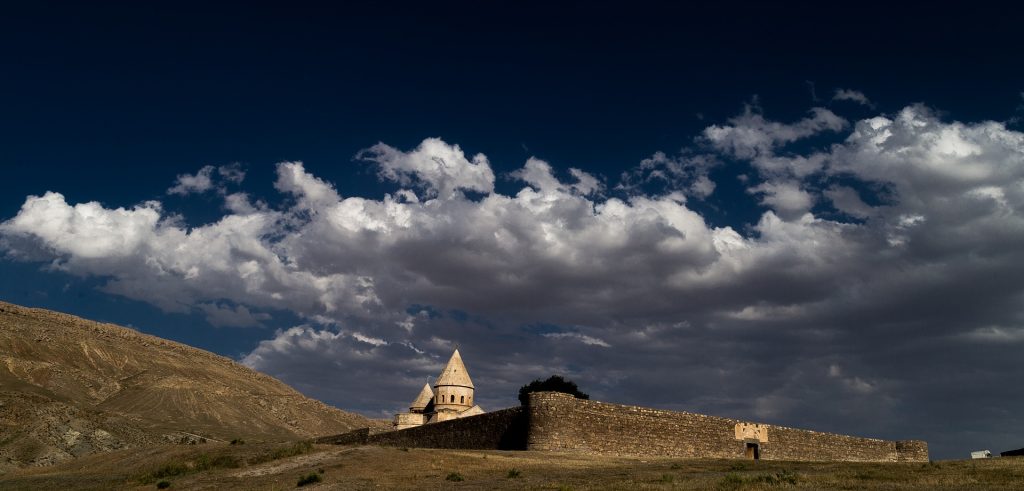
Saint Thaddeus Monastery, often called the Black Church, is one of the most significant Armenian Christian monuments in Iran.
Located in West Azerbaijan Province, the monastery is associated with the Christian apostle Saint Thaddeus. According to Armenian Christian tradition, the site is connected with his tomb and the early spread of Christianity in the region.
The monastery is especially important as a place of pilgrimage. UNESCO identifies Saint Thaddeus as a living testimony to Armenian religious traditions that have continued through the centuries.
Architecture and decorative details
The monastery is known for its substantial stone construction, distinctive architectural forms, carved surfaces, and religious decorations.
Its appearance reflects the evolution of Armenian ecclesiastical architecture, with features shaped by historical reconstruction and regional artistic influences.
The name Black Church is commonly associated with the darker stone used in parts of the building. The complex also contains lighter stonework and decorative elements that create a striking visual contrast.
The monastery’s remote setting adds to its atmosphere. Surrounded by the landscape of northwestern Iran, it feels both monumental and deeply connected to its natural environment.
The annual pilgrimage
Saint Thaddeus remains an important destination for Armenian pilgrims. The annual pilgrimage brings together members of Armenian Christian communities to pray, celebrate religious traditions, and maintain connections with their shared heritage.
UNESCO also recognizes the pilgrimage associated with Saint Thaddeus as an element of intangible cultural heritage.
For visitors, the monastery provides an opportunity to understand the relationship between architecture, faith, community, and cultural memory.
2. Saint Stepanos Monastery: A Masterpiece of Armenian Architecture
A historic monastery in the landscapes of the Aras River
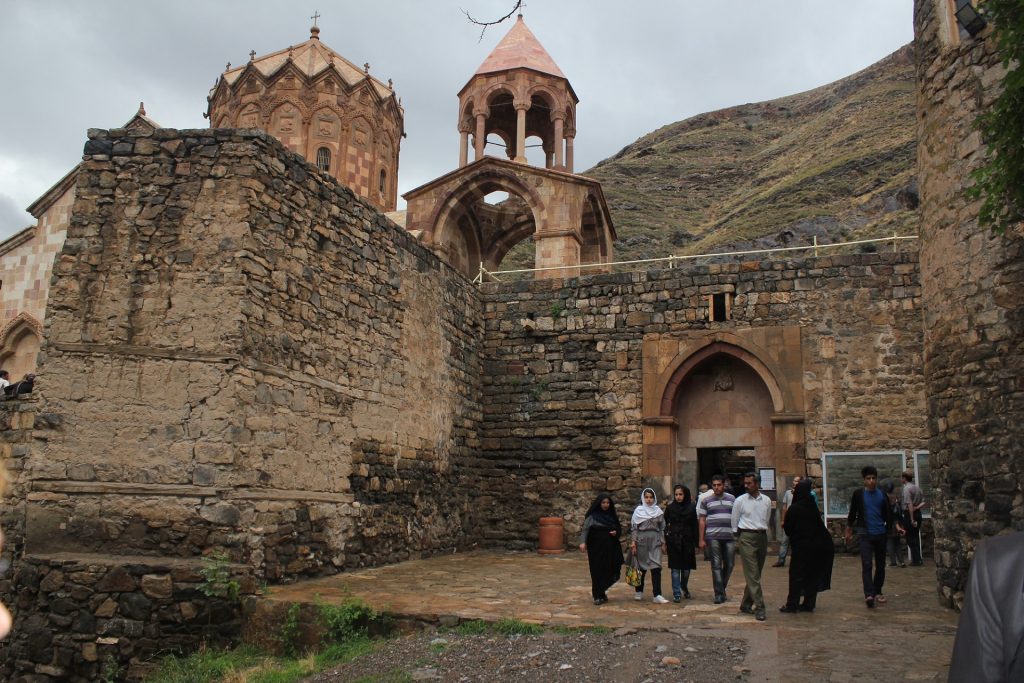
Saint Stepanos Monastery is another major monument within the UNESCO property. It stands in East Azerbaijan Province, near Jolfa and the Aras River, close to Iran’s northwestern border region.
Its dramatic setting combines rugged hills, open landscapes, and historic routes that once connected different communities across the region.
The monastery is dedicated to Saint Stephen, the first Christian martyr according to Christian tradition.
An architectural treasure
Saint Stepanos is particularly admired for its stone construction and richly decorated exterior.
Its architectural features include a central church, a prominent dome, carved stone details, and decorative elements associated with Armenian ecclesiastical art.
The complex illustrates the development of Armenian architectural traditions through periods of rebuilding and artistic exchange.
Religious architecture from this region often combines distinctive Armenian forms with influences from neighboring artistic cultures. Saint Stepanos is an outstanding place to observe these connections in the details of its walls, portals, decorative motifs, and overall composition.
Why travelers should visit
Saint Stepanos is an excellent destination for travelers interested in medieval architecture and cultural landscapes.
The journey offers more than an encounter with a historic church. It reveals how religious monuments developed within a wider regional environment shaped by movement, trade, political change, and cultural exchange.
The surrounding landscapes also provide opportunities for photography and a deeper appreciation of northwestern Iran’s geographical diversity.
3. The Chapel of Dzordzor: A Monument Rescued and Rebuilt
A small chapel with an extraordinary conservation story
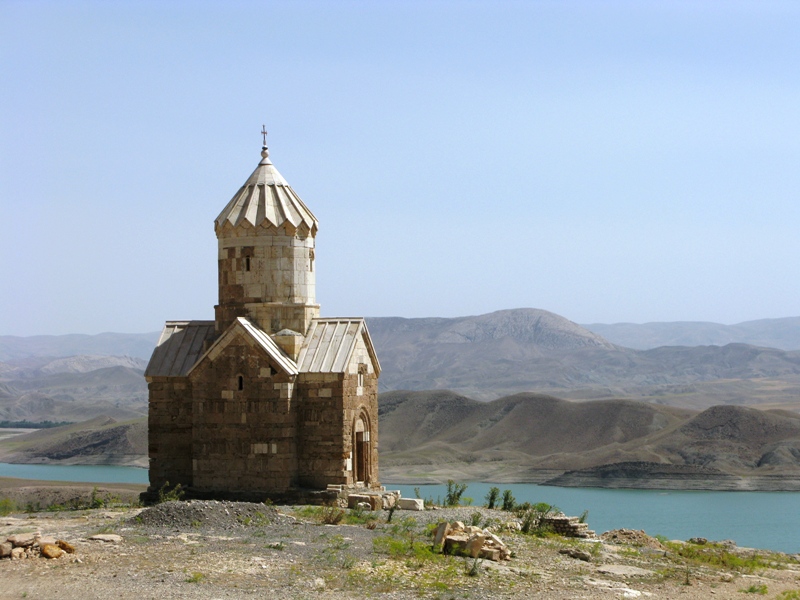
The Chapel of Dzordzor, also known as the Chapel of the Holy Mother of God, is the third principal ensemble recognized within this UNESCO property.
Compared with the larger monasteries, Dzordzor is modest in scale. Yet its architectural and historical importance is considerable.
The chapel preserves a distinctive expression of Armenian religious architecture and demonstrates how historic monuments can remain meaningful even when their physical surroundings change.
The relocation of Dzordzor Chapel
One of the most remarkable aspects of Dzordzor is its conservation history.
Because of a dam construction project, the chapel had to be moved from its original location and rebuilt at another site.
This complex intervention was carried out with particular attention to preserving the building’s authenticity. UNESCO specifically recognizes the conservation effort as part of the property’s significance.
The story raises an important question for heritage conservation: how can historic buildings be protected when modern infrastructure threatens their survival?
Dzordzor demonstrates the technical and cultural challenges involved in preserving a monument while retaining as much of its original character as possible.
For travelers, this history adds another dimension to the visit. The chapel represents not only Armenian architectural heritage but also the ongoing effort to safeguard cultural treasures for future generations.
A Meeting of Armenian, Persian, and Byzantine Traditions
One of the most important reasons the Armenian Monastic Ensembles received UNESCO recognition is their evidence of cultural exchange.
Although the monasteries express Armenian Christian traditions, their architecture and decoration also reflect interactions with other cultures, including Persian, Byzantine, Orthodox, Assyrian, and Muslim traditions.
These exchanges can be understood through several features.
Architectural forms: Church layouts, domes, entrances, and spatial arrangements reflect the development of regional building traditions.
Stone carving: Decorative details demonstrate the skills of artisans working within Armenian and neighboring artistic traditions.
Religious symbolism: The monuments preserve the visual language and spiritual identity of Armenian Christianity.
Regional influences: The monasteries developed within a landscape where communities interacted through trade, travel, political relationships, and religious networks.
The result is not simply a collection of isolated religious buildings. It is a record of how cultures influenced one another while maintaining distinctive identities.
Why Were the Monasteries Rebuilt Several Times?
The monasteries have survived centuries of political upheaval, natural disasters, and physical deterioration.
As a result, the surviving buildings represent different stages of construction, restoration, and reconstruction rather than a single moment in history.
Rebuilding was often necessary to preserve the religious function of the complexes and maintain their place in community life.
UNESCO notes that the monasteries have been reconstructed several times in ways intended to remain consistent with Armenian cultural traditions.
This history is important when interpreting their architecture.
A historic religious complex can preserve its cultural identity even when individual parts have changed over time. At these monasteries, continuity is expressed through architectural traditions, religious use, craftsmanship, and pilgrimage.
Their value therefore lies not only in the age of their stones but also in the cultural traditions they continue to represent.
The Armenian Monastic Ensembles and UNESCO World Heritage
The Armenian Monastic Ensembles of Iran were inscribed on the UNESCO World Heritage List in 2008 under criteria (ii), (iii), and (vi).
Criterion (ii): Cultural exchange
The monasteries demonstrate the exchange of human values through architecture and decorative arts. They illustrate how Armenian traditions interacted with Byzantine, Orthodox, Persian, and other regional cultures.
Criterion (iii): Testimony to Armenian culture
Situated near the southeastern edge of the main Armenian cultural region, the monasteries provide important evidence of Armenian cultural presence and influence in the area.
Criterion (vi): Religious traditions and pilgrimage
The ensembles are directly associated with Armenian Christian traditions and pilgrimage, particularly the spiritual significance of Saint Thaddeus.
Together, these criteria recognize the monasteries as outstanding examples of religious architecture, cultural continuity, and living spiritual heritage.
What Can Travelers Experience at the Monasteries?
A visit to the Armenian Monastic Ensembles offers several distinct experiences.
Explore historic religious architecture
Observe stone masonry, church layouts, domes, carved details, and decorative elements that reveal the craftsmanship of Armenian builders.
Discover the history of Christianity in Iran
Learn about Armenian Christian traditions and the historical role of religious institutions in northwestern Iran.
Experience cultural landscapes
Enjoy the relationship between the monasteries and their surrounding mountains, valleys, rivers, and rural environments.
Understand cultural exchange
Discover how Armenian, Persian, Byzantine, and other traditions interacted across centuries.
Learn about pilgrimage
Where appropriate, explore the role of pilgrimage in preserving religious identity and connecting communities across generations.
Photograph architectural details
Capture the textures of stone, monumental entrances, decorative carvings, and the monasteries’ relationship with the landscape, while respecting religious activities and site regulations.
For travelers who value meaningful cultural encounters, these experiences provide a deeper understanding of Iran’s heritage beyond its famous ancient Persian ruins.
Exploring Northwestern Iran Beyond the Monasteries
The Armenian Monastic Ensembles can form part of a broader journey through northwestern Iran.
Depending on travel conditions, available time, and access arrangements, an itinerary might combine the monasteries with:
- Jolfa and the Aras River landscape
- Tabriz, with its historic bazaar and urban heritage
- Kandovan, known for its distinctive rock-cut dwellings
- Lake Urmia and surrounding landscapes
- Historic villages and regional cultural experiences
- Local markets and traditional cuisine
Travelers interested in a wider UNESCO journey can also connect this region with the Historic City of Yazd, Tabriz Historic Bazaar Complex, and other Iranian heritage sites on a longer itinerary.
Distances in northwestern Iran can be considerable, so a thoughtfully planned route is important. The three monastic ensembles are separate locations, and visiting all of them may require multiple days, depending on starting point and transport arrangements.
Responsible Travel at the Armenian Monastic Ensembles
Religious heritage sites require a particularly respectful approach to tourism.
The monasteries are not simply archaeological attractions. They are symbols of religious identity and, in the case of Saint Thaddeus, living places of pilgrimage.
Responsible visitors can help protect their cultural and spiritual significance.
- Dress respectfully and follow local rules.
- Respect worshippers, pilgrims, and religious ceremonies.
- Ask permission before photographing people.
- Follow designated paths and conservation instructions.
- Avoid touching, climbing, or damaging historic surfaces.
- Never leave litter in the monasteries or surrounding landscapes.
- Support local businesses and responsible tourism services.
- Learn about Armenian history from knowledgeable guides and reliable sources.
UNESCO has emphasized the importance of managing tourism in ways that respect the outstanding universal value of the property.
For PGTG, responsible tourism means helping visitors appreciate the heritage while respecting the communities and traditions that keep it meaningful.
When Is the Best Time to Visit?
Spring and autumn are generally attractive seasons for exploring northwestern Iran, although local weather conditions vary.
Spring can bring greener landscapes and pleasant conditions for cultural sightseeing. Autumn offers opportunities to explore the region’s historic monuments and rural scenery.
Summer can be suitable for travel, but temperatures and conditions vary between locations. Winters may be cold, particularly in elevated areas.
Before traveling, check local access arrangements, opening conditions, road status, and any requirements associated with religious events. If you wish to attend the Saint Thaddeus pilgrimage, plan well in advance and confirm the current schedule and visitor arrangements.
The Monasteries as a Symbol of Cultural Continuity
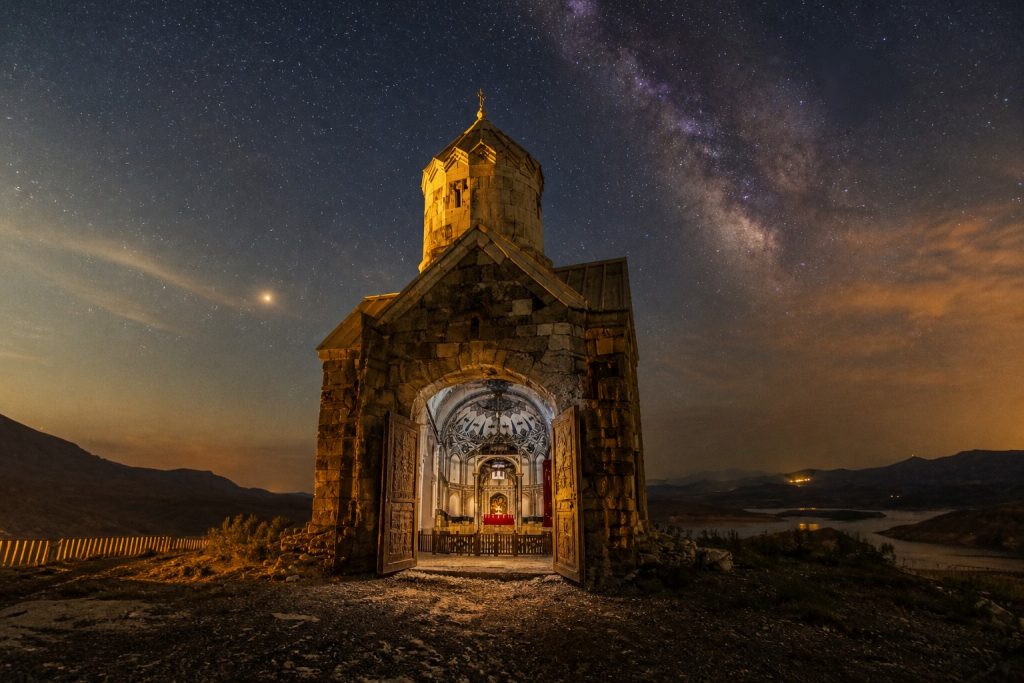
The Armenian Monastic Ensembles of Iran tell a story of survival and continuity.
They have endured natural disasters, political changes, reconstruction, and the passage of centuries. Yet they continue to represent the religious and architectural traditions of Armenian Christianity.
Their significance also reaches beyond a single community.
They demonstrate how cultures can interact, exchange ideas, and influence one another while preserving their distinctive identities.
For travelers, this is one of the most valuable lessons of heritage tourism: a historic monument is not only a record of the past. It can also help us understand the diversity of the present.
Explore the Armenian Monastic Ensembles with PGTG
At Persian Gryphon Travel Group (PGTG), we believe that travel becomes more meaningful when visitors understand the stories, people, and traditions behind each destination.
Our approach to tourism is sustainable, responsible, and experience-oriented. A journey through northwestern Iran can combine Armenian Christian heritage, Persian history, architecture, local culture, landscapes, and regional cuisine.
Whether you are interested in religious architecture, UNESCO World Heritage Sites, cultural photography, or a tailor-made journey through Iran, the Armenian Monastic Ensembles offer an exceptional opportunity to discover another dimension of the country.
Come to northwestern Iran. Discover centuries of faith and cultural exchange. Experience the living heritage of the Armenian monasteries with PGTG.
Together, we learn, experience, and give meaning to travel.
Leave a Reply